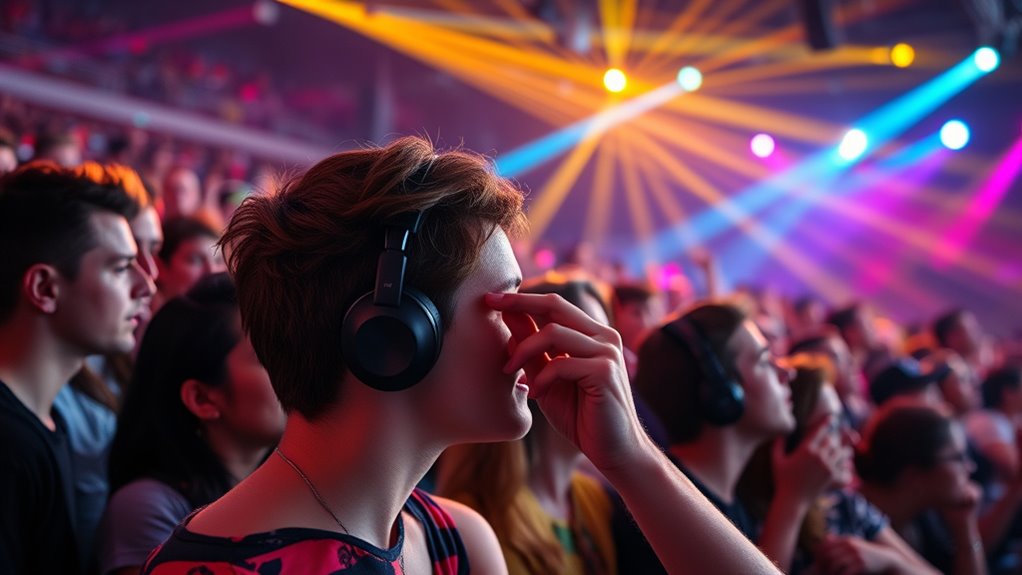

To protect your hearing, follow safe listening practices like keeping the volume below 85 decibels, using noise-canceling headphones, and sticking to the 60/60 rule—listening at 60% volume for no more than 60 minutes. Take regular breaks and listen in quieter environments whenever possible. Watch for signs of overexposure, like ringing or muffled sounds. Continuing to explore this, you’ll discover more ways to enjoy your music safely and preserve your hearing long-term.
Key Takeaways
- Keep volume below 60% and limit listening sessions to no more than 60 minutes per hour.
- Use noise-canceling headphones or earplugs to reduce the need for higher volume levels in noisy environments.
- Take regular breaks to give your ears time to recover from loud sounds.
- Be alert for signs of overexposure, such as ringing or muffled hearing, and adjust listening habits accordingly.
- Practice consistent, mindful listening habits to prevent irreversible hearing damage over time.

Have you ever thought about how loud noises could damage your hearing? It’s a common oversight, especially when you’re caught up in your favorite music. But understanding the importance of volume safety is vital for preserving your hearing over the years. Listening at high volumes, especially through headphones or earbuds, can lead to irreversible damage if you’re not careful. That’s why practicing hearing protection and keeping your sound levels in check should become second nature.
Protect your hearing by controlling volume and practicing safe listening habits every day.
When you’re enjoying music, it’s easy to turn up the volume without thinking about the consequences. However, loud sounds—above 85 decibels—can cause immediate harm to your ear’s delicate structures. The key is to monitor your listening habits and be mindful of how loud you set your devices. Many smartphones and music players have volume limit features, so take advantage of them to guarantee you’re staying within safe ranges. Remember, volume safety isn’t just about avoiding discomfort; it’s about safeguarding your long-term hearing health.
Using hearing protection, like noise-canceling headphones or earplugs, offers an extra layer of defense against damaging noise levels. When you’re in noisy environments—concerts, clubs, or even busy streets—these tools help reduce the overall volume reaching your ears. This way, you can still enjoy your music without exposing yourself to harmful sound levels. It’s a simple yet effective way to protect your hearing without sacrificing your listening experience.
Another tip is to follow the 60/60 rule: listen at no more than 60% of your device’s maximum volume for no longer than 60 minutes at a time. Taking regular breaks allows your ears to recover and minimizes the risk of hearing loss. If you notice any ringing or muffled sounds after listening, it’s a warning sign that you might have pushed your ears too far. Don’t ignore these signals—give your ears time to rest and avoid further exposure to loud sounds.
Being proactive about volume safety and hearing protection isn’t complicated. It’s about making small adjustments, like lowering your volume, using protective gear when necessary, and paying attention to how your ears feel. Protecting your hearing today means you’ll continue to enjoy music for years to come. So, next time you reach for your headphones or attend a concert, remember that safeguarding your hearing is an essential part of being a responsible music lover. Your ears will thank you in the long run. Additionally, understanding hearing damage risks can motivate you to adopt safer listening habits.
Frequently Asked Questions
How Can I Tell if My Music Is Too Loud?
You can tell if your music is too loud by paying attention to your volume levels and noise exposure. If you find yourself needing to turn up the volume to hear clearly, it’s probably too loud. Also, if others around you complain about the noise or if you experience ringing or muffled sounds after listening, these are signs your volume levels are harming your hearing. Keep the volume at a safe, comfortable level.
Are There Specific Devices to Help Protect Hearing?
Yes, there are devices like noise-canceling earbuds and hearing protection devices that can help safeguard your hearing. Noise-canceling earbuds block out background noise, allowing you to enjoy music at lower volumes. Hearing protection devices, such as earplugs designed for concerts, reduce sound levels without sacrificing sound quality. Using these devices consistently helps prevent hearing damage, so consider investing in quality options to keep your hearing safe.
How Often Should I Get My Hearing Checked?
You should get your hearing checked at least once every two years through a hearing screening. If you notice any changes, such as difficulty hearing or ringing in your ears, schedule audiology appointments sooner. Regular checkups help catch issues early and keep your hearing healthy. Don’t wait until problems worsen—consistent testing guarantees you stay aware of your hearing health and can take steps to protect it.
Can Hearing Loss Be Reversed if Caught Early?
Hearing loss can’t typically be reversed, but early intervention can aid in hearing recovery and prevent further damage. If you notice signs of hearing issues early, seeking prompt medical advice increases the chance of managing the problem effectively. While some damage may be permanent, early detection and treatment can improve your hearing health and help maintain your quality of life. Don’t delay—prioritize regular checkups to catch issues early.
What Are the Long-Term Effects of Listening at High Volumes?
Listening at high volumes can cause sound damage and lead to a gradual loss of your hearing over time. The long-term effects include difficulty understanding conversations, ringing in your ears, and reduced ability to enjoy music. The damage accumulates silently, so you might not notice it until it’s advanced. To protect your hearing, keep volume levels moderate and take breaks to avoid irreversible hearing loss.
Conclusion
By following safe listening practices, you’re like a guardian of your own hearing, ensuring it stays strong and vibrant. Remember, loud music can sneak up on you like a thief in the night, stealing your ability to enjoy sound fully later on. Keep the volume in check, take breaks, and use protection when needed. Your ears are precious—treat them with care, so your love of music continues to brighten your world for years to come.