
TL;DR

Get beauty and skincare favorites delivered free with Prime
- Fast, free delivery on millions of items
- Prime Video, Amazon Music and more included
- Member-only deals all year
Glamour UK published a 2026 guide to 11 red-light therapy devices marketed for hair growth, spanning wearable caps and helmets to handheld tools. The article describes low-level light therapy as a possible option but says results are not guaranteed, use must follow device instructions, and changes may take months.
Glamour UK has published a 2026 guide to 11 red-light therapy devices marketed for hair growth, comparing options such as caps, helmets and handheld scalp tools. The report presents low-level light therapy as a non-invasive option some people may try, while its cited experts caution that results are not guaranteed and depend on consistent use, the device and the individual.
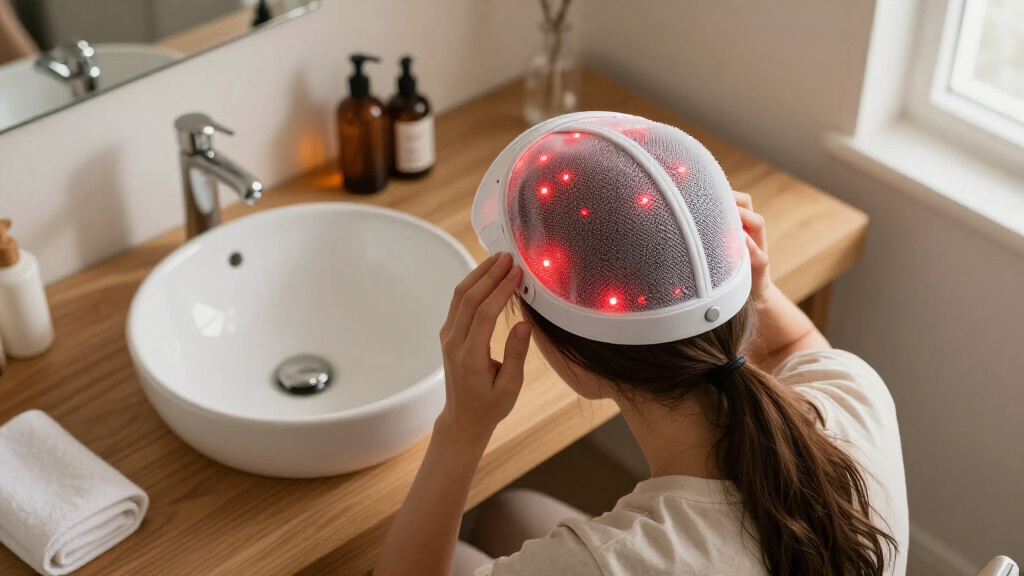
The guide says the devices vary in format and routine: some are worn over the scalp, while smaller handheld products are applied to particular areas. Dermatologist Dr. Raj, quoted in the report, favors devices that are ergonomic and easy to use consistently. The article says the choice is also shaped by personal preference and budget; the supplied material does not give the full product-by-product rankings, prices or specifications for all 11 devices.
The source describes red-light therapy and low-level light therapy (LLLT) as treatments studied for potential effects on hair follicles. Dr. Raj says the approach is thought to stimulate follicles, increase scalp circulation and support cellular metabolism. He says studies have reported positive results for people with androgenetic alopecia, but these comments are not a guarantee that a specific consumer device will work for an individual.
Glamour’s guide cites an expected red-light wavelength range of 620 to 670 nanometers for hair-growth applications and notes that the CurrentBody device emits light from 620 to 660 nm. Usage instructions differ by product: the report gives examples ranging from daily or every-other-day sessions to three-to-five uses a week. It advises readers to follow the instructions for their own device rather than treating one schedule as universal.
Choosing a Device Without Guarantees
The guide gives readers a snapshot of a growing home-treatment category, but it does not establish that buying a device will restore hair. Its most useful distinction is between a possible supportive option and a proven, guaranteed outcome. People comparing products need to weigh ease of routine and cost alongside the limited certainty described by the experts.
The report also cautions against relying on light therapy as the sole response to hair loss. Trichologist Kingsley says evidence for guaranteed results from LED is limited and suggests considering devices alongside other approaches, including minoxidil, as part of a broader plan. Anyone experiencing hair loss may need professional advice to identify its cause and discuss suitable options.
red light therapy hair growth device
As an affiliate, we earn on qualifying purchases.
As an affiliate, we earn on qualifying purchases.
Evidence, Causes and Treatment Routines
The article identifies androgenetic alopecia as the most common cause of hair loss across genders. It also mentions genetics and temporary hair shedding associated with factors such as pregnancy or stress. Those causes differ, so a consumer device guide cannot establish what is behind a particular person’s hair loss.
Experts quoted by Glamour describe the research on low-level light therapy as promising for some forms of hair loss but not conclusive enough to promise results. Dr. Raj says some users may notice changes after 12 to 24 weeks of consistent treatment, while fuller effects can take several months. The report stresses that timing varies with hair type, density, degree of loss and any other treatments being used.
Safety advice in the source is qualified: experts say genuine, high-quality devices are generally considered safe when used as directed, but users may experience temporary scalp irritation, redness or discomfort. The article says persistent reactions warrant advice from a doctor or dermatologist. Its comments are general and do not replace product-specific instructions or individual medical guidance.
““There is limited evidence on the guaranteed results of using LED.””
— Dr. Raj, quoted in Glamour UK
As an affiliate, we earn on qualifying purchases.
What the Guide Cannot Establish
The source material does not provide the complete list of 11 products, their comparative test results, prices, regulatory details or the method used to rank them. It also does not establish that every device emits the same wavelength or has the same evidence behind it. The exact benefit for any user remains uncertain, as do the time required to see a change and whether an apparent change is due to light therapy or another treatment.
The experts’ statements about safety and research are presented in the guide, but the material supplied here does not include study citations or detailed trial findings. People with persistent scalp reactions or concerns about hair loss should seek advice from a qualified health professional.
LED light therapy helmet for hair loss
As an affiliate, we earn on qualifying purchases.
As an affiliate, we earn on qualifying purchases.
Compare Instructions and Seek Advice
Readers considering one of the listed products should check its wavelength, treatment schedule, safety guidance, cost and return terms, then follow the manufacturer’s directions. The report offers no single schedule for all devices; its examples range from frequent short sessions to use several times a week.
The guide says consistent use may be needed for months before changes appear. It does not announce a follow-up test or additional product update. For people whose hair loss is persistent or worsening, the next practical step is to discuss possible causes and treatment options with a doctor or dermatologist rather than relying on a device alone.
As an affiliate, we earn on qualifying purchases.
Key Questions
What does Glamour UK’s 2026 guide cover?
It covers 11 red-light therapy devices marketed for hair growth, including wearable caps or helmets and handheld scalp tools. The supplied source material does not include the full product list or rankings.
Does red-light therapy guarantee hair regrowth?
No. The guide’s cited experts say evidence for guaranteed results is limited. The article describes potential benefits, not a certain outcome.
How long might it take to notice a difference?
Dr. Raj says some users may notice changes after 12 to 24 weeks of consistent use, with fuller effects potentially taking several months. Individual results vary.
How often should these devices be used?
Schedules vary by model. The source gives examples of daily, alternate-day and three-to-five-times-weekly use, and advises following the specific device instructions.
What should users do if they experience irritation?
The report says mild redness, irritation or discomfort may occur and may be temporary. Stop and seek advice from a doctor or dermatologist if a reaction persists, and follow the product’s safety instructions.
Source: rss
Halloween Picks
halloween
As an affiliate, we earn on qualifying purchases.