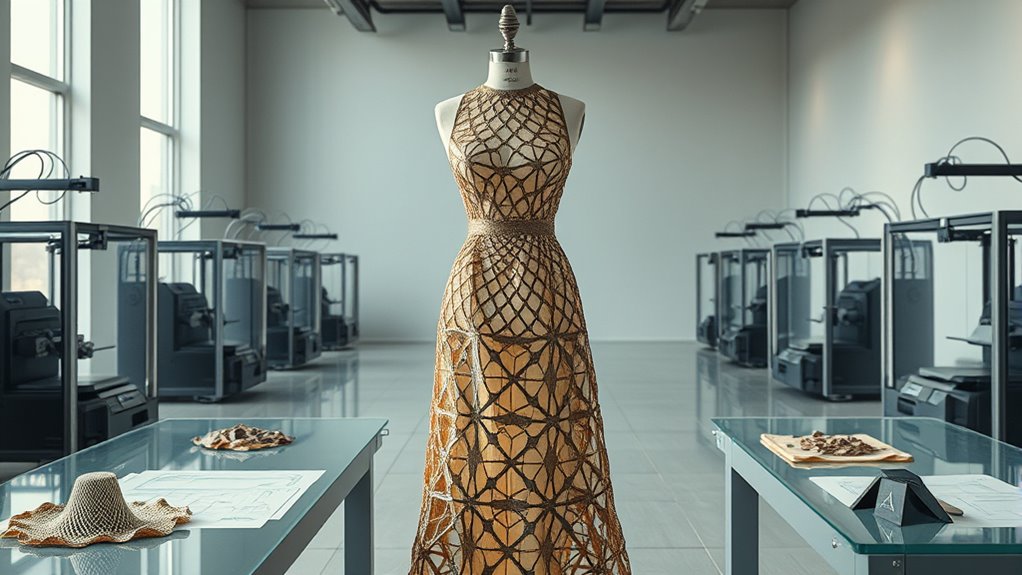

3D printing is transforming fashion by allowing you to craft sustainable, customized garments with complex designs that traditional methods can’t achieve. It reduces waste, shortens production cycles, and promotes eco-friendly materials, making each piece more environmentally conscious. By enabling local, on-demand manufacturing, it minimizes transportation emissions and supports innovative textures and functionalities. This technology opens exciting new possibilities for style and sustainability—keep exploring to discover how it’s shaping the future of fashion.
Key Takeaways
- 3D printing enables the creation of innovative, customized, and intricate garments with reduced material waste.
- It supports sustainable materials like recycled filaments and bioplastics, lowering environmental impact.
- On-demand production through 3D printing minimizes overproduction and promotes waste reduction.
- Decentralized manufacturing hubs reduce transportation emissions and foster local economies.
- Advancements in digital fabrication expand design freedom, allowing highly personalized and eco-conscious fashion.
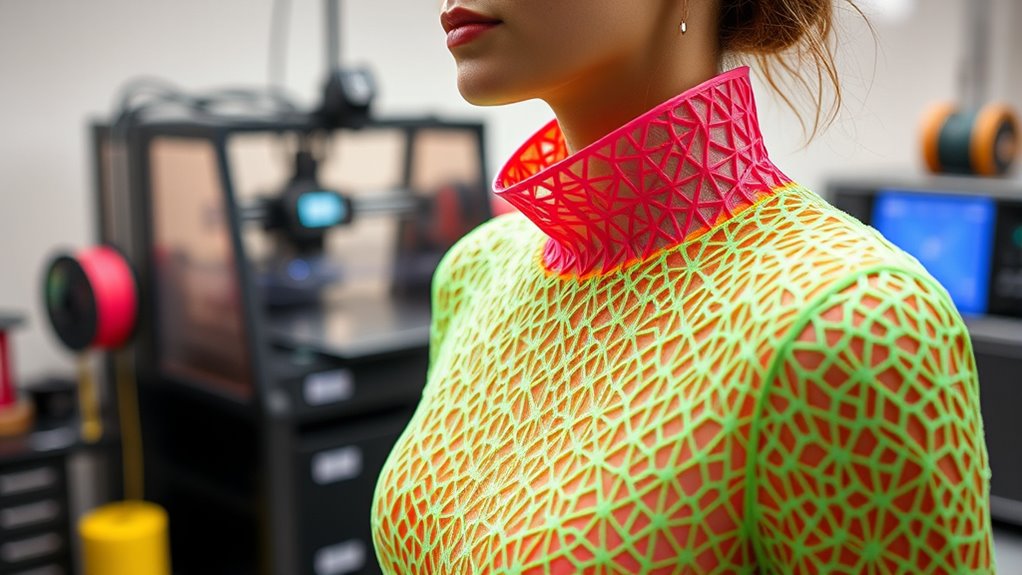
3D printing is revolutionizing the fashion industry by enabling designers to create innovative, customized, and sustainable garments with unprecedented precision. This technology opens up new possibilities for using sustainable materials, allowing you to craft clothing that minimizes environmental impact while maintaining high quality and style. By incorporating eco-friendly filaments, bioplastics, and recycled materials into your designs, you can reduce waste and carbon footprint, aligning fashion with sustainability goals. These sustainable materials are not only better for the planet but also expand your creative options, giving you the freedom to experiment with textures, colors, and forms that traditional methods might struggle to achieve.
With 3D printing, you’re engaging in innovative manufacturing processes that markedly cut down production times and waste. Instead of relying on mass production and excess inventory, you can produce custom pieces on demand, tailored to individual preferences and measurements. This approach promotes a more sustainable cycle, reducing overproduction and unsold stock, which are major issues in fashion. You have the flexibility to iterate designs rapidly, making adjustments before finalizing a piece, which minimizes material waste and accelerates the development process. Additionally, 3D printing allows for complex geometries and intricate patterns that would be difficult or impossible to create through conventional manufacturing techniques. This innovation not only enhances aesthetic appeal but also offers functional benefits like better fit and comfort.
Furthermore, advancements in digital fabrication are continuously broadening the scope of what’s possible in sustainable design, enabling even more innovative and eco-conscious creations. Another advantage of this revolutionary approach is the potential for localized production. Instead of shipping mass-produced garments across continents, you can set up local 3D printing hubs, reducing transportation emissions and supporting local economies. This decentralized manufacturing model aligns perfectly with sustainable practices, emphasizing less waste, lower energy consumption, and a smaller ecological footprint.
In terms of design freedom, 3D printing gives you the ability to craft highly personalized and adaptable garments. You can embed functional elements directly into the fabric or structure, such as adjustable components or embedded electronics, all made possible through innovative manufacturing techniques. This level of customization fosters a more inclusive and environmentally conscious fashion industry, where consumers get exactly what they want without excess waste.
Ultimately, 3D printing empowers you to push the boundaries of fashion by combining sustainable materials with innovative manufacturing. It transforms traditional notions of design, production, and consumption, paving the way for a more responsible and creative future where style and sustainability go hand in hand.

The Mountain mens Savage T-shirt T Shirt, Black, X-Large US
Make a statement and express yourself with art wear, wearable art of photo-realistic images and sophisticated color depth;…
As an affiliate, we earn on qualifying purchases.
As an affiliate, we earn on qualifying purchases.
Frequently Asked Questions
How Durable Are 3D Printed Fashion Items for Everyday Wear?
3D printed fashion items can be quite durable for everyday wear, especially if you choose materials with high longevity and wear resistance. The quality of the filament and printing technique directly impact their durability. While some pieces hold up well over time, others may need extra care or occasional reinforcement. Overall, with the right materials and maintenance, you can enjoy 3D printed fashion items that last and perform reliably in daily use.
Can 3D Printing Produce Customizable and Personalized Fashion Designs?
Yes, 3D printing allows you to create customizable and personalized fashion designs. You can craft personalized accessories that reflect your style or even bespoke garments tailored perfectly to your measurements. This technology gives you the freedom to experiment with unique patterns, colors, and textures, making every piece one-of-a-kind. With 3D printing, you’re empowered to design fashion items that truly suit your personality and preferences, ensuring a perfect fit and originality.
What Are the Cost Implications of 3D Printing in Fashion Production?
Oh, the joys of 3D printing—where material costs seem to dance with your budget, and production scalability feels like trying to fit an elephant through a keyhole. You’ll find that while it reduces waste, the upfront costs of specialized materials and printers can be hefty. Scaling up production often demands significant investment, making it a wild ride for fashion brands balancing innovation with cost.
How Does 3D Printing Impact Traditional Fashion Manufacturing Jobs?
You’ll find that 3D printing impacts traditional fashion manufacturing jobs by driving automation shifts, reducing the need for manual labor. This change means workers must adapt their skills, focusing more on design, programming, and maintenance rather than repetitive tasks. While some jobs may decline, new roles emerge in tech and innovation, encouraging a progression towards more specialized skills. Embracing this shift helps you stay relevant in evolving industry landscapes.
Are There Environmental Concerns With Large-Scale 3D Printing in Fashion?
You might think large-scale 3D printing in fashion is completely eco-friendly, but it’s not! Recycling challenges and material waste can pile up, creating serious environmental concerns. The process often requires significant energy, and managing leftover materials isn’t always straightforward. While it promises innovation, you should know that without proper waste management, it could be just as harmful to the planet as traditional manufacturing.

Creality 3D Printer Filament 1.75mm, Rainbow Upgrade PLA+ Filament Strong Toughness No-Tangling Vacuum Packaging 3D Printing Filament Fit Most 3D Printers, 1kg Spool, Accuracy +/- 0.02mm, Multi-Color
【Strong Toughness without Breakage】Compare with other PLA filament, the Creality Ender PLA+ filament enhances the toughness of the…
As an affiliate, we earn on qualifying purchases.
As an affiliate, we earn on qualifying purchases.
Conclusion
As you embrace 3D printing in fashion, you’ll discover a revolution so profound it’s like witnessing the dawn of a new era. This technology doesn’t just change how you design—it transforms the very fabric of sustainable innovation, making traditional methods seem almost archaic. Prepare to be awestruck as you step into a future where fashion’s possibilities are endless, and your creations can redefine the world’s standards of beauty, efficiency, and responsibility. The future of fashion is truly limitless.

SUNLU 3D Printer Filament PLA Filament 1.75mm, Neatly Wound 3D Printing Filament 1.75mm, Dimensional Accuracy +/- 0.02 mm, Fit Most FDM 3D Printers, 1kg Spool (2.2lbs), Transparent, Clear PLA
①【SUNLU PLA 3D Printer Filament】PLA material is the perfect choice for 3D printing enthusiasts! SUNLU PLA filament is…
As an affiliate, we earn on qualifying purchases.
As an affiliate, we earn on qualifying purchases.

3D Printing for Artists, Designers and Makers
As an affiliate, we earn on qualifying purchases.
As an affiliate, we earn on qualifying purchases.