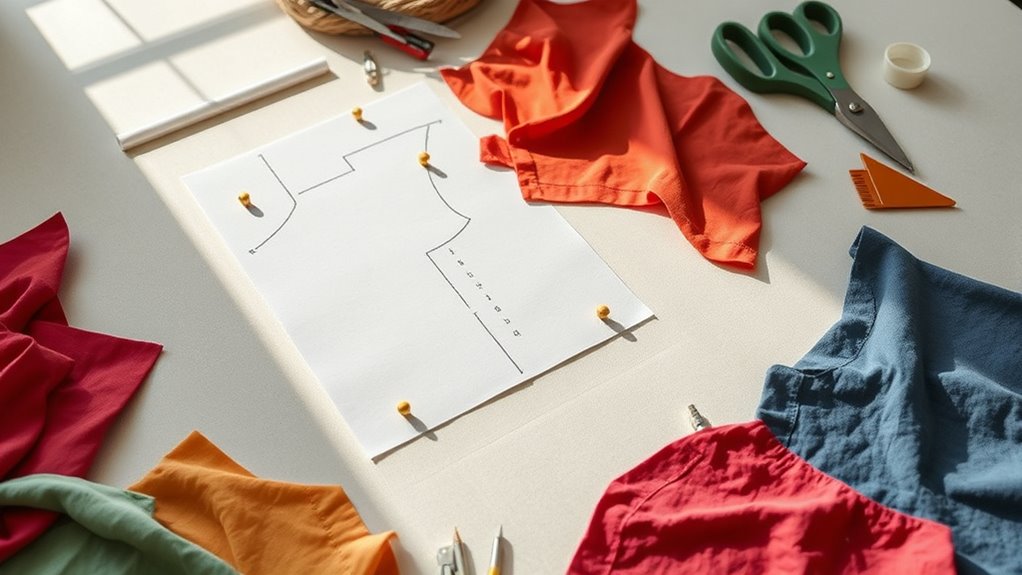

Zero-waste pattern making techniques focus on creating patterns that use fabric efficiently, minimizing scraps, and reducing waste. You can achieve this by designing interlocking shapes, clever seam placements, and asymmetric layouts that fit together like puzzle pieces. Digital tools help visualize your ideas, experiment with different options, and guarantee precise fabric use. If you’re curious about making sustainable garments with less waste, exploring these methods will open up creative possibilities to transform your design process.

Get beauty and skincare favorites delivered free — and shop member deals
- Fast, free delivery on millions of items
- Access to Prime Big Deal Days deals on October 6–7
- Prime Video, Amazon Music and more included
Key Takeaways
- Design patterns that interlock like a puzzle to maximize fabric use and eliminate scraps.
- Incorporate integrated seams and shape shifts for efficient fabric utilization.
- Use digital pattern drafting tools to experiment with layouts and visualize fabric efficiency.
- Choose sustainable fabrics such as organic cotton or recycled textiles to support eco-friendly practices.
- Plan the entire garment construction to minimize waste and optimize fabric grainlines and stretch directions.

Zero-waste pattern making is an innovative approach that aims to eliminate fabric waste during the garment design process. You focus on creating patterns that utilize fabric efficiently, reducing excess material and making the most of every inch. One of the key ways to achieve this is by carefully selecting sustainable fabric choices. By choosing eco-friendly textiles like organic cotton, hemp, or recycled fabrics, you not only minimize environmental impact but also align your designs with sustainable fashion principles. These fabrics often have unique textures and properties that can complement zero-waste techniques, encouraging you to rethink traditional pattern layouts.
Digital pattern drafting plays a vital role in this process. Instead of relying solely on paper patterns, you utilize digital tools to experiment with pattern shapes and layout options. This technology allows you to visualize how different pattern pieces will fit together before cutting into fabric, giving you precise control and reducing the chance of errors that lead to waste. Digital drafting makes it easier to manipulate pattern pieces and optimize fabric usage, especially when working with complex shapes or unconventional designs. It’s an efficient way to refine your patterns, ensuring every piece has a purpose and fits together seamlessly.
As you develop your zero-waste patterns, you’ll learn to think creatively about how pattern pieces interlock like a puzzle. You might design garments with integrated seams or clever shape shifts that maximize fabric efficiency. For instance, you could incorporate asymmetrical features or strategic dart placements that serve both aesthetic and functional purposes while reducing leftover scraps. Using digital pattern drafting software also helps visualize these ideas in real time, making adjustments quicker and more accurate. This technology supports experimentation, so you can try multiple layout options without wasting fabric or time.
Another advantage of combining sustainable fabric choices with digital pattern drafting is the ability to plan the entire design process more sustainably. You can simulate fabric grainlines and stretch directions, ensuring your pattern is optimized not just for waste reduction but also for durability and comfort. Incorporating pattern efficiency into your workflow encourages you to think beyond just cutting waste and towards creating garments that are environmentally responsible from start to finish.
Ultimately, zero-waste pattern making with sustainable fabrics and digital drafting tools empowers you to craft beautiful, eco-conscious garments that honor the planet. It pushes you to innovate with your designs, challenge traditional methods, and embrace a more mindful approach to fashion. You’ll find that reducing waste isn’t just about saving fabric—it’s about transforming your entire creative process into a sustainable practice that benefits both you and the environment.
digital pattern drafting software for fashion
As an affiliate, we earn on qualifying purchases.
As an affiliate, we earn on qualifying purchases.
Frequently Asked Questions
Can Zero-Waste Pattern Making Suit All Clothing Styles?
Yes, zero-waste pattern making can suit all clothing styles because it enhances clothing versatility and offers design flexibility. You can adapt this technique to create everything from casual wear to formal garments, ensuring each piece reflects your unique style. By experimenting with different shapes and patterns, you can achieve diverse looks while maintaining sustainability. Zero-waste methods truly empower you to craft stylish, eco-friendly clothing that fits any fashion preference.
What Tools Are Essential for Zero-Waste Pattern Creation?
You need essential tools like fabric scissors and pattern paper for zero-waste pattern creation. Fabric scissors help you cut fabric precisely, ensuring clean edges and minimal waste. Pattern paper allows you to draft your designs, make adjustments, and visualize your pattern before cutting into fabric. These tools streamline your process, making it easier to create efficient, sustainable designs while reducing waste and ensuring accuracy in your zero-waste sewing projects.
How Do I Adjust Patterns for Different Fabric Types?
When adjusting patterns for different fabric types, you need to take into account fabric stretch and draping techniques. If your fabric stretches, you might need to add or subtract ease to ensure a proper fit, especially in areas like the bust or hips. For fabrics with unique draping qualities, use draping techniques to observe how the fabric falls and adapt your pattern accordingly. Always test adjustments with muslins before cutting into your final fabric.
Is Zero-Waste Pattern Making Suitable for Beginners?
Sure, zero-waste pattern making might seem like a beginner’s nightmare, but surprisingly, it’s perfect for those just starting out. You’ll face beginners’ challenges, but with the right learning resources, you’ll master it faster than you thought. It’s a rewarding process that teaches you to think creatively about fabric use and design. So, don’t shy away—embrace the challenge, and soon, you’ll be creating stunning, sustainable pieces with confidence!
How Can I Ensure Durability in Zero-Waste Designs?
To guarantee durability in your zero-waste designs, focus on fabric reinforcement at stress points and strengthen seam construction. Use sturdy fabrics and reinforce seams with topstitching or zigzag stitches to prevent wear and tear. Consider double-stitching or flat-felled seams for added strength, especially in high-stress areas. Regularly test your designs and make adjustments as needed, ensuring your zero-waste pieces last longer and withstand daily use.
sustainable fabric bundle organic cotton recycled textiles
As an affiliate, we earn on qualifying purchases.
As an affiliate, we earn on qualifying purchases.
Conclusion
Just like a skilled chef turns every ingredient into a delicious dish without waste, you can master zero-waste pattern making to create stunning garments with minimal scraps. Remember, each fabric piece you save is a step toward a more sustainable future. When I first started, I thought waste was unavoidable—until I realized that smart patterning is like finding the perfect puzzle pieces that fit together perfectly. Embrace these techniques, and you’ll craft beauty from every inch of fabric.
zero waste sewing pattern templates
As an affiliate, we earn on qualifying purchases.
As an affiliate, we earn on qualifying purchases.
interlocking puzzle pattern making tools
As an affiliate, we earn on qualifying purchases.
As an affiliate, we earn on qualifying purchases.
Fall Picks
fall essentials
As an affiliate, we earn on qualifying purchases.