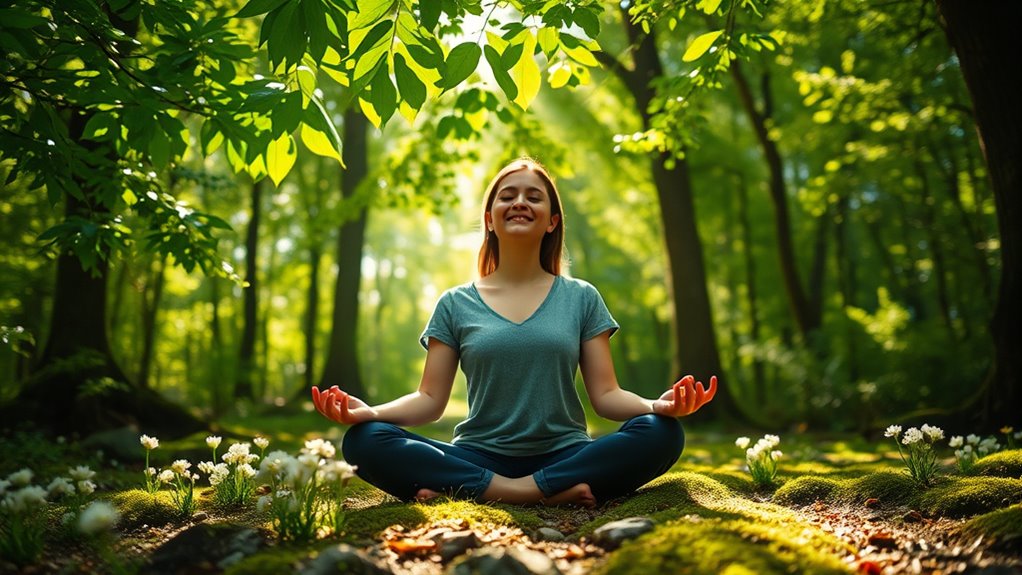

Practicing mindfulness helps you stay present, which boosts your happiness and emotional well-being. When you focus on the here and now, you become more aware of your thoughts, feelings, and surroundings. This awareness allows you to enjoy daily experiences fully, regulate emotions better, and build resilience to stress. As you become more present, you’ll notice positive changes in your mood and overall health. Keep exploring, and you’ll discover more ways mindfulness can transform your life.
Key Takeaways
- Practicing mindfulness keeps you focused on the present, increasing appreciation for daily experiences and fostering happiness.
- Staying present enhances emotional regulation, reducing impulsive reactions and promoting stable, positive moods.
- Mindfulness develops self-awareness, helping shift focus from negative thoughts to positive aspects of life.
- Regular mindfulness reduces stress and improves physical health, contributing to overall well-being and happiness.
- Incorporating brief mindfulness exercises daily can significantly boost mental clarity, emotional stability, and life satisfaction.

Practicing mindfulness can considerably enhance your sense of happiness by helping you stay present and fully engaged in each moment. When you focus on the here and now, you become more aware of your thoughts, feelings, and surroundings, which can lead to a deeper appreciation of everyday experiences. This heightened awareness is a core benefit of meditation, often referred to as meditation benefits, as it cultivates a calmer, more centered mind. As you develop a regular mindfulness practice, you’ll notice that you’re better able to navigate life’s ups and downs, reducing stress and increasing your overall sense of well-being.
Practicing mindfulness helps you stay present, reducing stress and boosting overall well-being.
One of the key ways mindfulness influences happiness is through emotional regulation. When you’re present, you gain more control over your emotional responses instead of reacting impulsively to external events or negative thoughts. This ability to regulate emotions allows you to approach challenges with a clearer mind, instead of being overwhelmed by frustration, anxiety, or sadness. Over time, this emotional resilience builds, helping you maintain a more stable mood and cultivate positive feelings like contentment and gratitude. Mindfulness teaches you to observe your emotions without judgment, creating space between stimulus and response, which ultimately fosters a more peaceful state of mind.
Furthermore, engaging in mindfulness practices helps you develop greater self-awareness. You begin to recognize patterns in your thoughts and feelings, giving you the power to shift your focus away from negativity or rumination. This shift can profoundly boost your happiness, as you start to notice more of the good in your life rather than dwelling on problems or what’s lacking. As your awareness deepens, you also become more empathetic and compassionate toward yourself and others, strengthening social relationships—another essential component of happiness. Incorporating practices like meditation techniques into your routine can further amplify these benefits.
The benefits of mindfulness extend beyond mental clarity; they influence your physical health too. Reduced stress levels from regular practice can lower blood pressure, improve sleep, and boost your immune system. All these physical benefits contribute to your overall well-being, reinforcing the positive cycle of feeling good physically and emotionally. It’s a simple yet powerful tool—by simply dedicating a few minutes each day to mindfulness, you can profoundly transform your emotional landscape and increase your happiness.
Frequently Asked Questions
Can Mindfulness Improve Overall Life Satisfaction Beyond Happiness?
Yes, mindfulness can improve your overall life satisfaction beyond happiness by strengthening long-term resilience and enhancing emotional regulation. When you practice mindfulness regularly, you become better at managing stress and setbacks, which helps you stay grounded during tough times. This increased resilience and emotional control contribute to a deeper sense of fulfillment, making your daily experiences more meaningful and allowing you to savor life’s moments with greater clarity and purpose.
How Long Does It Typically Take to See Benefits From Mindfulness Practice?
Have you ever wondered how soon you’ll notice the benefits of mindfulness? Typically, you might start seeing progress indicators within a few weeks, around 8 to 12 weeks of consistent practice. While some feel calmer or more focused sooner, real transformation varies based on your dedication and approach. Keep practicing daily, and you’ll likely recognize subtle shifts in your awareness and emotional resilience as time goes on.
Is Mindfulness Effective for Managing Chronic Stress or Anxiety?
Yes, mindfulness is effective for managing chronic stress and anxiety. By practicing meditation techniques like deep breathing and body scans regularly, you can reduce stress levels and build emotional resilience. These techniques help you stay present, calm your mind, and break the cycle of anxious thoughts. Incorporate mindfulness into your daily routine, and over time, you’ll notice improved mood and a greater sense of control over your stress and anxiety.
Can Mindfulness Be Integrated Into Daily Routines Easily?
Yes, you can easily integrate mindfulness exercises into your daily routines. Start with small steps, like taking a few deep breaths during breaks or practicing mindful eating at meals. Incorporate activities like mindful walking or short meditation sessions to stay present. Consistency is key, so choose moments that fit your schedule. Over time, these habits become natural, helping you manage stress and boost happiness effortlessly.
Are There Age-Specific Mindfulness Techniques for Children or Seniors?
Think of age-specific mindfulness techniques as tailored keys fitting different locks. For children, fun and simple activities like breathing bubbles or story-based exercises work well. Seniors benefit from senior-specific strategies like gentle body scans or seated meditation. These age-appropriate exercises help everyone stay present and mindful, making it easier to enjoy life’s moments at any stage. Your approach should fit their unique needs, like a glove.
Conclusion
By embracing mindfulness, you cultivate happiness like a gardener tending to a delicate bloom. Staying present allows you to savor life’s simple moments, transforming everyday experiences into sources of joy. Remember, happiness isn’t a distant horizon but the gentle current flowing through each breath and thought. When you anchor yourself in the now, you open a wellspring of contentment that enriches your life, turning each moment into a precious gem.