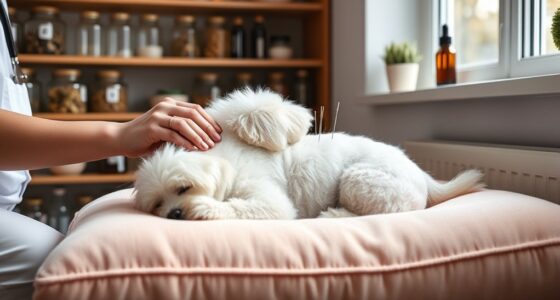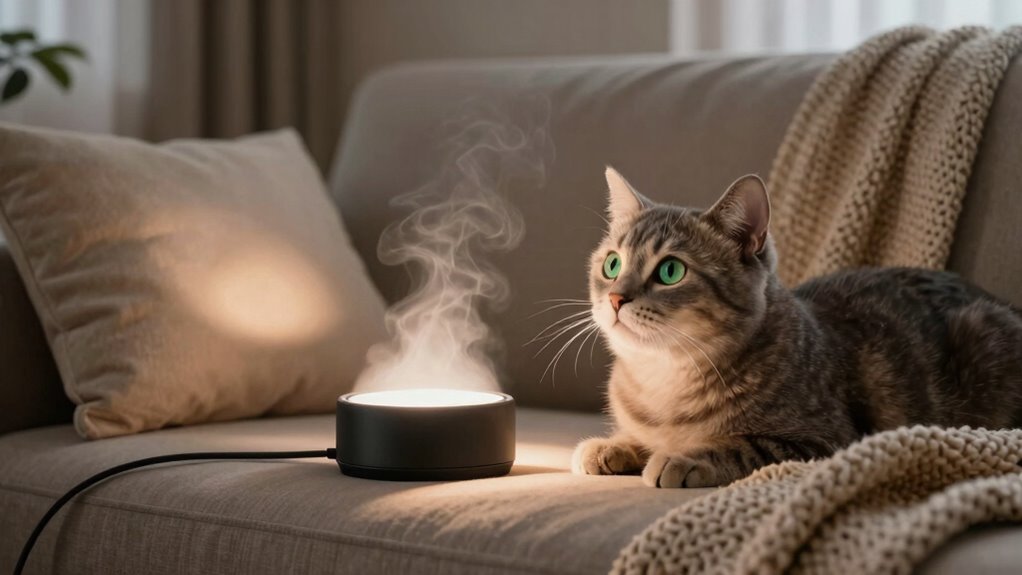

If you often use air fresheners, candles, or scented sprays, you might be overstimulating your pet’s sensitive nose and causing stress. Strong fragrances can overwhelm animals, leading to behaviors like hiding or excessive grooming. Switching to natural alternatives like open windows, houseplants, or pet-safe essential oils can help create a calmer environment. Want to know how to better protect your pet’s well-being? Keep exploring for helpful tips.
Key Takeaways
- Regular use of air fresheners, candles, or scented sprays can overstimulate pets’ sensitive noses.
- Strong fragrances may cause stress, anxiety, or behavioral changes like hiding or excessive grooming.
- Overexposure to intense scents disrupts pets’ sense of calm and comfort.
- Synthetic or heavily scented products are more likely to trigger pet scent sensitivities.
- Replacing artificial scents with natural, pet-safe alternatives can reduce overstimulation.

Many pet owners unknowingly overstimulate their animals by regularly using strong home scents, such as air fresheners, candles, or scented sprays. These products release pet scent triggers that can cause stress or anxiety in your pets, even if you don’t realize it. Pets have a highly sensitive sense of smell, and what seems like a pleasant aroma to you might be overwhelming or confusing to them. When exposed repeatedly to intense fragrances, your pet’s sense of calm can be disrupted, leading to behaviors like hiding, scratching, or excessive grooming. Recognizing pet scent triggers is essential for creating a more harmonious environment for your furry friends.
Instead of relying on harsh scents, consider incorporating calming essential oils into your home environment. Certain essential oils, like lavender or chamomile, are known for their soothing properties and can help create a peaceful atmosphere for your pet. However, it’s vital to use them safely—diluted properly and in well-ventilated areas. Diffusing calming essential oils can help mask stronger pet scent triggers and replace them with gentler, pet-friendly aromas. This shift can markedly reduce your pet’s stress levels and foster a more relaxed environment.
You might also want to evaluate your routine with home scents. For example, avoid lighting heavily scented candles or using spray air fresheners in rooms where your pet spends most of their time. Instead, opt for natural alternatives like open windows or houseplants, which improve air quality without introducing overwhelming fragrances. When using essential oils, always confirm they are pet-safe and used in moderation. Some oils, while calming to humans, can be toxic to animals, so research thoroughly or consult your veterinarian before making changes.
It’s easy to overlook how much your pet’s environment influences their behavior. Over time, constant exposure to strong scents can increase pet scent triggers that lead to unwanted stress. By replacing these with calming essential oils and natural air purification methods, you help your pet feel more secure and at ease. You’ll notice fewer signs of anxiety, and your home will become a more harmonious space for everyone. Remember, the goal is to create a scent environment that promotes relaxation without overwhelming your pet’s delicate sense of smell. Understanding pet scent triggers is key to fostering a healthier environment for your furry friend. Additionally, being aware of pet scent sensitivities can help you tailor your scent choices more effectively. Incorporating safe essential oils into your routine can make a significant difference in your pet’s well-being.
As an affiliate, we earn on qualifying purchases.
Frequently Asked Questions
Can Certain Scents Be Toxic to Pets?
Yes, certain scents can be toxic to pets. Essential oil dangers are well-known, as many oils contain compounds harmful to animals, especially cats and dogs. Synthetic fragrance risks are also significant, as they can cause respiratory issues and skin irritation. Always check labels and avoid diffusing essential oils or synthetic air fresheners around your pets. When in doubt, consult your vet to guarantee your home scents are safe for your furry friends.
How Often Should I Change Home Scents?
You should change home scents every 1-2 weeks to minimize pet allergy triggers and scent sensitivity issues. Even if your pet doesn’t seem affected, lingering fragrances can overstimulate or irritate them. Regular scent changes help reduce overstimulation. Before choosing new scents, consider scent sensitivity testing to identify safe options. This proactive approach keeps your home fresh without risking your pet’s comfort or health, ensuring a peaceful environment for everyone.
Are Natural Scents Safer for Pets Than Artificial Ones?
Natural scents are generally safer for pets than artificial ones, but you should still consider aromatherapy safety. Some pets have strong scent preferences or sensitivities, so observe their reactions closely. Always opt for high-quality, pet-safe essential oils, and avoid overuse. Knowing your pet’s scent preferences helps prevent overstimulation. Ultimately, keeping scents mild and natural minimizes risks, making your home more comfortable and safer for your furry friends.
What Signs Indicate My Pet Is Overstimulated?
Like a troubadour lost in a sea of noise, your pet might show signs of overstimulation through pet stress and behavioral changes. Watch for pacing, excessive licking, hiding, or hyperactivity. They might also yawn or yelp more than usual. If your pet seems overwhelmed, it’s a clear sign that the home scent environment is too intense. Recognizing these cues allows you to soothe them and create a calmer space.
Do Scent Diffusers Affect All Types of Pets Equally?
Scent diffusers don’t affect all pets equally because of differences in pet scent sensitivity. Some animals, like cats and small dogs, may be more sensitive to fragrances, especially if you place the diffuser near their usual hangout spots. To minimize overstimulation, keep diffuser placement away from their bedding or feeding areas. Monitor your pet’s reactions, and adjust the diffuser’s location or scent strength if you notice signs of discomfort.
As an affiliate, we earn on qualifying purchases.
Conclusion
Think of your home as a garden, where every scent is a bloom. When you overwater or over-fertilize, the plants can become overwhelmed and stop thriving. Similarly, continuously bombarding your pet with strong scents can overstimulate their senses, leaving them stressed or anxious. To keep your home a peaceful oasis, gently nurture your pet’s environment—allowing natural scents to flourish. Sometimes, less truly is more, creating a calmer space for both of you to thrive.
As an affiliate, we earn on qualifying purchases.
As an affiliate, we earn on qualifying purchases.