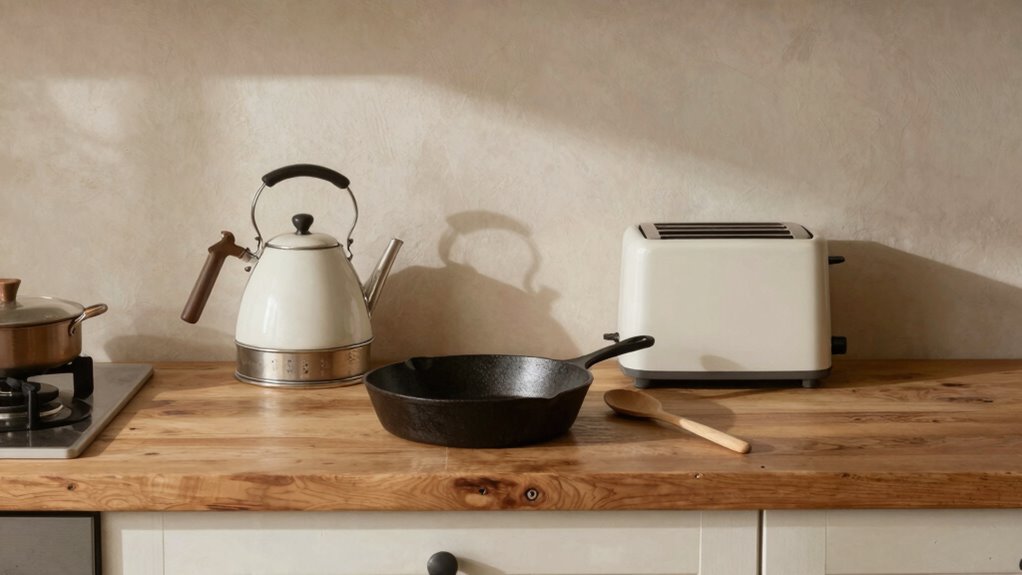

In a mindful kitchen, you intentionally use fewer appliances to create a calmer, more focused cooking environment. This approach encourages you to slow down, engage your senses, and appreciate each step. It promotes sustainability by reducing energy use and waste, while emphasizing quality ingredients and traditional techniques. By simplifying your tools and routines, you foster mindfulness, connection, and balance in your kitchen. Keep exploring how this mindful approach transforms your relationship with food and cooking.
Key Takeaways
- Using fewer appliances promotes mindful cooking by encouraging focus on traditional techniques and ingredient quality.
- Intentional appliance use reduces energy consumption and kitchen clutter, fostering sustainability.
- Relying on manual tools enhances sensory engagement and transforms cooking into a mindful ritual.
- A minimalist approach supports resourcefulness, waste reduction, and ecological awareness.
- Prioritizing intentional choices creates a deeper connection to food and promotes a balanced, eco-conscious mindset.
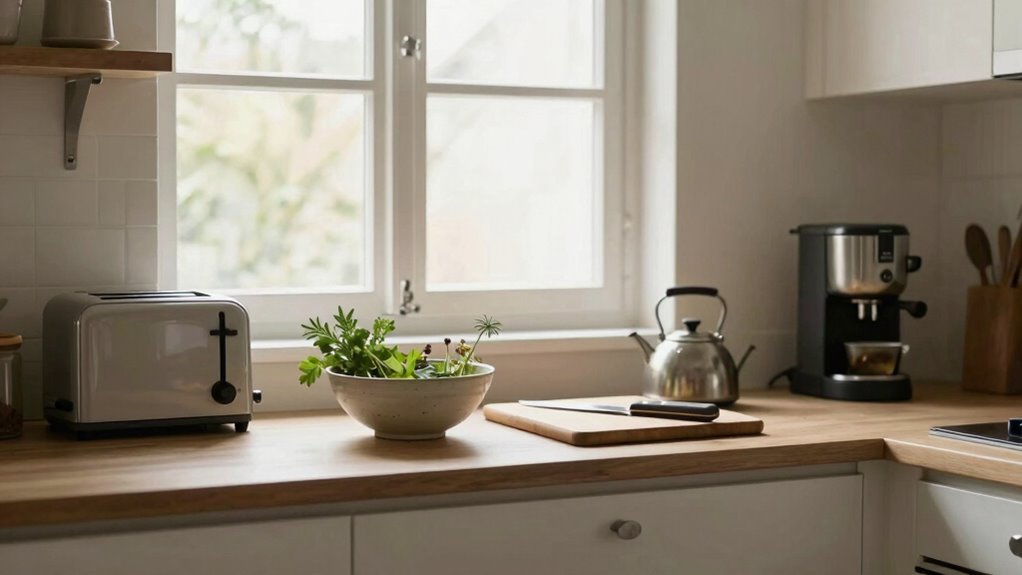
Creating a mindful kitchen involves more than just organizing your space; it’s about cultivating an intentional approach to cooking and eating. One way to achieve this is by using fewer appliances more deliberately, which aligns with sustainable practices and encourages you to focus on the quality of your food and the process. Instead of defaulting to multiple gadgets, you start to see your kitchen as a space where simplicity supports mindfulness. This shift helps you become more aware of what you truly need, reducing clutter and minimizing energy consumption.
Embrace simplicity in your kitchen to foster mindfulness, sustainability, and a deeper connection with your food and process.
When you choose to use fewer appliances, you’re making a conscious decision that benefits both your environment and your well-being. For example, opting for manual tools like a hand whisk or a mortar and pestle instead of an electric mixer not only slows down the cooking process, but it also invites you to be more present during meal preparation. By doing so, you engage with your ingredients more fully, appreciating their textures, smells, and flavors. This intentional cooking fosters a deeper connection to your food, transforming routine tasks into mindful rituals.
Reducing reliance on appliances also encourages you to explore traditional cooking methods. Baking bread from scratch, fermenting vegetables, or preparing homemade sauces can become more meaningful activities when you’re not rushing through them with high-speed gadgets. These methods often require more time and attention, which naturally cultivates patience and presence. Furthermore, they often produce healthier, more sustainable results because you’re controlling ingredients and avoiding the excess packaging or preservatives common in pre-packaged foods. Embracing biodiversity in your ingredients can further enrich your culinary experience and support ecological balance.
In addition, using fewer appliances pushes you to be more resourceful. You might find yourself repurposing kitchen tools or improvising with what you have, leading to less waste and more thoughtful consumption. This approach aligns with sustainable practices that prioritize reducing energy use and minimizing environmental impact. It also encourages a mindful awareness of lifecycle considerations for your kitchen tools and ingredients, fostering a more eco-conscious mindset. Incorporating minimalism into your kitchen philosophy can help streamline your routines and reinforce mindful choices.
Ultimately, choosing to operate with fewer appliances isn’t about sacrificing convenience; it’s about intentionally designing your cooking experience to be more mindful and sustainable. It invites you to slow down, pay attention, and make conscious choices that benefit your health, your environment, and your overall well-being. By simplifying your kitchen routine, you create space for reflection, gratitude, and a genuine appreciation for the nourishment you provide to yourself and others.
As an affiliate, we earn on qualifying purchases.
Frequently Asked Questions
How Can I Start Decluttering My Kitchen Appliances?
Start by gathering all your appliances and sorting them into categories. Use decluttering strategies like asking yourself if you’ll genuinely use each item regularly. Keep only the essentials that serve your cooking needs and bring you joy. Organize what remains with appliance organization in mind, storing seldom-used items out of sight. Regularly reassess, and you’ll create a clutter-free, mindful kitchen that feels more functional and inviting.
What Are Simple Ways to Practice Mindfulness While Cooking?
Imagine chopping vegetables, your knife slicing through each piece with purpose. To practice mindfulness, focus on sensory awareness—feel the texture, smell the aroma, listen to the sounds of cooking. Engage in mindful tasting, savoring each bite slowly, noticing flavors and textures. Breathe deeply, stay present in each step, and let your attention anchor you in the moment. This simple practice transforms cooking into a calming, intentional experience.
How Does Using Fewer Appliances Affect Food Flavor and Quality?
Using fewer appliances helps preserve flavor and ingredient freshness by reducing unnecessary heat, oxidation, and exposure to external elements. When you cook more simply, you allow natural flavors to shine through without overpowering additives or prolonged processing. This approach guarantees your food retains its original taste and quality, making each ingredient’s unique character more pronounced. Fewer appliances mean less interference, so you enjoy fresher, more vibrant flavors in every bite.
Are There Specific Appliances to Avoid for a Mindful Kitchen?
In a mindful kitchen, you should avoid appliances that waste energy and lack efficiency, like old toaster ovens or inefficient microwaves. These appliances consume more energy without adding significant value, hindering your energy conservation goals. Instead, focus on using efficient appliances that serve multiple purposes, reducing clutter and waste. Prioritizing appliance efficiency helps you cook mindfully, save energy, and create a more sustainable, intentional kitchen environment.
How Can I Maintain a Mindful Kitchen Routine Daily?
To maintain a mindful kitchen routine daily, prioritize mindful shopping and intentional meal planning. You can start by choosing quality over quantity, buying only what you need, and avoiding impulsive purchases. Plan your meals thoughtfully, focusing on nourishing ingredients. Use your appliances intentionally, turning them off when not in use, and keep your space simple. This consistent approach helps you stay present, reduce waste, and enjoy healthier, more fulfilling cooking experiences.
As an affiliate, we earn on qualifying purchases.
Conclusion
In your mindful kitchen, every appliance becomes a gentle brushstroke in your culinary masterpiece. You’re the conductor, guiding each tool with intention, turning cooking into a dance rather than a rush. Less clutter, more focus—your space transforms into a sanctuary where nourishment flows effortlessly. Embrace this rhythm, and let your kitchen be a symphony of simplicity and purpose. In this harmonious space, you don’t just cook—you craft moments of mindful magic.
As an affiliate, we earn on qualifying purchases.
As an affiliate, we earn on qualifying purchases.