
TL;DR

Get beauty and skincare favorites delivered free — and shop member deals
- Fast, free delivery on millions of items
- Access to Prime Big Deal Days deals on October 6–7
- Prime Video, Amazon Music and more included
Luxury facial cleansing brushes are optional powered or manual tools that add vibration, brush contact, or convenience to face washing. A premium model may offer silicone touchpoints, adjustable settings, and travel-friendly design, but there is limited independent evidence that brushes cleanse better than gentle washing by hand. Choose based on comfort and care needs, start gently, and stop if your skin becomes irritated.
A glowing display and a velvet-lined travel case can make a facial cleansing brush look like a tiny spa appointment. But a luxury price tag does not prove better skincare results. What it may buy is a more comfortable grip, softer-feeling contact points, adjustable vibration, or a routine you enjoy enough to stick with.
This guide explains what luxury facial cleansing brushes are, what their features can—and can’t—do, and how to choose one that fits your skin and habits. You’ll also get practical steps for using and cleaning a brush, plus clear reasons to skip one or ask a skin-care professional for guidance. Think of it as a helpful accessory, not a shortcut to perfect skin.
A luxury price may buy better design or convenience, but it does not guarantee better skin results.
Silicone is generally less porous than bristles, yet either type still needs regular cleaning and full drying.
Start on the lowest setting, use light pressure, and stop if your skin stings, stays red, or feels unusually dry.
Avoid brushing broken or irritated skin; ask a qualified professional if you have a relevant skin condition.
Clean hands are a valid alternative, especially if a brush adds irritation, expense, or extra chores.
What a Luxury Cleansing Brush Actually Does
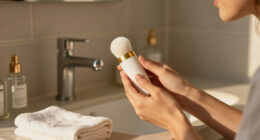
Luxury facial cleansing brushes are powered or manual tools designed to help you wash your face by moving soft contact points across the skin or vibrating while you cleanse. Most premium powered models use silicone touchpoints; some use replaceable bristle heads that rotate or oscillate. The tool adds movement to your routine, but it does not replace cleanser, sunscreen, or other skin-care products.
That distinction matters: “luxury” describes a product tier, not a proven level of skin benefit. A high-end device may offer several intensity settings, water resistance, a charging stand, or a neat travel case. For instance, if you travel often, a compact case may be more useful than an app that tracks your cleansing sessions.
Imagine washing your face with your hands and then using a brush with a gentle, even vibration. The second method may feel more thorough or soothing, like using a soft dish brush instead of your fingertips to clean a cup. But the sensation of extra action is not proof that your skin is cleaner or healthier.
There is limited independent evidence that cleansing brushes consistently outperform careful cleansing with clean hands. If you enjoy the device and your skin tolerates it, it can make washing feel pleasant and consistent. If it adds friction, fuss, or irritation, your hands are a perfectly sensible tool.
As an affiliate, we earn on qualifying purchases.
Which Premium Features Are Worth Your Money?
Luxury facial cleansing brushes are most worth comparing by how they feel, how easily you can clean them, and whether their features fit your routine. Silicone touchpoints, adjustable intensity, a comfortable handle, and water resistance can offer practical convenience. Extra settings or app connectivity matter only if you’ll actually use them.
Here’s a quick comparison to help separate useful features from nice-to-have extras:
| Feature | What it may offer | What to remember |
|---|---|---|
| Silicone touchpoints | Smooth, flexible contact that rinses easily | Still needs washing and thorough drying |
| Replaceable bristle head | A familiar brush feel and a head you can change | Follow replacement and cleaning instructions |
| Adjustable vibration | A gentler setting to start with and room to adjust | More intensity does not mean better cleansing |
| Water resistance | Convenience near a sink or in the shower | Check the specific manufacturer’s instructions |
| Travel case or app | Portability or routine reminders | These features do not prove improved skin results |
For example, a busy traveler who washes at hotel sinks may value a rechargeable, water-resistant design. Someone who keeps a simple routine at home may get more value from an easy-to-rinse manual tool—or no brush at all.
Features and models change over time, so check current product details and care directions rather than relying on old reviews. Pay for comfort and convenience if they matter to you; don’t pay extra expecting a device to erase pores, wrinkles, or blackheads.
As an affiliate, we earn on qualifying purchases.
How to Use a Brush Without Overdoing It
To use a facial cleansing brush cautiously, follow the device’s directions, begin on its lowest setting, and use brief, light contact. Let the brush glide instead of pressing it into your skin. If you’re wondering whether you need to scrub harder to get a better clean, the answer is no: more pressure can add friction without adding a reliable benefit.
- Wet your face and brush as the instructions direct.
- Apply a compatible cleanser, avoiding gritty formulas if they make the brush feel abrasive.
- Start on the lowest setting and move gently for the time specified by the manufacturer.
- Rinse your face and the device, then let the brush dry fully.
- Watch your skin’s response and stop if it stings, stays red, or feels unusually dry.
For instance, if your usual evening wash takes a minute, don’t add a long, forceful brushing session just because a device has multiple modes. Start with a short trial and give your skin time to show how it responds. Daily use may suit some people, but it may be too much for others; follow the product directions and your own comfort.
Don’t use a brush on broken, irritated, or inflamed skin. If you have sensitive or reactive skin, rosacea, eczema, active acne, or a damaged skin barrier, a brush may feel uncomfortable or aggravate irritation. Consider checking with a dermatologist or another qualified professional before adding mechanical cleansing, especially if you already manage a skin condition.
water-resistant facial cleansing device
As an affiliate, we earn on qualifying purchases.
As an affiliate, we earn on qualifying purchases.
How to Choose Between Silicone, Bristles, and Your Hands
Choose between silicone, bristles, or your hands by asking which option feels gentle, fits your routine, and is easiest for you to keep clean. Silicone contact points are generally less porous than bristles and can rinse easily, while bristle models offer a different brushing feel and may have replaceable heads. Neither design is automatically the right choice for every skin type.
Consider how you’ll use the tool on an ordinary Tuesday, not only how it looks in a product photo. If you tend to leave gadgets damp beside the sink, a brush that needs careful drying may become another chore. If you’re already comfortable washing with clean hands, you may not gain enough from a device to justify its price or upkeep.
A useful way to think about the choice is as comfort versus added maintenance. A silicone model might suit someone who wants a soft-feeling accessory and an easy rinse; a bristle model might appeal to someone who prefers that familiar texture and will replace its head on schedule. Clean hands remain a practical option when your skin reacts easily or you want the simplest routine.
For example, if a brush leaves your cheeks tight after one gentle use, don’t assume you need a stronger moisturizer and keep pushing through. Pause the device and return to hand cleansing. Your skin’s comfort is better evidence of fit than a feature list, a premium finish, or a brand’s promise of dramatic results.
travel-friendly facial cleansing brush
As an affiliate, we earn on qualifying purchases.
As an affiliate, we earn on qualifying purchases.
Keep Your Brush Clean Without Turning It Into a Chore
A facial cleansing brush needs regular cleaning and complete drying, whether it has silicone touchpoints or bristles. Silicone is generally less porous than bristles, but it is not self-cleaning. Cleanser residue and moisture can remain on a device, so follow the manufacturer’s directions for rinsing, washing, and replacing any detachable head.
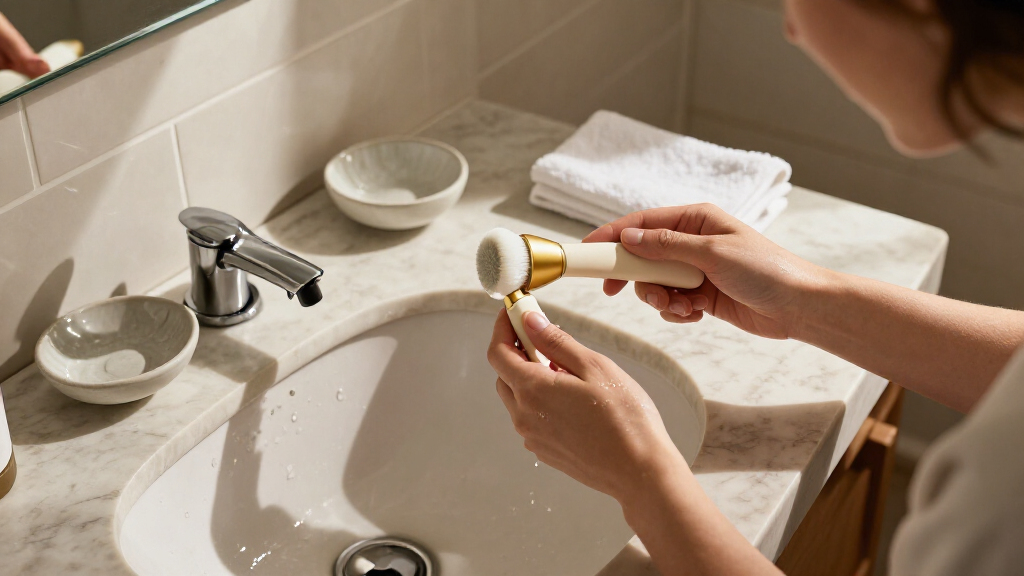
After use, rinse away visible cleanser, clean the brush as directed, and let it dry fully before storing it. A sealed, damp case can trap moisture, so don’t tuck a wet brush into luggage and forget about it. If the device has a removable head, check its care instructions and replace it on the recommended schedule—or sooner if it looks worn, damaged, or difficult to clean.
Picture a brush left in a steamy shower: water beads on the handle, but the contact points stay damp. That everyday scenario is why drying matters as much as rinsing. Store it somewhere it can air-dry, and avoid sharing it with someone else; shared use complicates hygiene, especially with a replaceable head.
Keep the routine simple enough that you’ll follow it. If cleaning the device feels like a weekly puzzle, your hands may be the easier choice. Don’t use harsh cleaning products unless the maker specifically recommends them, since the wrong product could damage the device. Check the current care instructions for your specific model; materials and product designs vary.
Know When a Brush Is Not the Right Fit
A cleansing brush is not a must-have for healthy skin, and it may be a poor fit if brushing causes stinging, lasting redness, dryness, or discomfort. People with sensitive or reactive skin, rosacea, eczema, active acne, or a damaged skin barrier may find mechanical cleansing uncomfortable. In those cases, gentle hand washing—or advice from a qualified skin-care professional—may suit you better.
There’s also a common mix-up between cleansing and exfoliating. A brush creates some physical friction, but that doesn’t make it a substitute for a carefully chosen exfoliating product. Combining a brush with a gritty cleanser or another exfoliating step may add more irritation than you intended, like sanding a surface that only needed a wipe.
Be cautious with claims that a brush can shrink pores, remove wrinkles, or reliably clear blackheads. A cleansing device cannot permanently shrink pores or reverse wrinkles, and aggressive use can make skin uncomfortable. For example, if you’re using a brush because your nose has visible pores, turning up the speed is unlikely to give you a lasting change.
Try a brush only if it adds comfort or convenience, not because you feel your routine is incomplete without one. If your skin worsens after use, stop and return to a gentle routine. For an ongoing concern or a pre-existing skin condition, ask a dermatologist or another qualified professional for guidance rather than trying to scrub the problem away.
Frequently Asked Questions
Do facial cleansing brushes work better than using your hands?
They may make washing feel more thorough, but limited independent evidence shows they reliably cleanse better than gentle washing with clean hands. Choose the method that feels comfortable and fits your routine.
Are luxury facial cleansing brushes worth the price?
The premium may pay for materials, design, adjustable settings, water resistance, or travel features. It does not guarantee better skin results, so compare the features you’ll actually use with the cost and care required.
Are silicone brushes more hygienic than bristle brushes?
Silicone is generally less porous than bristles, but neither kind cleans itself. Rinse and clean the device as directed, let it dry fully, and replace brush heads on the manufacturer’s schedule.
Can I use a facial cleansing brush every day?
It depends on your skin and the device. Follow its instructions, start gently, and stop if you notice persistent redness, stinging, or unusual dryness; daily use may be too much for some people.
Can I use a cleansing brush if I have sensitive skin or acne?
Mechanical cleansing may feel uncomfortable or aggravate irritation for some people with sensitive skin, active acne, rosacea, eczema, or a damaged skin barrier. Avoid brushing irritated or broken skin, and ask a qualified professional if you are unsure whether it suits your situation.
Conclusion
Choose a cleansing brush for comfort and convenience, not for promises of perfect skin. If you try one, use it gently, care for it as directed, and let your skin—not the price tag—decide whether it belongs in your routine.
A good face wash should leave you feeling comfortable, not scrubbed raw. Sometimes the best luxury is simply a calm, easy rinse at the sink.
Halloween Picks
halloween
As an affiliate, we earn on qualifying purchases.