TL;DR

Get beauty and skincare favorites delivered free with Prime
- Fast, free delivery on millions of items
- Prime Video, Amazon Music and more included
- Member-only deals all year
A Cosmetics Business report argues that travel retail is offering premium beauty brands a new place to reach shoppers as they face pressure to justify higher prices. The supplied excerpt does not include sales figures, brand examples or evidence measuring the scale of airport beauty growth.
Travel retail is emerging as a potential sales opportunity for luxury beauty brands facing pressure to justify higher prices, according to a 2026 report by Cosmetics Business. The report says airport shopping is changing consumer buying habits, but the available excerpt does not provide sales data or name brands demonstrating the trend.
The report describes a beauty market crowded with products, brands and what it calls “so-called innovations.” In that environment, it says premium brands are finding it harder to maintain and explain their higher price points as shoppers turn to dupes and less expensive products.
Skin care is one example. Citing McKinsey’s State of Beauty Industry Trends 2026 report, Cosmetics Business says the perceived link between premium prices and stronger performance is weakening. McKinsey’s research, as summarized in the excerpt, found consumers embracing lower-priced brands, particularly dermatologist-backed and K-beauty companies, that offer visible results and clinical credibility at lower prices.
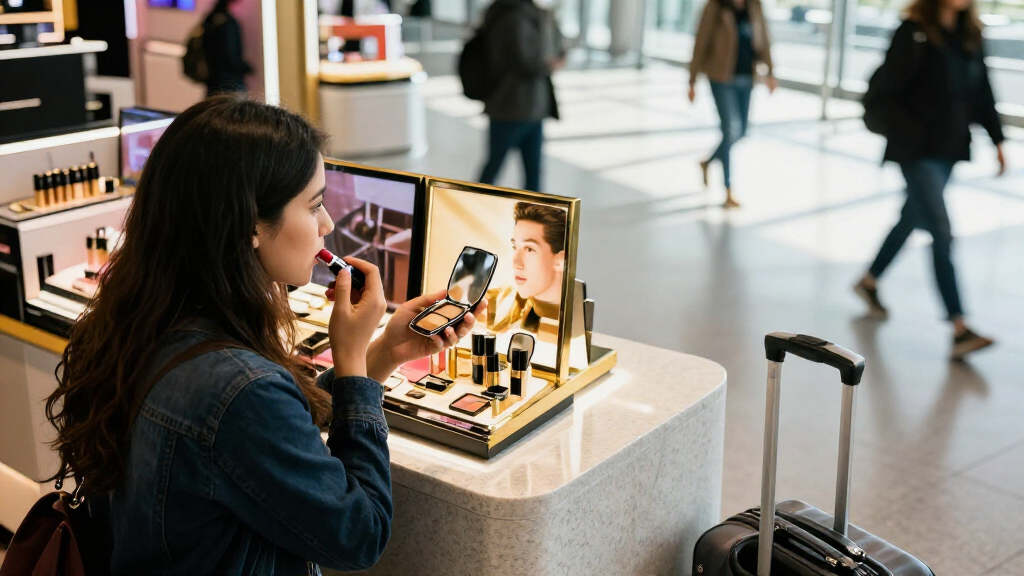
Against that backdrop, Cosmetics Business presents travel retail, including airport shopping, as a place where premium beauty may find a more receptive audience. The supplied extract introduces that argument but does not include the full report’s examples, retailer details or supporting figures.
The development matters because premium beauty faces a pricing challenge: shoppers have more affordable alternatives, and the report’s account of McKinsey’s findings suggests that price alone may not persuade them that a product performs better. Travel retail could give brands another setting to present premium products and reach consumers while they are travelling.
That opportunity remains a report’s framing, not a quantified market result in the material provided. Without figures on sales, shopper numbers or growth, readers cannot tell how much airport retail is offsetting pressure elsewhere. For retailers and brands, the practical question is whether travel purchases reflect durable demand or are limited to particular locations and shopping occasions.
Products Worth Considering

Oura Ring 4 Smart Ring – Silver – Size 8

Oral-B iO Series 5 Rechargeable Electric Toothbrush with 3 Brush Heads and Travel Case, Black

Oura Ring 5 Smart Ring – Stealth, Size 11
As an affiliate, we earn on qualifying purchases.
Price Pressure Shapes the Opportunity
Cosmetics Business places the travel-retail discussion within a broader 2026 market described as crowded and competitive. Its excerpt says dupes and cheaper products are making it harder for premium brands to sustain higher prices. It also points to consumer interest in lower-priced skin-care brands with dermatologist associations or K-beauty positioning.
The report cites McKinsey’s 2026 industry trends research for the observation that consumers are not consistently treating premium pricing as proof of better skin-care performance. The excerpt does not reproduce the underlying data, methodology or exact comparisons, so those findings should be understood as reported by Cosmetics Business rather than independently detailed here.
Cosmetics Business then presents airport retail as a changing sales environment, contrasting it with online and conventional physical stores. The available text stops before explaining what changes in airport shopping are driving the proposed opportunity.
“The perceived rule that “premium equals performance” no longer holds true.”
— Cosmetics Business, summarizing McKinsey’s State of Beauty Industry Trends 2026 report
Airport Growth Lacks Figures Here
The scale of the travel-retail opportunity is not established in the supplied excerpt. It includes no sales totals, growth rates, time periods, comparison baselines, shopper surveys, retailer comments or brand case studies. It also does not identify which airports or markets are involved.
The details behind the claimed shift in shopping habits remain unclear, including what consumers are buying, why they choose airport beauty counters and whether travel purchases are replacing or adding to purchases through other channels. The full report may contain further evidence, but it is not included in the source material provided.
Full Report Could Add Evidence
The next step for assessing the claim is to review the full Cosmetics Business report and any data or examples it contains. Further evidence would need to show how airport beauty sales are changing over a stated period and against a clear baseline, as well as which brands and retailers are seeing gains.
Until those details are available, the confirmed development is that Cosmetics Business has identified travel retail as a possible route for premium brands to reach shoppers amid price competition. Whether that opportunity is large enough to change the outlook for luxury beauty remains unconfirmed.
Key Questions
What is the reported development?
Cosmetics Business identifies travel retail as a potential sales opportunity for luxury beauty brands dealing with pressure on premium prices.
Why are premium beauty brands under pressure?
The report says shoppers have more lower-priced options, including dupes and skin-care brands described as dermatologist-backed or K-beauty. It summarizes McKinsey research as finding that premium pricing is no longer reliably seen as proof of better performance.
Does the source show that airport beauty sales are growing?
Not in the supplied excerpt. It gives no sales figures, growth rates, time window or comparison baseline to establish the scale of airport beauty sales or any increase.
Which brands or airports are benefiting?
The available source material names no specific beauty brands, retailers, airports or markets benefiting from the proposed travel-retail opportunity.
What evidence would clarify the trend?
Sales data over a stated period, a clear comparison baseline, and examples from brands or airport retailers would help establish whether travel retail is producing measurable growth for luxury beauty.
Source: cosmeticsbusiness.com