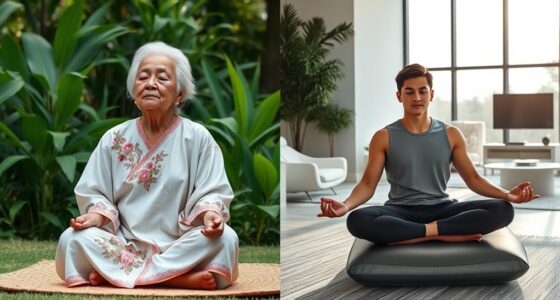
Breath awareness meditation is a simple practice perfect for beginners. It involves paying close attention to your natural breathing, noticing sensations like air entering and leaving your body or the rise and fall of your chest. By focusing on your breath, you can ground yourself, reduce stress, and increase mindfulness. Practice regularly, even for just a few minutes a day, to experience its full calming effects. Keep exploring to discover how this mindful practice can fit into your daily routine.
Key Takeaways
- Focus on observing your natural breath without trying to control it to cultivate mindfulness.
- Find a comfortable seated position, close your eyes if preferred, and take a few deep breaths to settle in.
- Pay attention to sensations like air entry, chest or abdomen movement, and pauses between breaths.
- Use breath awareness as an anchor to remain present and quiet mental chatter during stressful moments.
- Practice regularly, even for a few minutes daily, to deepen relaxation, reduce stress, and enhance mental clarity.
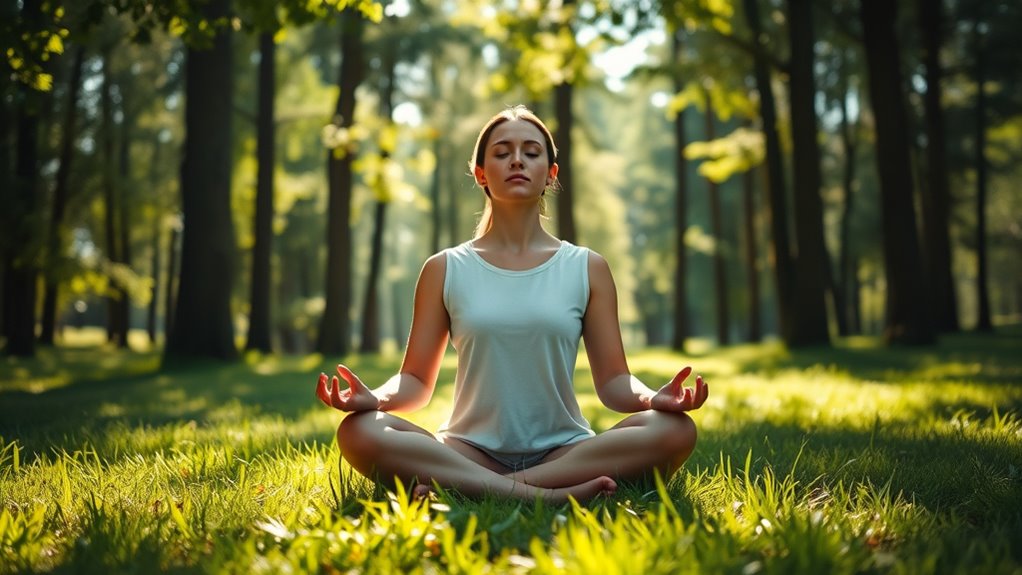
Breath awareness meditation is a simple yet powerful practice that centers your attention on your breathing to promote relaxation and mindfulness. When you intentionally focus on your breath, you create a moment of calm amid the chaos of daily life. This technique is a cornerstone of many relaxation techniques, as it helps you ground yourself in the present moment and reduce stress. As a beginner, you might find it helpful to start by simply observing your breath without trying to change it, noticing the natural rhythm of inhaling and exhaling.
Engaging in mindful breathing is foundational to breath awareness meditation. It involves paying close attention to the sensations of breathing—feeling the air enter your nostrils, the rise and fall of your chest or abdomen, and the gentle pause between breaths. By consciously observing these sensations, you anchor your awareness in the present, which is a core principle of mindfulness. This focus helps quiet the mental chatter and cultivates a sense of calm. As you practice, you may notice your mind wandering; that’s natural. Gently redirect your attention back to your breath without judgment. Over time, this process strengthens your ability to stay present and can improve overall mental clarity.
Focus on the sensations of breathing to anchor awareness and cultivate calm and clarity.
Incorporating breath awareness into your routine can serve as an effective relaxation technique. It’s accessible anywhere—whether you’re at home, in the office, or outdoors—and requires no special equipment. To get started, find a comfortable seated position, close your eyes if you like, and take a few deep breaths to settle in. Then, shift your focus to your natural breathing pattern. Don’t manipulate your breath; simply observe it. If your mind begins to race or your body feels tense, use your breath as an anchor. Deepen your inhalation slightly if that feels comfortable, or gently slow your exhalation to enhance relaxation. Over a few minutes, you’ll start noticing a sense of tranquility washing over you as your nervous system calms.
Practicing mindful breathing regularly can deepen your awareness and amplify the benefits of relaxation techniques. It’s a gentle way to reset your mental state, reduce anxiety, and foster emotional resilience. As you continue, you might experiment with different breathing patterns—such as counting your breaths or focusing on a specific sensation—to keep your practice engaging. Remember, consistency is key. Even a few minutes a day can markedly improve your ability to stay present, manage stress, and cultivate a peaceful mind. Breath awareness meditation isn’t about doing it perfectly; it’s about showing up and simply observing your breath with curiosity and kindness.
breath awareness meditation cushion
As an affiliate, we earn on qualifying purchases.
As an affiliate, we earn on qualifying purchases.
Frequently Asked Questions
Can Breath Awareness Meditation Help With Anxiety?
Yes, breath awareness meditation can help with anxiety by promoting stress reduction and enhancing mindfulness development. When you focus on your breath, you slow down your racing thoughts and calm your nervous system. This practice makes you more aware of the present moment, reducing feelings of worry and panic. Regularly practicing breath awareness meditation builds resilience against anxiety, helping you respond more calmly to stressful situations.
How Long Should I Practice Daily for Benefits?
You should aim for a practice duration of about 10 to 20 minutes daily to see benefits, and the ideal frequency is once or twice a day. Consistency is key, so setting a regular schedule helps you develop a habit. Start with shorter sessions if needed, then gradually increase your practice duration as you become more comfortable. With regular practice, you’ll notice improved focus, reduced stress, and greater overall well-being.
Is It Necessary to Sit in a Specific Posture?
You don’t need a strict posture for breath awareness meditation, but maintaining seated comfort helps you stay relaxed and focused. A flexible posture allows you to adjust for comfort and better breathing, so feel free to sit in a way that suits your posture flexibility. Whether cross-legged or on a chair, the key is to find a position that promotes seated comfort, enabling you to meditate without distraction or discomfort.
Can I Do This Meditation While Walking?
Yes, you can do breath awareness meditation as a walking meditation during outdoor practice. Walking meditation allows you to focus on your breath while moving, making it a dynamic way to stay present. Keep your steps slow and steady, paying attention to each inhale and exhale. This outdoor practice helps deepen your mindfulness, combining breath awareness with the natural environment for a calming, grounding experience.
Are There Any Health Conditions That Contraindicate This Practice?
Think of your body as a well-guarded fortress. If you have medical restrictions or breathing disorders, like asthma, these can act as locked gates, making breath awareness meditation tricky. Always consult your doctor before starting, because certain conditions might make your practice unsafe or uncomfortable. Listening to your body’s signals guarantees you meditate safely, respecting your fortress’s boundaries and keeping your health secure.
mindfulness meditation starter kit
As an affiliate, we earn on qualifying purchases.
As an affiliate, we earn on qualifying purchases.
Conclusion
Now that you’ve started practicing breath awareness meditation, you’re revealing a superpower that can transform your entire life. Imagine calming storms within your mind with a single breath, turning chaos into peace in an instant. This simple act can elevate your happiness, health, and clarity to levels you never thought possible—like discovering a secret portal to endless serenity. Keep at it, and watch your world change in ways that feel downright miraculous.
comfortable meditation seat
As an affiliate, we earn on qualifying purchases.
As an affiliate, we earn on qualifying purchases.
guided breathing meditation app
As an affiliate, we earn on qualifying purchases.
As an affiliate, we earn on qualifying purchases.