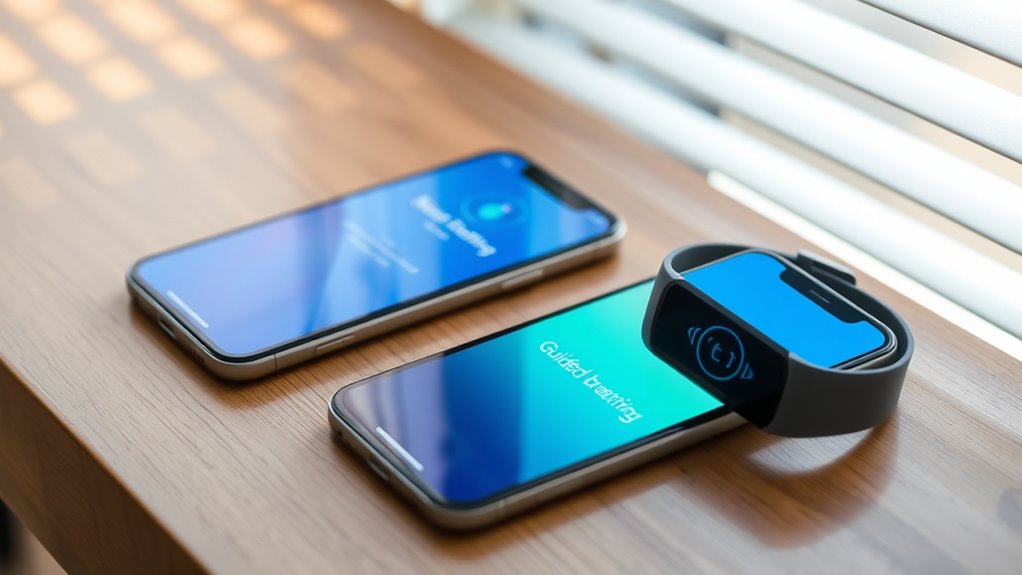

Guided breathing apps and wearables are easy-to-use tools that help you manage stress in real time. They guide you through calming breathing exercises with visual cues, sounds, or vibrations, making it simple to stay centered wherever you are. Wearables also monitor your physiological responses, letting you see when you’re stressed and prompting you to breathe calmly. By customizing these techniques to your needs, you can boost your mental resilience daily—discover how these tools support your calmness journey.
Key Takeaways
- Guided breathing apps and wearables use visual cues and vibrations to help users practice mindfulness and reduce stress effectively.
- Wearables monitor physiological signals like heart rate and stress indicators, prompting timely breathing exercises.
- Personalized programs tailor breathing techniques based on individual stress responses for more effective relaxation.
- These tools enable quick mental calmness during stressful moments and promote daily mindfulness habits.
- They enhance awareness of stress triggers and support resilience through real-time feedback and consistent practice.

In today’s fast-paced world, guided breathing apps and wearables have become popular tools for managing stress and improving mental well-being. These devices and apps leverage technology to help you practice mindfulness techniques, making it easier to incorporate stress reduction strategies into your daily routine. Instead of relying solely on traditional methods, you now have access to real-time guidance that can lead to immediate calmness and greater mental clarity. Incorporating mindfulness techniques into your daily habits can significantly enhance your overall mental health and resilience.
When you use guided breathing apps, you’re often guided through specific breathing exercises designed to activate your parasympathetic nervous system, which promotes relaxation. These apps typically feature visual cues, gentle sounds, or vibrations to assist you in maintaining steady inhalations and exhalations. By focusing on your breath, you’re practicing mindfulness techniques that anchor your attention to the present moment, helping you detach from worries and mental clutter. This intentional focus on breathing can profoundly reduce stress levels, especially during hectic or overwhelming times.
Wearables take this a step further by providing continuous feedback on your physiological responses. Devices like smartwatches monitor your heart rate, variability, and even skin conductance to gauge your stress levels in real time. When your data indicates elevated stress, the wearable can prompt you to pause and begin a guided breathing session. This proactive approach encourages you to take control of your mental state before stress becomes overwhelming. Over time, using these tools consistently can improve your ability to recognize stress triggers and employ mindfulness techniques more effectively, fostering long-term stress reduction.
These devices often come with personalized programs tailored to your individual needs. For example, if your heart rate variability suggests heightened stress, the app or wearable might suggest a specific breathing pattern or mindfulness exercise. This customization helps you target your stress more precisely, making your relaxation practices more effective. Plus, many apps include reminders or notifications to prompt you to take a break and breathe deeply, integrating stress reduction seamlessly into your busy schedule.
Ultimately, guided breathing apps and wearables empower you to take active control over your mental health. They turn mindfulness techniques into accessible, daily habits that can be practiced anytime and anywhere. With consistent use, you’ll develop greater awareness of your body’s stress signals and strengthen your ability to calm your mind quickly. In our demanding world, these technological tools offer a practical, effective way to foster resilience, reduce stress, and cultivate a sense of calm whenever you need it most.

Stress Relief Breathing Tool – vidaBALL® Handheld Guided Breathing Device for Calm, Anxiety Relief, Desk Stress & Sleep – No App Required
Handheld stress relief breathing tool designed to calm the nervous system through guided rhythm, light, and vibration.
As an affiliate, we earn on qualifying purchases.
As an affiliate, we earn on qualifying purchases.
Frequently Asked Questions
Are Guided Breathing Apps Suitable for Children?
Yes, guided breathing apps can be suitable for children when they offer age-appropriate content. You should look for apps that engage children’s attention with fun visuals and simple instructions. Make sure the exercises match their developmental level to keep their interest and guarantee they benefit from the calming techniques. Always supervise their use to create a positive experience and help them develop healthy relaxation habits.
Can Wearables Track Emotional Stress Levels Accurately?
Did you know that wearables can achieve up to 95% heart rate accuracy? They can track emotional stress levels, but their stress detection reliability varies. While many devices monitor heart rate fluctuations associated with stress, factors like movement or improper fit can affect accuracy. So, you might get helpful insights, but don’t rely solely on wearables for precise stress assessment—they’re best used alongside other methods.
How Secure Is My Data With These Apps and Devices?
Your data with these apps and devices is generally secure, but privacy concerns still exist. They use data encryption to protect your information, reducing the risk of unauthorized access. However, always review the privacy policies and settings, as some companies may share data with third parties or use it for marketing. Stay cautious and choose reputable brands that prioritize strong security measures to keep your personal info safe.
Do These Tools Replace Professional Mental Health Treatment?
These tools don’t replace professional mental health treatment; they’re like tiny helpers in your self-guided relaxation toolkit. While they offer valuable stress relief as a complementary therapy, managing serious issues requires a trained therapist’s support. Think of them as boost buttons, not full substitutes. Relying solely on them can overlook underlying problems that need expert care. Always seek professional help for ongoing or severe mental health concerns.
What Features Should I Look for in a Good Breathing Wearable?
When choosing a good breathing wearable, look for biometric sensors that accurately monitor your breathing patterns and physiological responses. A user-friendly interface is essential, so you can easily navigate and customize your experience. Make sure it offers real-time feedback and adjustable settings to suit your needs. These features help you stay engaged and effective, but remember, they should complement, not replace, professional mental health treatment when needed.
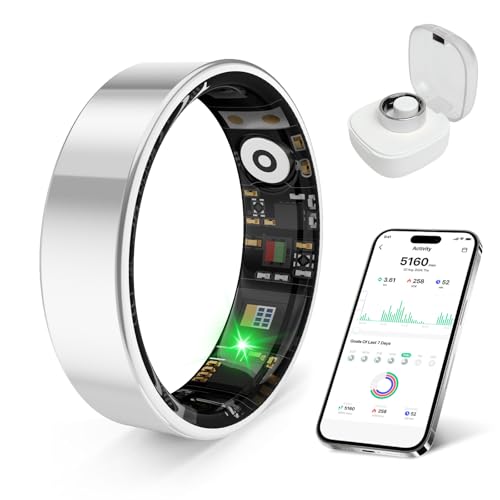
prxxhri Smart Health Ring, Featuring Stress and Sleep Monitoring Functions, Compatible with iOS and Android,Waterproof Fitness Tracker for Women & Men, No Subscription Fee. (Silver, 8)
【Check the Size Before Purchase】 Before buying the prxxhri Smart Ring, we strongly suggest that you refer to…
As an affiliate, we earn on qualifying purchases.
As an affiliate, we earn on qualifying purchases.
Conclusion
Just like the soothing whispers of a wise old sage, guided breathing apps and wearables help you find calm amid chaos. They’re your modern-day Zen masters, guiding you to breathe deeply and reset when life gets overwhelming. Embrace this technology as your personal serenity toolkit—because, in the words of Lao Tzu, “A journey of a thousand miles begins with a single breath.” Let these tools be your path to inner peace.

LICNPHLL Smart Bracelet,Activity Trackers for Man&Women,Fitness Tracker Band, 24H Sleep Tracker,All-Day Continuous Heart Rate Blood Oxygen Stress HRV Monitor,170+ Sport Mode with Free APP (Green)
【More Insights】- LICNPHLL fitness tracker for women&man uses advanced sensors to continuously and accurately monitor your heart rate,…
As an affiliate, we earn on qualifying purchases.
As an affiliate, we earn on qualifying purchases.

Breathing Lamp Guided Visual Meditation Tool for Mindfulness,Anxiety Relief&Calm Your Mind for Stress&Visual Relaxation and Restful Sleep,478 Seconds Breathing Rate Change 3 Colors,Gift for Kids
Breathing Lamp Function: A mindful breathing lamp is a powerful and effective tool that can help you reduce…
As an affiliate, we earn on qualifying purchases.
As an affiliate, we earn on qualifying purchases.