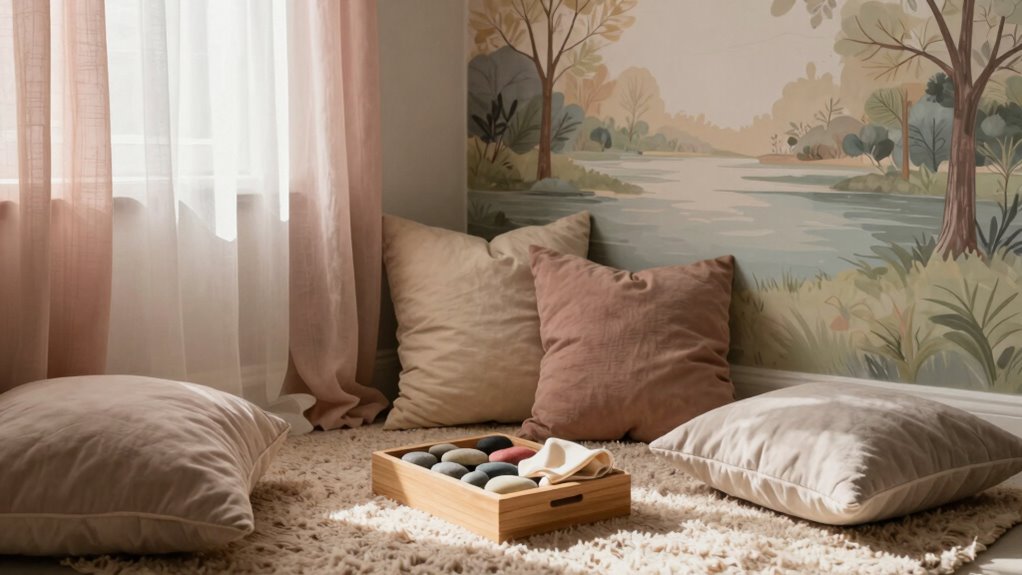

To build a calming sensory corner, choose soft textures, gentle lighting, and soothing sounds to create a peaceful environment. Include sensory tools like fidget toys and textured fabrics that encourage self-soothing without overwhelming the senses. Keep the space uncluttered, safe, and low-traffic to reduce stress. Use sturdy, non-toxic materials and regularly inspect items for safety. If you continue exploring, you’ll discover even more ways to design an inviting, stress-free space that promotes emotional regulation and comfort.

Get beauty and skincare favorites delivered free with Prime
- Fast, free delivery on millions of items
- Prime Video, Amazon Music and more included
- Member-only deals all year
Key Takeaways
- Choose a quiet, low-traffic location with soft lighting and minimal noise to create a calming environment.
- Incorporate gentle, textured sensory tools like soft fabrics, stress balls, and fidget items for soothing engagement.
- Use adjustable elements such as dimmable lights and removable covers to control stimulation levels.
- Keep the space uncluttered with only a few purposeful, safe items easily accessible for independent use.
- Regularly assess and refresh the space to ensure items remain safe, clean, and suitable for calming purposes.

Creating a sensory corner can be a game-changer for children who need a calming or stimulating space. When designing this special area, your goal is to create an environment that helps the child regulate their emotions and sensory input without feeling overwhelmed. To achieve this, focus on incorporating interactive elements that engage their senses in a gentle, controlled manner. Items like textured fabrics, soft lighting, and calming sounds can make the space inviting. Toys such as sensory balls, fidget tools, or stress-relief items allow children to explore and self-soothe through touch and movement. Keep in mind that these interactive elements should be easy to access and safe to use, enabling children to independently engage with their environment comfortably.
Safety considerations are paramount when building a sensory corner. You want to guarantee that all materials and objects are non-toxic, free of small parts, and sturdy enough to withstand active use. Avoid items with sharp edges or anything that could pose a choking hazard. The furniture should be stable, with no risk of tipping or collapsing. Padding or soft mats on the floor can prevent injuries if a child falls or stumbles, and covering outlets or securing cords will eliminate potential hazards. Regularly check the space for wear and tear, replacing worn or broken items promptly. It’s also wise to keep the area in a low-traffic part of your home or classroom, reducing the chance of accidental bumps or disturbances that might startle or overstimulate your child. Additionally, understanding sensory processing can help you better tailor the environment to your child’s unique needs. Recognizing sensory sensitivities is essential in creating an effective and supportive space. Incorporating sensory-friendly materials can further enhance comfort and safety. Engaging in sensory integration activities can also support your child’s development and help them adapt to various stimuli. Being aware of sensory overload cues can assist you in adjusting the environment promptly to prevent distress.
When selecting sensory tools, opt for those that can be easily cleaned and sanitized, especially if multiple children will use the space. Incorporate adjustable elements, like dimmable lighting or removable covers, so you can tailor the environment to your child’s needs on any given day. Remember, the goal is to create a calming haven, not an overload of stimuli. Avoid cluttering the space with too many objects; instead, choose a few well-chosen items that serve specific calming purposes. By thoughtfully integrating interactive elements with strong safety considerations, you’ll craft a sensory corner that offers comfort and control, helping your child self-regulate and feel secure in their environment.
calming sensory corner sensory toys
As an affiliate, we earn on qualifying purchases.
As an affiliate, we earn on qualifying purchases.
Frequently Asked Questions
Can Sensory Corners Be Personalized for Individual Needs?
Yes, sensory corners can definitely be personalized for individual needs. You can explore various personalization options by incorporating items that match your sensory preferences, such as specific textures, calming lights, or soothing sounds. Think about what helps you relax or focus best, then select elements that cater to those preferences. Customizing your sensory corner guarantees it becomes a calming space tailored specifically to your sensory needs, enhancing comfort and effectiveness.
How Often Should Sensory Corners Be Cleaned?
Think of your sensory corner as a garden that needs regular care. You should clean it weekly to prevent dust and germs from building up. Incorporate simple maintenance routines like wiping surfaces, vacuuming soft toys, and checking for wear and tear. This consistent cleaning frequency keeps the space safe and inviting, ensuring it remains a calming retreat rather than an overstimulating clutter zone.
Are Sensory Corners Effective for All Age Groups?
Sensory corners can be effective for all age groups because they support sensory integration and provide calming techniques tailored to individual needs. Whether for children or adults, these spaces help reduce overstimulation and promote relaxation. You can customize sensory items and activities to suit different age-related preferences, making your sensory corner a versatile tool for calming anyone, regardless of age. Proper design guarantees everyone benefits from this calming environment.
What Safety Considerations Are Important for Sensory Corners?
You need to prioritize safety hazards in your sensory corner by regularly inspecting equipment for stability and damage. Confirm all furniture and sensory tools are secure and stable to prevent falls or injuries. Use non-toxic, hypoallergenic materials, and keep the space clutter-free to avoid tripping hazards. Supervise children at all times, and clearly mark any potentially risky items. These steps help create a safe, calming environment that minimizes overstimulation.
How Can I Encourage a Child to Use the Sensory Corner?
You might worry your child won’t want to use the sensory corner, but you can encourage them by making sensory play inviting and fun. Use calming techniques like gentle voice prompts and positive reinforcement to guide them. Show enthusiasm and let them explore at their own pace. Over time, they’ll associate the space with relaxation, making it a go-to spot for calming down whenever needed.
fidget toys for children sensory tools
As an affiliate, we earn on qualifying purchases.
As an affiliate, we earn on qualifying purchases.
Conclusion
Creating a calming sensory corner isn’t just about choosing the right tools—it’s about crafting a space where your child feels safe and soothed. When you notice a favorite soft blanket or gentle light, it’s no coincidence; these small details build comfort and trust. As you tailor this space, remember that each calming element becomes a quiet ally in helping your child navigate overstimulation, turning everyday moments into peaceful retreats where calmness naturally unfolds.
soft textured fabrics for sensory space
As an affiliate, we earn on qualifying purchases.
As an affiliate, we earn on qualifying purchases.
dimmable soft lighting for sensory room
As an affiliate, we earn on qualifying purchases.
As an affiliate, we earn on qualifying purchases.
Fall Picks
fall essentials
As an affiliate, we earn on qualifying purchases.