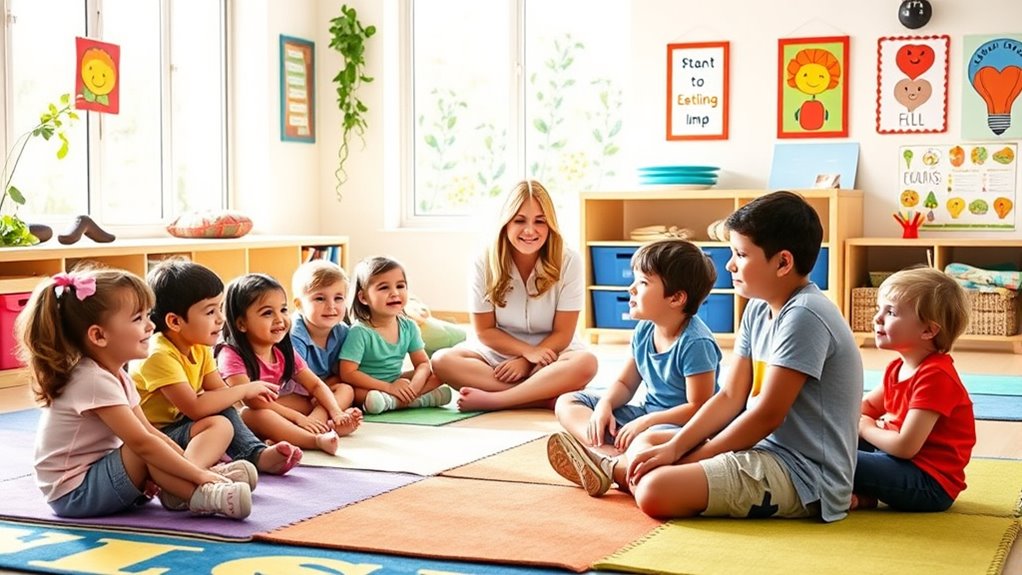

Talking about emotions is key to building your child’s emotional intelligence. By naming feelings as they happen and encouraging them to express their thoughts, you help your child recognize and understand their emotions. Respond with empathy and validate their feelings to foster trust. Modeling healthy emotional management teaches them how to handle their own feelings. Creating a safe, supportive environment will boost their confidence in sharing and managing emotions—continue to explore how these strategies can strengthen your child’s EQ.

Get beauty and skincare favorites delivered free — and shop member deals
- Fast, free delivery on millions of items
- Access to Prime Big Deal Days deals on October 6–7
- Prime Video, Amazon Music and more included
Key Takeaways
- Regularly label and discuss emotions to help children recognize and articulate their feelings effectively.
- Use empathetic responses to validate children’s emotions, fostering a safe environment for emotional expression.
- Model healthy emotional management by sharing your feelings and demonstrating constructive coping strategies.
- Create a supportive space that encourages open conversations about emotions, emphasizing that all feelings are valid.
- Incorporate tools like reflection questions and mindfulness activities to enhance emotional awareness and regulation skills.

Have you ever wondered how to help children develop stronger emotional skills? One of the most effective ways is by talking about emotions openly and regularly. When you discuss feelings with children, you’re helping them build emotional recognition, which is essential for understanding their own emotions and those of others. The more you talk about emotions, the better they become at identifying different feelings, whether it’s happiness, anger, sadness, or frustration. This recognition creates a foundation for empathy, enabling them to connect with others on a deeper level.
Start by naming emotions as they happen. For example, if your child is upset after losing a game, say, “It looks like you’re feeling disappointed.” This simple acknowledgment encourages them to label their own feelings and understand what they’re experiencing. As they grow, ask questions like, “How did that make you feel?” or “What do you think caused that feeling?” These prompts invite children to reflect on their emotions, reinforcing emotional recognition and helping them articulate their feelings clearly.
Empathetic communication is equally important in nurturing emotional intelligence. When you respond with understanding and validation, you teach children that their feelings are legitimate and worth exploring. Instead of dismissing emotions like anger or sadness, acknowledge them and show compassion. For instance, if your child is angry about a conflict, you might say, “I see you’re upset. That’s a normal reaction when things don’t go your way.” This approach demonstrates empathy, encouraging children to express their feelings openly without fear of judgment.
It’s also crucial to model empathetic communication yourself. Share your feelings honestly and demonstrate how you handle emotions. For example, if you’re stressed, say, “I’m feeling overwhelmed right now, but I’m taking deep breaths to calm down.” Children learn a lot from observing how adults manage their emotions. When they see you acknowledge your feelings and respond with kindness, they’re more likely to do the same.
Creating a safe space for conversations about emotions helps children feel comfortable sharing. Use age-appropriate language and be patient as they learn to express themselves. Reinforce that all feelings are okay and that talking about them is a healthy way to cope. Additionally, understanding that emotional skills can be cultivated through regular practice encourages parents and caregivers to be consistent in their approach. Incorporating knowledge from Personality Test frameworks can also guide tailored communication strategies, making emotional development more effective. Recognizing that emotional intelligence is a skill that can be developed over time gives both parents and children confidence in their growth journey. Developing these skills can also benefit from incorporating practices like meditation, which has been shown to enhance emotional regulation and awareness, further supporting children’s emotional growth.
emotional intelligence building toys for children
As an affiliate, we earn on qualifying purchases.
As an affiliate, we earn on qualifying purchases.
Frequently Asked Questions
How Early Can Children Start Understanding Their Emotions?
Children can start understanding their emotions as early as age one, reaching emotional milestones like recognizing basic feelings. You’ll notice early recognition through their reactions to different situations, such as smiling when happy or fussing when upset. By paying attention to these signs, you help your child develop emotional awareness. Supporting their emotional growth now sets the foundation for building strong empathy and self-regulation skills later in life.
What Are Effective Ways to Model Emotional Regulation?
To effectively model emotional regulation, you should demonstrate consistency in managing your own emotions, showing children how to stay calm during stress. Use emotional storytelling to share experiences where you handled feelings constructively. When you openly express your emotions calmly, children learn by example, understanding healthy ways to cope. Your consistent behavior and honest storytelling create a safe environment, encouraging children to develop their own emotional regulation skills.
How Do Cultural Differences Influence Emotional Expression?
Think of cultural differences as different maps guiding emotional expression. Cultural norms shape how you show feelings—what’s acceptable or taboo varies widely. You might smile when upset in one culture, but remain stoic in another. These differences influence how children learn to express emotions. Respecting these varied maps helps you understand and support children’s emotional growth, fostering empathy and better communication across diverse backgrounds.
Can Talking About Emotions Improve Academic Performance?
Talking about emotions can profoundly improve emotional literacy, which helps children understand and manage their feelings better. When you encourage open conversations about emotions, you foster emotional awareness, leading to better focus and reduced stress in the classroom. This improved emotional regulation boosts academic success, as children are more engaged, motivated, and able to overcome challenges. So, yes, discussing emotions directly supports your child’s academic performance.
How Do Parents Handle Children’S Emotional Outbursts Constructively?
When your child has an emotional outburst, handle it with emotional coaching and calming techniques. Stay calm yourself, acknowledge their feelings, and encourage them to express emotions constructively. Use calming techniques like deep breathing or counting to ten to help them settle down. By validating their emotions and guiding them through the process, you teach your child healthy ways to manage feelings, fostering emotional growth and resilience.
children's emotion recognition books
As an affiliate, we earn on qualifying purchases.
As an affiliate, we earn on qualifying purchases.
Conclusion
By nurturing your child’s emotional intelligence, you’re planting seeds in a garden that will bloom with understanding and empathy. When you listen and validate their feelings, you’re watering these seeds, helping them grow strong and resilient. Imagine their heart as a vibrant tree, branches reaching out to connect with others, leaves fluttering with compassion. With your guidance, their emotional landscape will flourish, creating a future full of kindness and connection.
As an affiliate, we earn on qualifying purchases.
empathy development tools for children
As an affiliate, we earn on qualifying purchases.
As an affiliate, we earn on qualifying purchases.
Fall Picks
fall essentials
As an affiliate, we earn on qualifying purchases.