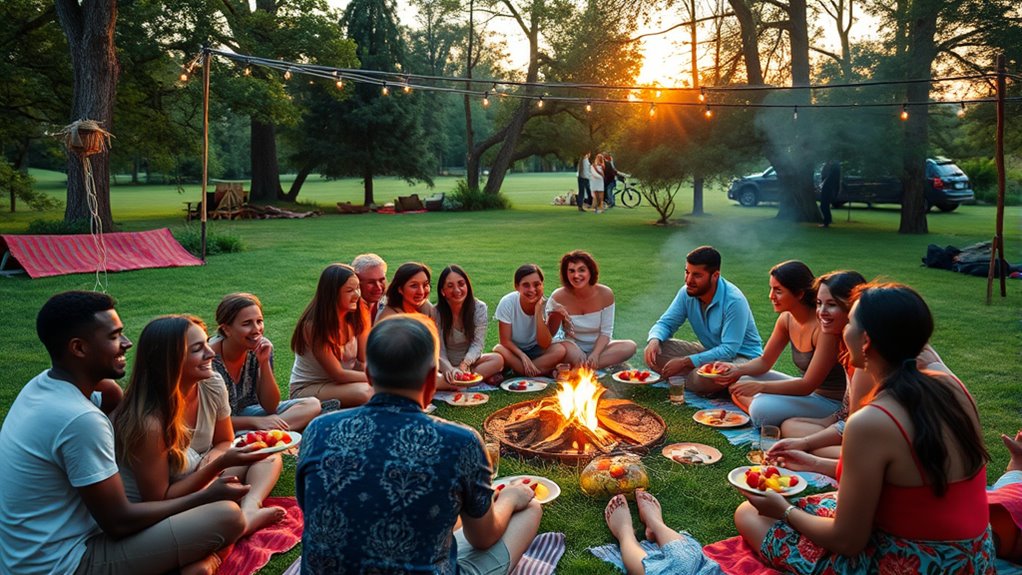

To create lasting connections at retreats, focus on building trust through honesty, respect, and sharing personal stories. Set clear intentions, establish ground rules, and encourage vulnerability by engaging in activities like sharing circles. Foster an environment of openness and patience, model genuine behavior, and prioritize emotional safety. When participants feel connected and supported, bonds naturally deepen. Keep exploring simple, effective strategies to strengthen community—your next steps can make a meaningful difference.
Key Takeaways
- Establish clear intentions and ground rules to foster trust and safety among participants.
- Use activities like sharing circles and storytelling to encourage vulnerability and genuine connection.
- Model openness by sharing personal experiences to inspire honesty and emotional sharing.
- Promote mindfulness and attentive listening to deepen presence and empathy within the group.
- Cultivate patience and sincerity, recognizing that authentic bonds develop gradually beyond the retreat.
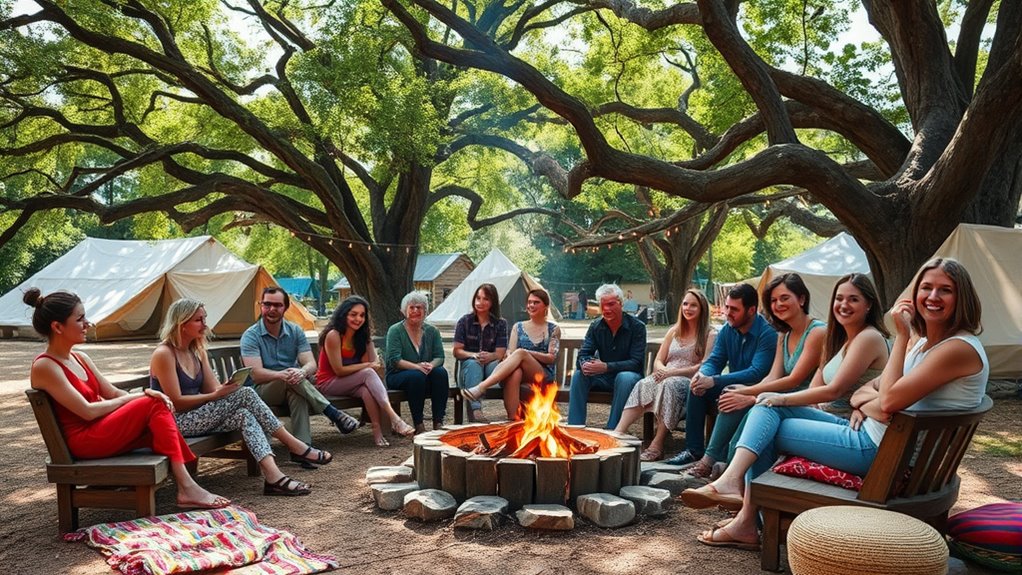
Community building at retreats is essential for fostering meaningful connections and creating a supportive environment. When you focus on facilitating trust, you lay the foundation for genuine relationships to develop. Trust doesn’t happen overnight; it’s built through consistent actions, openness, and vulnerability. As a facilitator, your role is to create spaces where participants feel safe enough to share their true selves. This means encouraging honest conversations, listening without judgment, and modeling transparency yourself. When you openly share your experiences or admit uncertainties, you demonstrate vulnerability, which in turn invites others to do the same. This mutual vulnerability helps break down barriers and accelerates the bond among participants.
Building trust fosters genuine connections and creates a safe space for authentic sharing and vulnerability.
To facilitate trust effectively, set clear intentions at the beginning of the retreat. Let everyone know that the environment is confidential, respectful, and free of judgment. Establishing these ground rules early on reassures participants that their voices will be valued and protected. Engage in activities that promote transparency, such as sharing circles or personal storytelling sessions. These activities encourage participants to open up about their experiences, struggles, and aspirations, which fosters a sense of shared humanity. When people see others expressing vulnerability, they often feel more comfortable doing the same. Over time, this openness transforms the retreat into a safe space where authentic connections flourish.
Creating opportunities for vulnerability also involves being attentive to emotional cues and providing gentle prompts. Recognize when someone might be hesitant to share and offer encouragement rather than pressure. Sometimes, simply acknowledging the courage it takes to speak up can boost confidence and deepen trust. As trust grows, participants become more willing to engage in deeper conversations, which strengthens the community fabric. Remember, fostering vulnerability isn’t about forcing openness but rather about nurturing an environment where it naturally occurs. When you succeed in this, you cultivate a space where everyone feels valued and understood. Incorporating mindfulness techniques can further enhance the sense of presence and compassion within the group, making it easier for participants to connect authentically.
Ultimately, facilitating trust and fostering vulnerability are ongoing processes that demand sincerity and patience. By setting the tone with genuine intention, modeling openness yourself, and creating a safe environment for sharing, you help build a community where lasting connections can form. These connections become the heart of the retreat experience, empowering participants to leave feeling more connected, supported, and inspired. When community building is prioritized through trust and vulnerability, the effects extend well beyond the retreat, enriching lives long after the event ends.
retreat sharing circle kit
As an affiliate, we earn on qualifying purchases.
As an affiliate, we earn on qualifying purchases.
Frequently Asked Questions
How Do I Handle Introverted Participants in Community Activities?
You handle introverted participants by incorporating gentle icebreaker strategies that encourage participation without pressure. Offer quiet space design options where they can retreat and recharge, ensuring they feel comfortable. Respect their pace and avoid forcing interactions, instead providing opportunities for meaningful one-on-one conversations or small group activities. This approach fosters trust, allowing introverted attendees to connect at their own comfort level and build lasting relationships within the community.
What Are Effective Ways to Sustain Connections After the Retreat Ends?
Think of post-retreat engagement as tending a garden—you need consistent care. To sustain connections, encourage peer mentorship programs that keep the dialogue alive. Use social media groups or regular virtual check-ins to nurture relationships beyond the retreat. By actively supporting ongoing communication, you transform fleeting moments into roots that grow stronger, allowing your community to flourish long after the event ends.
How Can Facilitators Encourage Genuine Conversations Among Attendees?
You can encourage genuine conversations by incorporating icebreaker techniques that make attendees comfortable and engaged. Use storytelling exercises to help participants share personal experiences and build trust. Keep activities interactive and open-ended, prompting attendees to listen actively and connect on a deeper level. By creating a safe space for honest dialogue, you foster authentic interactions that lay the groundwork for lasting relationships long after the retreat ends.
What Activities Best Promote Inclusivity and Diversity?
You can promote inclusivity and diversity through activities like collaborative storytelling, where everyone shares their cultural awareness and personal experiences. For example, at a recent retreat, participants created a shared story reflecting their backgrounds, fostering understanding and respect. This activity encourages active listening, celebrates differences, and creates a safe space for diverse voices, ultimately strengthening connections and building a more inclusive community during the retreat.
How Do I Measure the Success of Community Building Efforts?
You measure the success of your community building efforts by tracking participant engagement and collecting feedback. Notice how attendees interact, share, and connect during activities, indicating a sense of belonging. Regularly gather feedback through surveys or informal conversations to understand their experiences. When engagement increases and feedback highlights positive connections, you know your efforts are fostering a strong, lasting community. Keep monitoring these indicators to continually improve your retreat’s impact.
mindfulness and meditation tools for groups
As an affiliate, we earn on qualifying purchases.
As an affiliate, we earn on qualifying purchases.
Conclusion
Remember, building genuine connections at retreats isn’t about forcing interactions or perfect moments—it’s about showing up authentically and being open to others. Some might worry it takes too much effort or that connections fade quickly, but with small, meaningful gestures, you’ll foster bonds that last beyond the retreat. So, embrace vulnerability and trust the process. The more you invest in others, the richer your community becomes—creating lasting friendships that truly stand the test of time.
trust building activities for retreats
As an affiliate, we earn on qualifying purchases.
As an affiliate, we earn on qualifying purchases.
emotional safety workshop materials
As an affiliate, we earn on qualifying purchases.
As an affiliate, we earn on qualifying purchases.