
To achieve more consistent creative output, focus on shaping your mindset and environment, not just relying on willpower. By adopting a growth mindset and normalizing setbacks, you stay motivated through slow progress. Creating a dedicated space with fewer distractions boosts focus and momentum. When you combine mental shifts with physical tweaks, you set a sustainable foundation for creativity. Keep exploring to discover how these strategies can transform your creative flow.

Get beauty and skincare favorites delivered free with Prime
- Fast, free delivery on millions of items
- Prime Video, Amazon Music and more included
- Member-only deals all year
Key Takeaways
- Cultivating a growth mindset reduces fear of setbacks and encourages continuous progress.
- Creating an inspiring, organized environment minimizes distractions and boosts creative momentum.
- Small mental shifts, like normalizing creative struggles, foster resilience and sustained effort.
- Designing routines and dedicated spaces reinforces creative habits and reduces reliance on willpower.
- Combining mindset shifts with environmental adjustments leads to more consistent, fulfilling creative output.
Many believe that discipline is the key to maintaining a steady flow of creative work, but the truth is, relying on willpower alone often falls short. Discipline can push you to sit down and work, but without the right mindset shifts and environmental factors, that effort may not lead to consistent results. Your mindset shapes how you approach your creative projects, and small mental adjustments can make a significant difference. Instead of viewing creativity as a fleeting talent, see it as a skill that you can nurture through deliberate shifts in your attitude. Embrace a growth mindset, where setbacks are opportunities to learn rather than proof of inadequacy. This mental shift encourages resilience and keeps you motivated, even when progress feels slow.
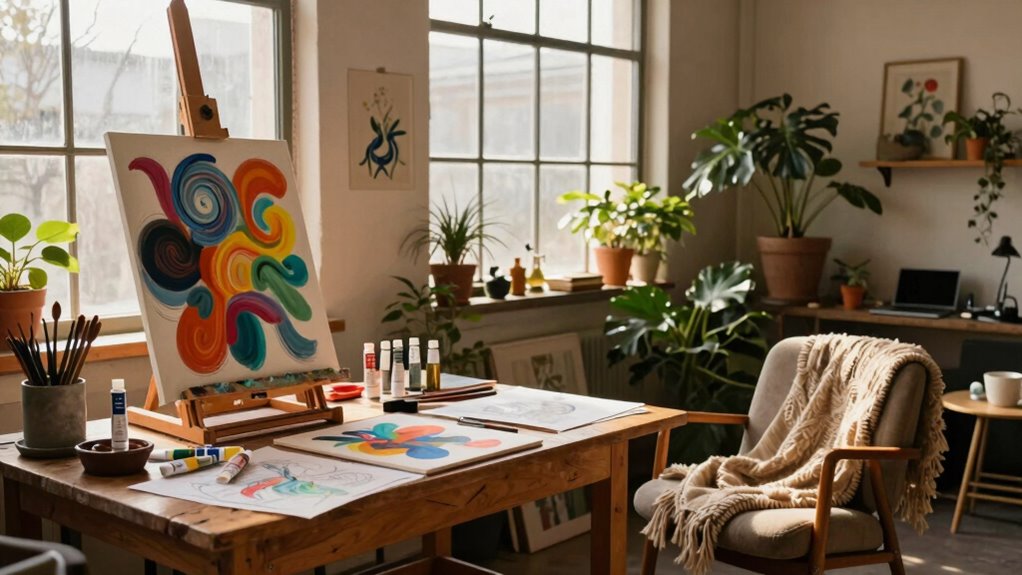
Environmental factors play a vital role in fostering sustainable creative habits. If your workspace is cluttered or distracting, it’s easy to lose focus and derail your momentum. You need an environment that signals to your brain that it’s time to create. This might mean organizing your space, limiting interruptions, or setting up dedicated zones for different tasks. Small changes, like adjusting the lighting or having inspiring objects nearby, can boost your mood and productivity. It’s not just about physical space; your routines matter too. Establishing consistent work times helps your mind associate certain periods with creative effort, making it easier to slip into a productive mindset. Recognizing that mindset and environment are interconnected can help you develop more holistic strategies for sustained creativity.
The key is to recognize that discipline isn’t enough on its own. Instead, you want to cultivate mental and environmental conditions that naturally support your creative flow. When you shift your mindset to see creativity as a process that can be managed and improved, it becomes less about forcing yourself and more about creating the right conditions for inspiration to strike. At the same time, optimizing your environment reduces friction and makes it easier to show up and do the work. Over time, these adjustments become habits, reducing the reliance on sheer willpower and turning creative work into a sustainable part of your life.
You don’t have to overhaul everything overnight. Start small by tweaking your mindset—remind yourself that setbacks are normal and that consistency matters more than perfection. Then, gradually optimize your environment to support your efforts. Combining these mindset shifts with strategic environmental changes creates a powerful foundation for more consistent, fulfilling creative output. It’s not about working harder; it’s about working smarter, with conditions that naturally foster your creative best.
As an affiliate, we earn on qualifying purchases.
Frequently Asked Questions
How Can I Overcome Creative Burnout Effectively?
To overcome creative burnout, you should practice mindfulness techniques like meditation or deep breathing to clear your mind. Take breaks to step back and focus on activities that reignite your passion. Schedule time for exploration without pressure, allowing your creativity to renew naturally. Connecting with others or seeking new inspiration can also boost your motivation. These steps help you recharge emotionally and mentally, making it easier to return to your creative work refreshed.
What Role Does Environment Play in Creative Consistency?
Did you know that a well-designed environment can boost creativity by up to 60%? Your ambient influence and physical space play essential roles in maintaining consistency. When your surroundings are inspiring and organized, they foster focus and stimulate ideas. By optimizing your workspace—adding natural light, reducing clutter, or incorporating inspiring elements—you create a supportive environment that encourages continuous creative flow and helps you stay committed to your projects.
Can Collaboration Improve My Creative Output?
Yes, collaboration can boost your creative output by fostering idea generation through diverse perspectives. When you work with others, you’re exposed to new insights and approaches that challenge your thinking. This variety sparks innovation and helps you break through creative blocks. By embracing collaboration, you tap into a collective energy that enhances your ability to produce fresh, compelling ideas consistently, making your creative process more dynamic and effective.
How Do I Handle Creative Blocks Without Losing Momentum?
To handle creative blocks without losing momentum, embrace mindset shifts that view blocks as opportunities, not setbacks. Take time for idea incubation—step back and let your subconscious work. Break big tasks into smaller steps to keep progress steady, and trust that inspiration will return. By shifting your perspective and allowing ideas to simmer, you stay motivated and foster a more resilient, creative flow even during challenging times.
What Habits Support Sustainable Creativity Long-Term?
To support sustainable creativity long-term, you should develop mindful routines that keep you grounded and focused. Incorporate diverse inspirations into your daily life—read widely, explore new art forms, or travel—to spark fresh ideas. Regularly stepping outside your comfort zone helps prevent stagnation. By blending mindful practices with varied influences, you’ll nurture a resilient creative mindset that endures and evolves over time, keeping your work vibrant and fulfilling.
adjustable desk lighting for creativity
As an affiliate, we earn on qualifying purchases.
As an affiliate, we earn on qualifying purchases.
Conclusion
So, here’s the irony: the secret to consistent creativity isn’t just about pushing yourself harder. It’s about letting go of the myth that discipline alone will do the trick. Sometimes, the most productive thing you can do is give yourself permission to pause, relax, and trust the process. After all, the most surprising bursts of brilliance often come when you stop forcing it—and that’s the real secret to staying inspired.
dedicated creative workspace setup
As an affiliate, we earn on qualifying purchases.
As an affiliate, we earn on qualifying purchases.
noise-canceling headphones for focus
As an affiliate, we earn on qualifying purchases.
As an affiliate, we earn on qualifying purchases.
Columbus Day / Indigenous Peoples' Day Picks
long weekend sales
As an affiliate, we earn on qualifying purchases.