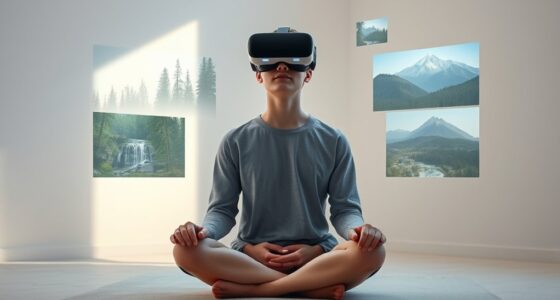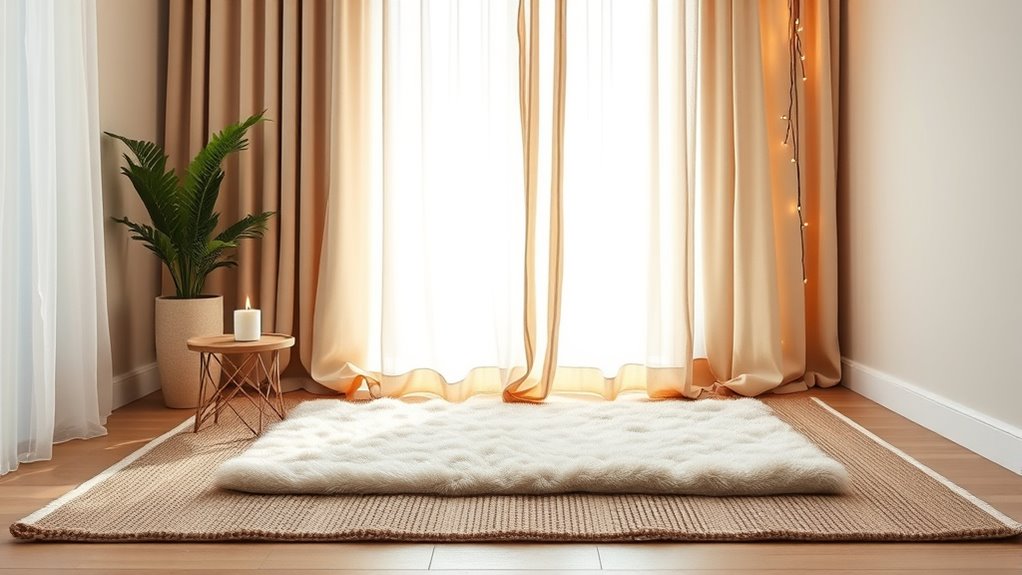

To create a meditation space at home, choose a quiet, clutter-free spot away from distractions, ideally with soft, warm lighting like candles or dimmable lamps. Add meaningful objects such as crystals, plants, or calming décor to foster tranquility. Incorporate gentle sounds or nature recordings to support mindfulness, and personalize the area with inspiring quotes or spiritual items. Keep the space inviting and consistent, and discover how to make it a nurturing sanctuary by exploring further tips.
Key Takeaways
- Choose a quiet, clutter-free spot away from distractions to establish a consistent meditation area.
- Incorporate calming elements like candles, crystals, or natural objects to promote presence and tranquility.
- Use soft, warm lighting such as candles or dimmable lamps to create an inviting, relaxing atmosphere.
- Add gentle sounds like nature recordings or calming music to support focus and mindfulness.
- Personalize the space with inspiring items and maintain its cleanliness to encourage regular, meaningful practice.
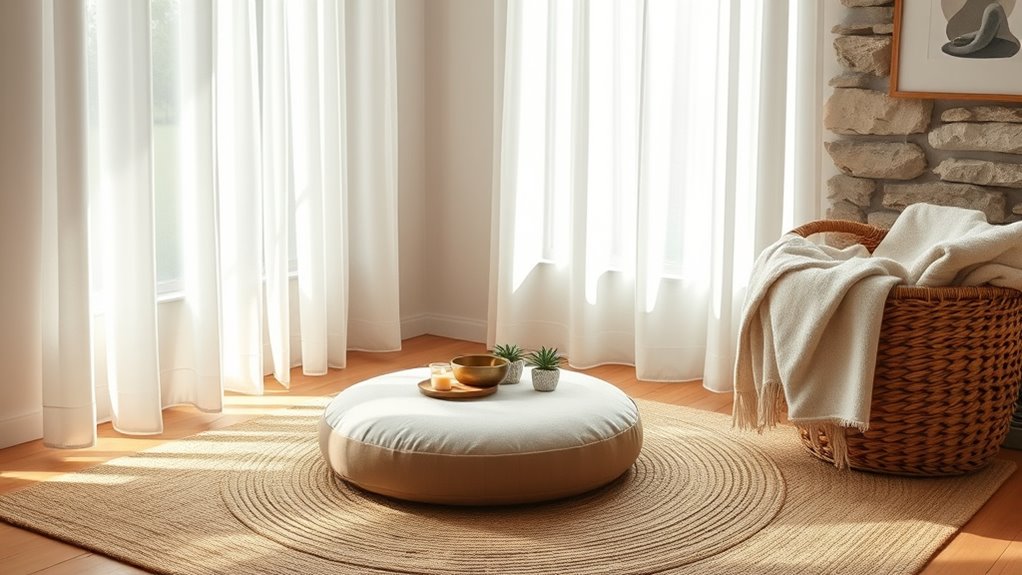
Have you ever wondered how a dedicated meditation space can transform your practice? Creating a specific area in your home designed for meditation can deepen your mindfulness and help you establish a consistent routine. The first step is selecting a quiet spot where you won’t be disturbed, ideally away from distractions like TVs or busy household areas. Once you’ve chosen the location, focus on making it inviting and calming, which encourages you to sit down and settle into your practice without resistance.
One of the most effective ways to enhance your meditation space is by integrating mindfulness techniques into its setup. This might include placing meaningful objects, such as a favorite crystal or a small statue, that remind you to stay present. Incorporate elements that evoke tranquility—like soft textiles or natural materials—to make the space feel cozy yet uncluttered. Keep the area simple; a cluttered environment can distract you from your practice, so make certain it remains tidy and intentional.
Ambient lighting plays a pivotal role in creating a soothing environment. Avoid harsh overhead lights, opting instead for soft, warm illumination. Use candles, Himalayan salt lamps, or dimmable lamps to produce gentle, ambient lighting that helps your mind relax. The right lighting can profoundly influence your mood and help you transition into a meditative state more easily. When the space feels warm and inviting, you’ll find it easier to release tension and focus inward.
Now, consider the acoustics of your meditation area. Background sounds, like gentle nature recordings or calming music, can enhance your mindfulness techniques by anchoring your attention and preventing your mind from wandering. Use a small speaker or a nature sound machine to fill the space with peaceful sounds that support your practice. Keep noise levels low to maintain a sense of serenity, making it easier to enter a state of deep relaxation. Additionally, choosing an optimal soil for string of hearts plants can create a more natural and grounding atmosphere in your space, fostering a sense of connection with nature.
Finally, personalize your meditation space with items that inspire you—whether it’s a favorite book on mindfulness, a spiritual quote, or a plant that adds a touch of nature. This personal touch makes the space uniquely yours, encouraging regular visits and fostering a stronger connection to your practice. As you arrange and decorate, remember that this space should feel safe and nurturing, a sanctuary where you can pause, breathe, and reconnect with yourself. Over time, this dedicated corner becomes more than just a physical spot—it becomes an essential part of your mindfulness journey.
Frequently Asked Questions
What Are Some Budget-Friendly Decor Ideas for Meditation Spaces?
You can make your meditation space cozy and affordable by adding DIY wall art, like painted quotes or simple patterns, which personalize the area. Incorporate plants and greenery to bring freshness and tranquility without spending much. Use thrifted or homemade items for decor, and choose soft textiles like cushions or throws. These budget-friendly ideas help create a calming environment that encourages mindfulness without breaking the bank.
How Can I Incorporate Aromatherapy Into My Meditation Area?
You can incorporate aromatherapy into your meditation area by using essential oils in a diffuser. Place the diffuser in a central spot where the scent can gently fill the space without overwhelming you. Choose calming oils like lavender or chamomile to enhance relaxation. Remember to start with a few drops, adjust diffuser placement for even coverage, and enjoy the soothing atmosphere you create.
What Lighting Options Are Best for a Calming Atmosphere?
You should use natural light during the day to create a calming atmosphere, letting soft sunlight filter into your space. For evenings, opt for dim lighting like warm-colored lamps or candles to promote relaxation. Avoid harsh, bright lights, and instead, choose options that can be dimmed or adjusted easily. This combination helps establish a soothing environment, perfect for deep meditation and mental clarity.
How Do I Choose the Right Size for My Meditation Space?
Imagine fitting a yoga studio into your closet—that’s too small. You want a space that allows you to stretch out and breathe, so consider spatial considerations carefully. Choose furniture that’s minimal and functional, avoiding clutter. A good rule of thumb is enough room to sit comfortably cross-legged or lie down, plus space to move naturally. Keep it simple, spacious, and free of distractions to create a truly calming environment.
Can I Include Technology or Music in My Meditation Area?
Yes, you can definitely include technology or music options in your meditation area. Tech integration, like calming sound machines or gentle music playlists, can enhance your experience. Choose devices with minimal distraction, and set up a dedicated space for easy access. Keep the sound levels soft, and opt for music or sounds that promote relaxation. This way, technology becomes a helpful tool, not a distraction, in your meditation practice.
Conclusion
Think of your meditation space as a peaceful garden, where each element is a flower that nurtures your inner calm. When you create this sacred spot, you’re planting seeds of tranquility that grow stronger with daily care. Over time, it becomes your sanctuary—an oasis amid life’s chaos. Just like a garden flourishes with attention, your meditation space flourishes when you nurture it. Keep tending to it, and serenity will always bloom within you.