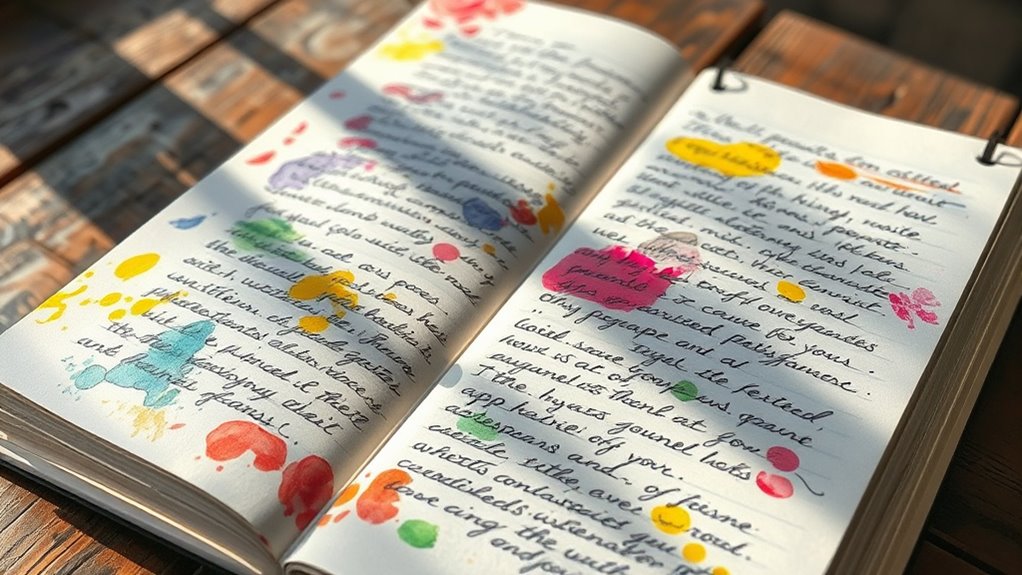

Creative journaling invites you to blend words and art, revealing hidden ideas and emotional insights. By incorporating sketches, symbols, and collages, you access deeper subconscious layers and communicate complex feelings beyond words alone. Mindfulness exercises help you observe with awareness, sparking genuine self-expression and reducing stress. As you continue exploring these techniques, you’ll discover how visual storytelling and mindful awareness foster self-discovery and inspire new perspectives within your journal.
Key Takeaways
- Combining words and visual art fosters deeper self-expression and uncovers subconscious insights.
- Mindfulness exercises enhance observation skills, inspiring authentic ideas through heightened awareness.
- Visual storytelling with sketches, symbols, and collages enriches emotional communication beyond words.
- Engaging in mindful observation and artistic creation creates a reflective space for self-discovery.
- Integrating art and words in journaling boosts creativity, reduces stress, and nurtures personal growth.
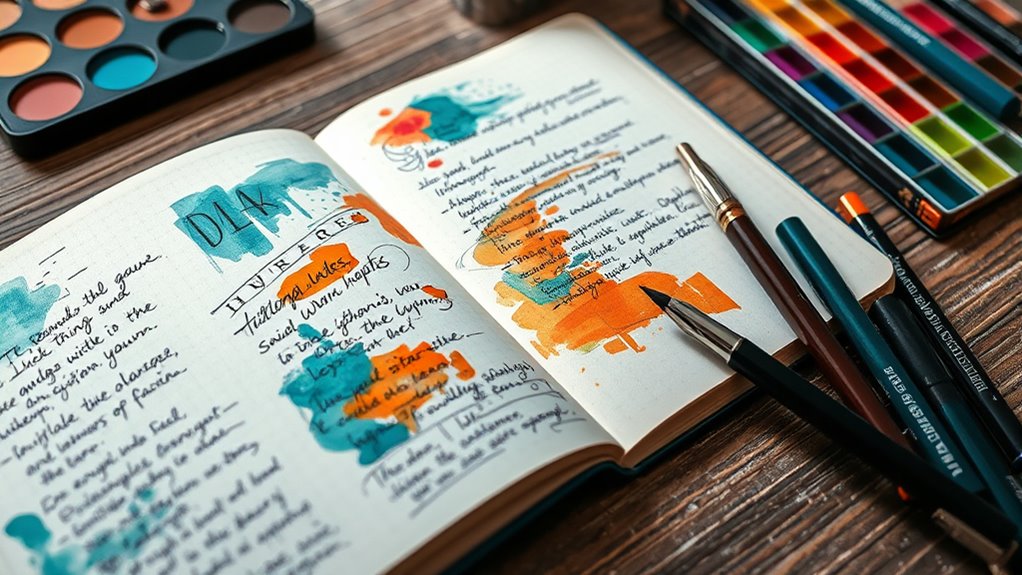
Creative journaling is a powerful way to unseal your imagination and express your thoughts openly. When you pick up your journal, you’re inviting a blend of words and art to tell your story, unlocking ideas that might otherwise stay hidden. One effective approach is to explore visual storytelling within your journal. Instead of relying solely on words, you can incorporate sketches, doodles, or collages that capture your feelings and thoughts visually. These images can serve as symbols or metaphors, helping you access deeper layers of your mind. Visual storytelling allows you to communicate complex emotions and ideas without the constraints of language, making your journaling sessions more intuitive and revealing.
To deepen this process, mindfulness exercises are invaluable. Before you start writing or sketching, take a few moments to center yourself. Breathe deeply, focusing on each inhalation and exhalation to clear your mind. This practice cultivates present-moment awareness, allowing you to approach your journaling with openness and curiosity. Mindfulness exercises help you detach from judgment and perfectionism, encouraging genuine expression. As you engage in these practices, you’ll find it easier to tap into your subconscious and let your ideas flow freely onto the pages. Additionally, consistent practice can help strengthen your creative practice and make it a sustainable habit.
Incorporating mindfulness into your creative journaling creates a space where your thoughts can unfold naturally. It also enhances your ability to notice subtle details—colors, textures, impressions—that can inspire your visual storytelling. For instance, after a mindfulness exercise, you might notice a certain shade in your environment or a particular feeling that sparks an idea for a drawing or a written reflection. This heightened awareness enriches your journaling experience and helps you connect with your inner self more authentically.
By combining visual storytelling with mindfulness exercises, you transform your journal into a dynamic tool for self-discovery. You’re not just recording daily events; you’re engaging in a creative dialogue with yourself. The images you create and the words you write become a mirror of your inner landscape, revealing insights and possibilities you might not have recognized otherwise. Over time, this practice can boost your creativity, reduce stress, and cultivate a deeper understanding of your emotions and thoughts.
Ultimately, your creative journal becomes a sanctuary of self-expression, where words and art work together to unlock your ideas. Through mindful observation and visual storytelling, you’ll find your ideas flowing more freely, guiding you toward new insights and a richer understanding of yourself. Remember that embracing failure as part of the process allows you to experiment without fear, fostering greater innovation and growth in your creative journey.
Frequently Asked Questions
How Can I Overcome Writer’s Block in My Journal?
To overcome writer’s block in your journal, try mind mapping to organize your thoughts visually, which can spark new ideas. Also, engage in free writing—set a timer and write nonstop without worrying about structure or correctness. This helps loosen up your creativity and reduces pressure. Combining these techniques encourages spontaneous expression, making it easier to break through mental barriers and find inspiration for your journal entries.
What Supplies Are Essential for Creative Journaling?
To start your creative journaling, you need essential art supplies like quality pens, markers, and a sketchbook or journal. Keep everything organized with simple tips such as dedicated storage containers or labeled drawers. This way, you can easily access your supplies, stay motivated, and focus on your creativity without wasting time searching. Having a well-organized setup encourages regular journaling and helps your ideas flow freely.
How Often Should I Journal for Maximum Benefit?
You should aim for a consistent journaling frequency, ideally daily or several times a week, to establish your best writing routine. Regular practice helps you access ideas more effectively and promotes personal growth. Even short sessions can be impactful if done consistently. Find a rhythm that fits your schedule, and stick with it. Over time, this steady approach will deepen your insights and enhance your creative process.
Can Creative Journaling Improve Mental Health?
Creative journaling can totally transform your mental health, almost like a superpower! By engaging in mindfulness practice and emotional expression through words and art, you can reduce stress, boost mood, and gain clarity. It’s a powerful tool that helps you process feelings and gain perspective. So, if you want to feel more balanced and resilient, start journaling regularly—your mind will thank you with a newfound sense of calm and strength.
How Do I Personalize My Journal Style Effectively?
To personalize your journal style effectively, focus on your personal style and artistic expression. Experiment with different layouts, color schemes, and materials to see what resonates with you. Incorporate your favorite art supplies, doodles, or handwriting styles to make each page unique. Trust your instincts, and don’t be afraid to evolve your style over time. The key is to make your journal a true reflection of your personality and creative spirit.
Conclusion
So, as you continue your creative journaling journey, remember that blending words and art opens endless ideas—like discovering a secret passage in your own mind. Don’t be afraid to experiment and embrace imperfections; even Leonardo da Vinci’s sketches had quirks. Keep your journal close, and let your imagination roam free. Before you know it, you’ll be creating masterpieces that feel as timeless as a Gutenberg print. Happy journaling!