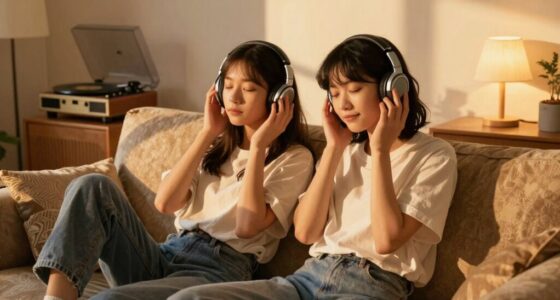
Crowdsourced music creation platforms and apps let you collaborate globally, no matter your skill level. With just a device and internet connection, you can add beats, melodies, or vocals, working alongside others in real-time or asynchronously. These tools foster creativity, break down traditional barriers, and promote community engagement. They often include AI features for harmony and synchronization, making collaboration seamless. Keep exploring to discover how these platforms are transforming music making and opening new possibilities for everyone.

Get beauty and skincare favorites delivered free — and shop member deals
- Fast, free delivery on millions of items
- Access to Prime Big Deal Days deals on October 6–7
- Prime Video, Amazon Music and more included
Key Takeaways
- Crowdsourced music creation platforms enable worldwide collaboration, allowing artists and fans to co-produce tracks in real-time.
- These apps feature intuitive tools for adding beats, melodies, and vocals without requiring professional equipment.
- Automatic synchronization and AI assistance ensure cohesive, high-quality collaborative outputs despite asynchronous work.
- Users can track a song’s development from concept to completion, fostering transparency and community engagement.
- Such platforms democratize music production, inspiring innovation, genre fusion, and the emergence of new musical trends.

Crowdsourced music creation is transforming the way artists and fans collaborate, making it possible for anyone with an internet connection to contribute to the making of a song. Thanks to innovative platforms and apps, you now have the chance to be part of the creative process in real time, breaking down traditional barriers between musicians and their audiences. These tools facilitate music genre fusion by allowing diverse styles and influences to blend seamlessly from different contributors around the world. Whether you’re into pop, jazz, electronic, or folk, you can add your unique touch and see how your input interacts with others’ ideas instantly.
Crowdsourced music creation connects artists and fans worldwide, blending diverse styles instantly through real-time collaboration.
With real-time collaboration, you can upload your recordings, tweak melodies, or suggest harmonies that others can immediately hear and build upon. This continuous, live exchange accelerates the evolution of a track, as multiple contributors respond to each other’s inputs without delay. It creates a dynamic environment where ideas are tested and refined quickly, leading to fresh, innovative sounds that might never emerge from traditional studio settings. You don’t need professional equipment or extensive training—just a device and an internet connection—and you’re ready to participate in the creative process.
Platforms designed for crowdsourced music creation often feature intuitive interfaces that encourage experimentation. You might start by adding a simple beat or a bassline, then watch as others layer vocals or synths over your contribution. The collaborative process is transparent and engaging, giving you insight into how different musical elements come together to shape a song’s overall vibe. These platforms also foster a sense of community, where you can connect with fellow music lovers and creators from all over the globe, exchanging feedback and inspiration. This shared space helps democratize music production, giving everyone an equal voice regardless of their background or experience level.
Furthermore, many of these apps incorporate tools that automatically synchronize contributions, making sure that all parts fit together harmonically and rhythmically. This technical sophistication guarantees that the collaborative process remains smooth and musically coherent, even when contributors are working asynchronously at different times. You get to witness the evolution of a song from initial concept to finished piece, all while contributing your ideas and hearing how they influence the final product. Additionally, the integration of collaborative platforms often includes AI-driven features that assist with harmony and timing, further enhancing the creative process.
Ultimately, crowdsourced music creation empowers you to be more than just a listener—you become a active participant in shaping new sounds. By enabling music genre fusion through real-time collaboration, these platforms open up a world of possibilities, where collective creativity pushes the boundaries of traditional music production. Your input can spark new trends, inspire artists, and even lead to the next big hit—all from the comfort of your home.
Top picks for "crowdsourc music creation"
As an affiliate, we earn on qualifying purchases.
Frequently Asked Questions
How Do Licensing Rights Work in Crowdsourced Music Projects?
In crowdsourced music projects, licensing rights are typically governed by royalty agreements and licensing models. You and other contributors usually sign a contract outlining how rights are shared or transferred, guaranteeing everyone gets fair compensation. These agreements clarify whether the project uses a Creative Commons license or a custom licensing model. By understanding these terms, you make certain your rights are protected and royalties are properly distributed, making collaboration fair and transparent.
What Are the Best Platforms for Beginner Music Collaborators?
Did you know that over 60% of beginner musicians start with online collaboration? If you’re new, try platforms like Soundation or BandLab—they’re beginner-friendly and easy to navigate. These platforms let you connect with others, share ideas, and create music effortlessly. You’ll find built-in tools and tutorials that make collaboration smooth, even if you’re just starting out. Jump in and start creating with confidence today!
How Is Credit Typically Attributed in Collaborative Tracks?
In collaborative tracks, artist recognition and royalty distribution are usually handled through clear agreements or platform terms. You’ll find credit attributed based on contributions, often documented in project files or metadata. Platforms typically guarantee fair royalty splits, so each artist gets recognition and compensation proportional to their work. Always communicate openly and set expectations early to avoid misunderstandings around credit and royalties in your collaborative projects.
Can Crowdsourced Music Be Monetized Legally?
Yes, you can monetize crowdsourced music legally by establishing clear royalty agreements and respecting intellectual property rights. When you collaborate on a track, guarantee everyone agrees on how royalties are split and who owns the rights. This way, you avoid legal issues and can earn income from streams, downloads, or licensing. Proper legal agreements protect all contributors and make monetization straightforward and legitimate.
What Tools Facilitate Remote Collaboration Among Musicians?
Think of remote collaboration tools like a digital jam session. You use platforms that offer real-time editing, allowing you to co-create seamlessly, as if you’re in the same room. Cloud storage acts as your musical library, storing all your tracks and ideas securely. Apps like Ableton Live, Splice, and SoundTrap enable you to connect with musicians worldwide, edit tracks instantly, and share projects effortlessly, making remote music creation feel natural and spontaneous.
Conclusion
As you explore these collaborative platforms, you realize the true power of collective creativity. With every new track, you’re on the brink of discovering something extraordinary—something that could change the way music is made forever. But the question remains: what groundbreaking sounds are just waiting to be uncovered in this ever-evolving landscape? Keep creating, because the next big hit might be just one collaboration away, and you won’t want to miss it.
Fall Picks
fall essentials
As an affiliate, we earn on qualifying purchases.