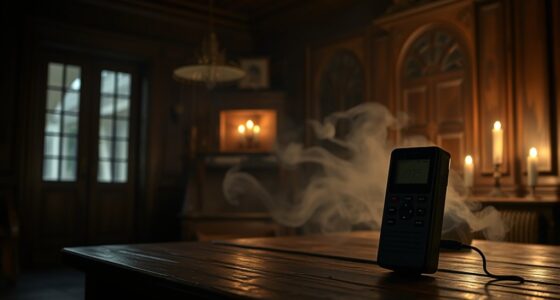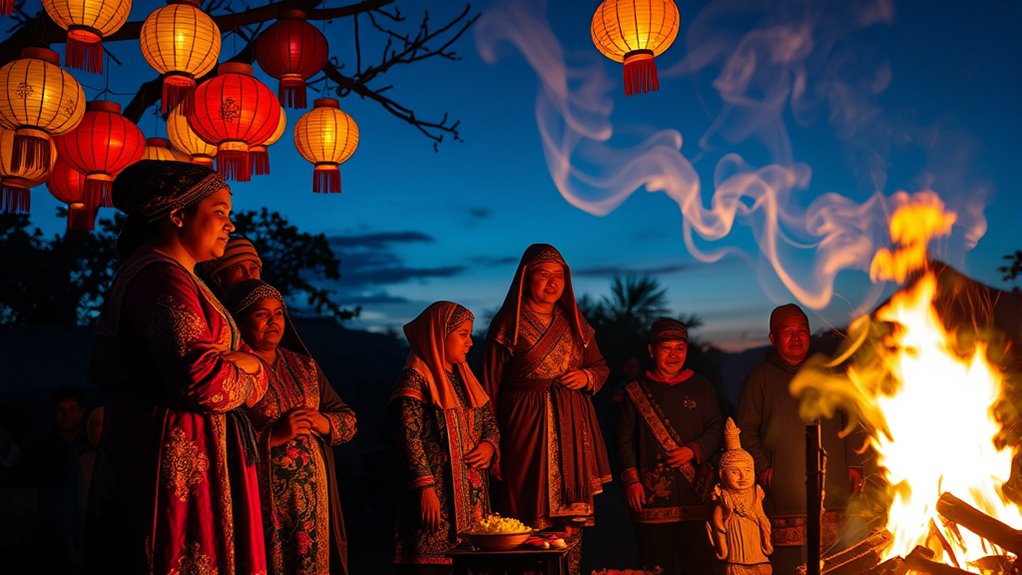

Cultural approaches to spirits and the afterlife often center on maintaining respectful relationships with ancestors and honoring their ongoing presence in daily life. Rituals like offerings, incense, and symbolic gestures help keep spirits pleased and connected to the living. These practices reinforce cultural identity and provide comfort, emphasizing death as a shift rather than an end. If you look further, you’ll discover how these traditions shape spiritual beliefs and strengthen community bonds across different cultures.
Key Takeaways
- Many cultures maintain ongoing relationships with ancestors through rituals, believing spirits influence the living world.
- Rituals such as offerings, incense, and ceremonies serve to honor spirits and seek their guidance or protection.
- Ancestor worship emphasizes death as a continuation of relationships, not an end, fostering cultural identity and spiritual harmony.
- Preserving ancestral knowledge and traditions sustains spiritual connections and reinforces community bonds across generations.
- Ritual practices and beliefs vary but commonly aim to bridge the living and spirits, ensuring ongoing spiritual presence and support.

Across cultures, beliefs about spirits and the afterlife shape how communities honor the dead and understand existence beyond death. You might find yourself participating in ancestor worship, a practice that emphasizes maintaining a respectful and ongoing relationship with those who have passed away. In many traditions, ancestors are seen as essential guides and protectors, whose spirits continue to influence the living world. To honor them, communities perform ritual practices such as offering food, burning incense, or presenting symbolic items at altars dedicated to ancestors. These rituals serve as a way to show respect, seek guidance, and guarantee the spirits remain pleased, fostering a sense of continuity between generations.
In some cultures, ancestor worship isn’t just a one-time event but an ongoing series of rituals woven into daily life or special festivals. You might light candles or prepare traditional dishes during specific seasons, believing that these acts sustain the bond between the living and the departed. Ritual practices often include prayers, chants, or ceremonies led by community elders or spiritual figures, reinforcing the social fabric and cultural identity. These ceremonies can also serve as communal gatherings, strengthening bonds among family members and reinforcing shared beliefs about the afterlife. The act of honoring ancestors through ritual practices underscores a deep respect for lineage, emphasizing that death isn’t an end but a continuation of relationships in another form.
Across many societies, these ritual practices are rooted in the idea that spirits of the dead are active participants in the world of the living. You may observe that offerings are carefully prepared to match the preferences of ancestors, believing that such gestures ensure their favor and protection. Rituals often include specific gestures—bowing, lighting incense, or presenting symbolic objects—that communicate reverence and maintain harmony between worlds. These practices are not only acts of remembrance but also ways to invoke blessings, prevent misfortune, and express gratitude for the guidance and protection believed to flow from ancestral spirits. Additionally, the preservation of ancestral knowledge through generations plays a vital role in maintaining these spiritual traditions and practices.
Ultimately, your understanding of these cultural approaches to spirits and the afterlife reveals how deeply intertwined death, remembrance, and community are. Whether through ancestor worship or ritual practices, these traditions serve to bridge the gap between the living and the dead, providing comfort, continuity, and a sense of purpose that transcends mortality. They remind you that honoring those who came before is an ongoing act that sustains cultural identity and spiritual connection across generations.
Frequently Asked Questions
How Do Different Cultures Interpret the Concept of Spiritual Communication?
You see that different cultures interpret spiritual communication through practices like mediumship and ancestor reverence. In some traditions, you might involve mediums to connect with spirits, believing they serve as messengers. Others honor ancestors through rituals, offering prayers and maintaining shrines. These approaches reflect a deep respect for spirits and a desire to stay connected, showing that spiritual communication is a essential part of many cultural identities and spiritual practices worldwide.
What Rituals Are Universally Performed Across Cultures for Honoring the Dead?
You perform funeral rites and ancestral veneration to honor the dead across cultures. These rituals often include offerings, prayers, or ceremonies to show respect and maintain a connection with ancestors. You might light candles, prepare special foods, or create altars. These acts help you acknowledge the deceased’s ongoing presence in your life and guarantee their spirits are at peace, fostering a sense of community and spiritual continuity worldwide.
Are There Common Symbols Used Worldwide to Represent Spirits or the Afterlife?
You’ll find that certain symbols like lights, candles, and food are common worldwide to represent spirits or the afterlife. Notably, about 80% of cultures practice ancestor veneration, often using soul symbolism such as trees or water to depict spiritual connection. These symbols serve to honor and communicate with the spirits, creating a universal language that bridges diverse beliefs and traditions worldwide.
How Do Cultural Beliefs Influence Mourning Practices and Grief Expression?
You find that cultural beliefs shape your mourning practices and grief expression considerably. Funeral rituals guide how you honor the deceased, reflecting your cultural views on death. Mourning attire symbolizes your respect and emotional state, varying from somber black to vibrant colors depending on your tradition. These practices help you process loss, connect with community, and express grief in ways that align with your cultural values.
What Role Do Spirits Play in Contemporary Religious and Spiritual Movements?
Spirits play a crucial role in contemporary movements through practices like ancestor veneration and engaging with spirit mediums. You might participate in rituals honoring ancestors to connect with their spirits or seek guidance from spirit mediums during spiritual gatherings. These practices help you maintain a link to the spiritual world, offering comfort, insight, and a sense of ongoing connection with loved ones and the divine, grounding your beliefs in tradition and personal experience.
Conclusion
As you explore these diverse beliefs, you realize that spirits and the afterlife are like threads woven into the fabric of every culture’s story. They serve as bridges between worlds, whispering secrets of life beyond the seen. Embracing these views, you see that no single path holds all the answers — instead, they’re like stars guiding us through the night, each shining with its own mystery and wonder, inviting you to continue your journey of understanding.