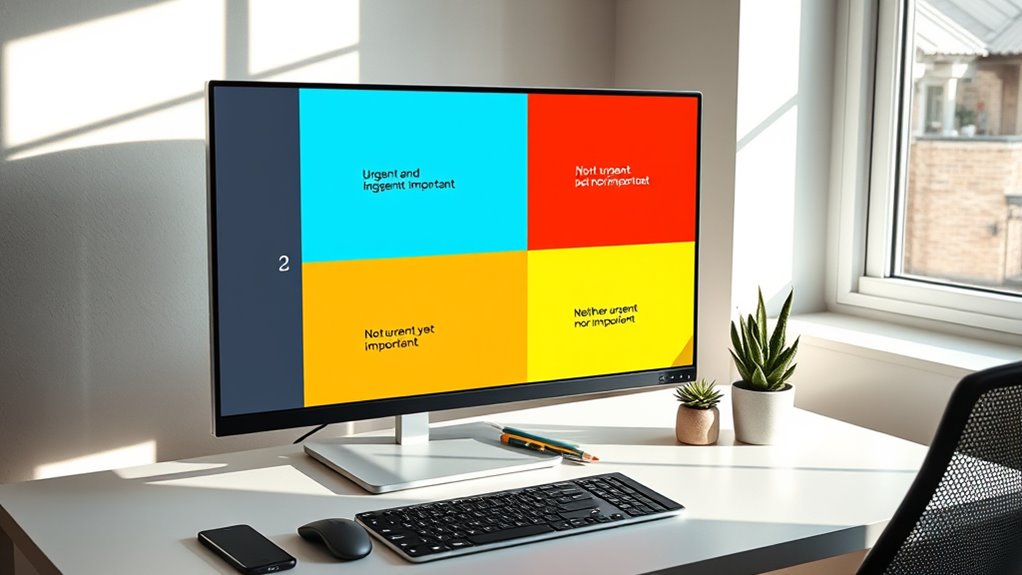

The Eisenhower Matrix can be redesigned for remote work by emphasizing clear task categorization, helping you prioritize urgent or important tasks while cutting through distractions like social media or chores. Incorporate outdoor breaks and natural environments to boost focus and mental well-being. Regularly review your tasks to develop discipline and shift from reactive to proactive work. Want to discover how to tailor the matrix even further for your remote routine? Keep exploring to find out more.
Key Takeaways
- Integrate outdoor and natural environment breaks into the matrix to enhance mental clarity and reduce stress.
- Customize the quadrants to include long-term planning and skill development as separate priorities.
- Use digital tools to automate task categorization and prompt regular reviews aligned with remote workflows.
- Emphasize mental well-being by scheduling outdoor activities within urgent and important task blocks.
- Incorporate flexibility for adapting priorities as remote work challenges evolve, ensuring sustained focus and productivity.
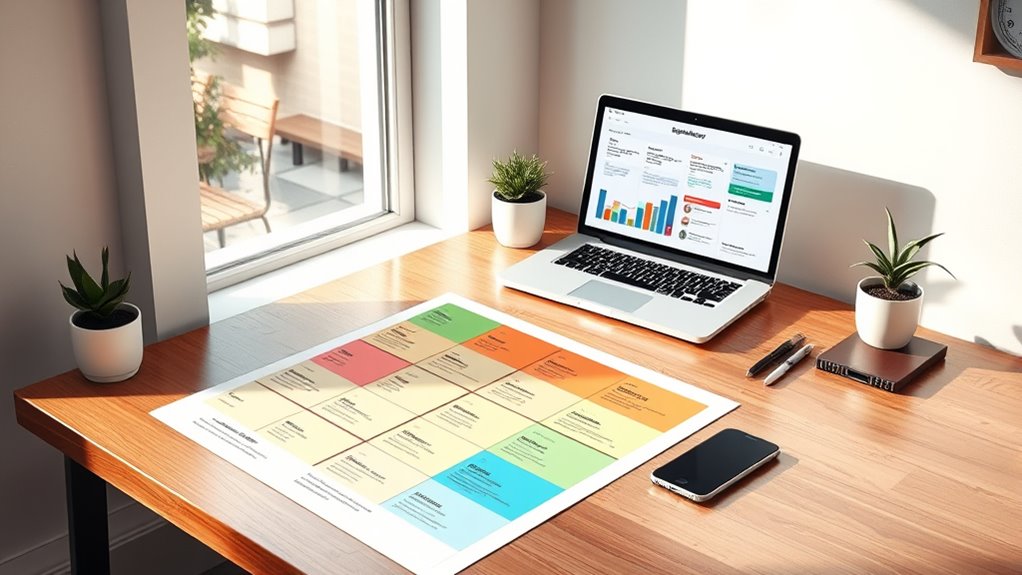
Managing remote work can be challenging, but the Eisenhower Matrix offers a simple way to prioritize tasks effectively. When you’re juggling deadlines, meetings, and personal responsibilities from home, it’s easy to feel overwhelmed or disorganized. That’s where the Eisenhower Matrix becomes a powerful tool for improving your time management and boosting your productivity strategies. By dividing your tasks into four quadrants—urgent and important, important but not urgent, urgent but not important, and neither urgent nor important—you gain clarity on what truly needs your attention right now.
Using this matrix helps you cut through the noise and focus on what moves your work forward. For example, when a new project deadline looms, you recognize it as urgent and important, so you prioritize it immediately. Meanwhile, tasks like planning long-term goals or skill development fall into the important but not urgent quadrant. These are often overlooked but are essential for sustained growth. With the matrix, you deliberately schedule time for these activities, preventing them from slipping through the cracks. This strategic approach to prioritization is a cornerstone of effective time management, ensuring you’re working smarter, not harder.
The Eisenhower Matrix also helps you identify tasks that are neither urgent nor important, so you can eliminate or delegate them. This keeps your focus sharp and prevents wasted effort. When you’re working remotely, distractions are everywhere—social media, household chores, or spontaneous interruptions. The matrix encourages you to assess each task quickly, determine its true importance, and then act accordingly. This disciplined approach minimizes wasted time and mental clutter, allowing you to stay productive throughout your workday. Incorporating mental well-being benefits from fresh air and natural landscapes can further improve your focus and resilience during busy days.
Additionally, understanding the importance of natural landscapes and environments for mental well-being can help you incorporate breaks and outdoor activities into your routine, further enhancing your productivity and focus. Integrating the Eisenhower Matrix into your daily routine fosters better decision-making. You start each day or week by reviewing your tasks and categorizing them within the matrix. This routine sharpens your ability to recognize priorities and manage your workload proactively. Over time, you develop a stronger sense of discipline and a clearer perspective on what deserves your focus. As a result, your overall time management improves, and your productivity strategies become more effective. Instead of reacting impulsively to every new task or distraction, you approach your work with intention and focus.
Frequently Asked Questions
How Can I Adapt the Eisenhower Matrix for Virtual Collaboration Tools?
You can adapt the Eisenhower matrix for virtual collaboration by integrating digital tools that facilitate task categorization and prioritization. Use project management apps like Trello or Asana to create digital quadrants, assigning tasks based on urgency and importance. This makes it easy for everyone to see priorities, track progress, and stay aligned. Regular virtual check-ins ensure the team updates their digital boards, keeping task management transparent and efficient in remote work environments.
What Are Common Mistakes When Implementing the Matrix Remotely?
When implementing the matrix remotely, you often make misclassification errors, wrongly assigning tasks to the wrong quadrants. Neglecting urgency can cause you to overlook pressing issues, leading to missed deadlines. You might also fail to communicate clearly with your team, causing confusion. To avoid these mistakes, guarantee you review tasks regularly, clarify priorities, and maintain open communication. This keeps your workflow efficient and aligned with your goals.
How Do I Prioritize Personal Tasks Versus Work Tasks Remotely?
Imagine balancing a tightrope between personal and work life, like a skilled acrobat. To prioritize tasks remotely, set clear personal boundaries and practice task segregation. Allocate specific times for personal tasks, ensuring they don’t spill into work hours. Focus on urgent and important work first, then dedicate moments to personal needs. This way, you maintain harmony, avoiding burnout and keeping both worlds in balance with intentionality.
Can the Matrix Help Reduce Remote Work Burnout Effectively?
Yes, the matrix can help you reduce remote work burnout by improving stress management and establishing work-life boundaries. By categorizing tasks into urgent and important, you prioritize what truly matters, preventing overload. This clarity helps you avoid unnecessary stress and signals when to disconnect. As a result, you regain control over your workload, balance work with personal life, and create healthier routines that combat burnout effectively.
How Often Should I Review and Update My Remote Eisenhower Matrix?
You should review your matrix weekly to stay aligned with your shifting priorities. Regular review frequency helps you catch tasks that need immediate attention and adjust your update strategies accordingly. If your workload fluctuates often, consider updating your matrix bi-weekly or monthly. This guarantees your task list remains relevant, reducing stress and preventing burnout. Consistent updates keep your remote work organized and focused, making it easier to manage your responsibilities effectively.
Conclusion
Embrace the redesigned Eisenhower Matrix as your compass through the vast ocean of remote work. Like a lighthouse guiding ships safely to shore, it illuminates your priorities amid the fog of distractions. Trust this tool to steer you away from stormy urgency and toward calm, strategic waters. With each task you chart, you’re steering closer to productivity’s harbor—your own safe haven in the endless sea of remote possibilities.