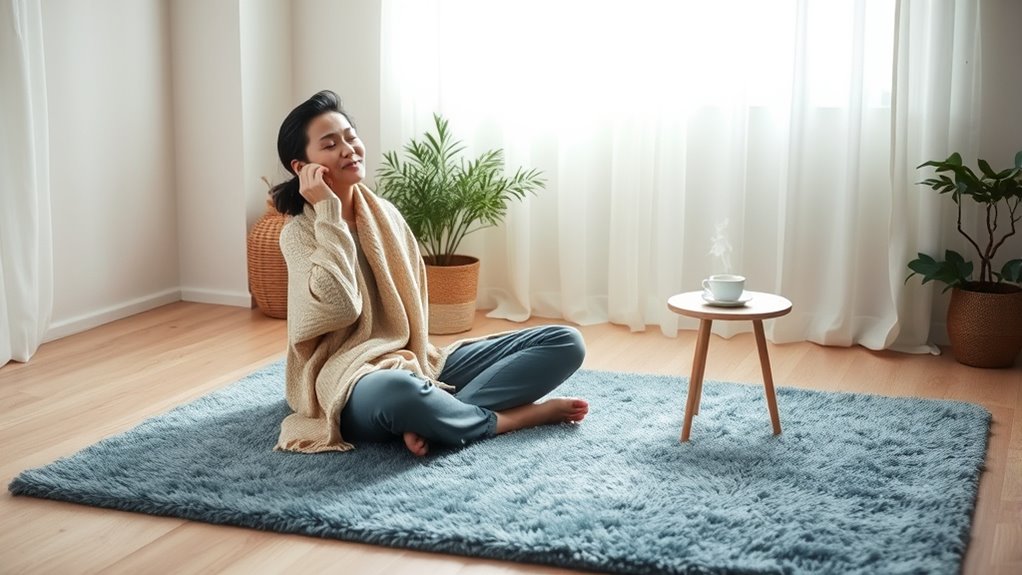

To effectively regulate your emotions, try combining mindfulness practices like deep breathing and body scans with cognitive reframing, which helps you view situations more positively. Mindfulness increases your awareness of emotional triggers and promotes calmness, while reframing challenges negative thoughts, reducing anxiety or anger. Incorporating these strategies into your daily routine, possibly enhanced with calming aromas like lavender, can improve resilience over time. Keep exploring for more ways to manage your emotions with confidence.
Key Takeaways
- Practice mindfulness techniques like deep breathing, meditation, and body scans to increase emotional awareness and reduce reactivity.
- Use cognitive reframing to challenge negative thoughts and adopt more positive or realistic perspectives during stressful situations.
- Develop a regular routine of mindfulness and reframing exercises to enhance emotional resilience over time.
- Combine mindfulness with cognitive reframing to promote thoughtful, rather than impulsive, emotional responses.
- Incorporate calming aromas such as lavender or eucalyptus to support emotional stability and relaxation during stressful moments.
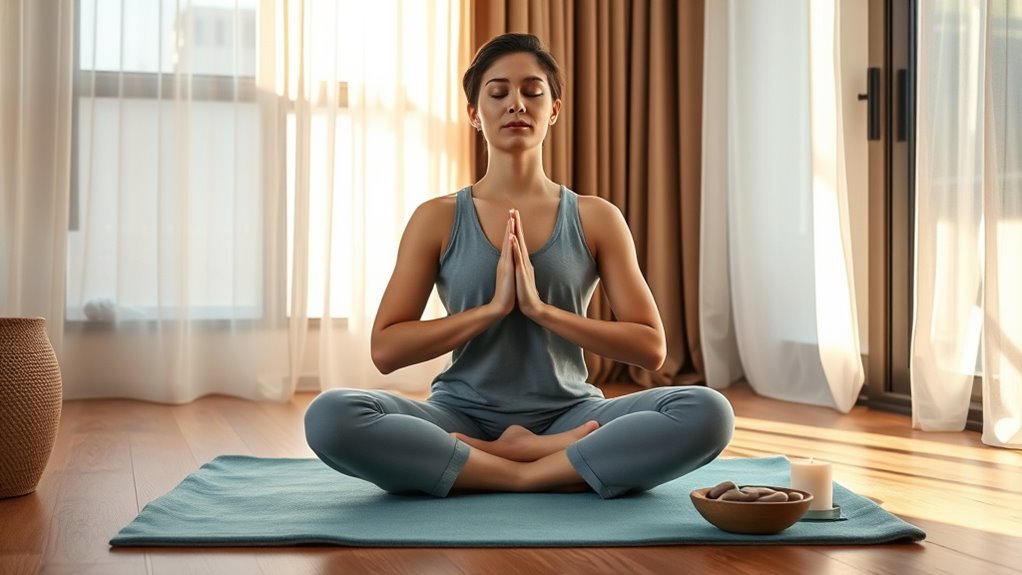
Have you ever wondered how some people stay calm and focused even in stressful situations? The secret often lies in their ability to manage emotions effectively through specific strategies like mindfulness practices and cognitive reframing. These techniques help you develop a more balanced perspective, allowing you to navigate challenging moments with greater ease. Mindfulness practices involve paying close attention to your thoughts, feelings, and bodily sensations without judgment. When you practice mindfulness, you learn to observe your emotional responses rather than immediately reacting to them. This creates a pause, giving you the opportunity to choose a more constructive response instead of impulsively reacting. Regular mindfulness exercises, such as deep breathing, meditation, or body scans, can help you become more aware of your emotional triggers and reduce the intensity of negative feelings over time. Incorporating essential oils such as lavender or eucalyptus during your mindfulness routine can enhance relaxation and emotional clarity.
Cognitive reframing, on the other hand, is about shifting your perspective to view situations differently. Instead of getting overwhelmed by negative thoughts, you challenge them and replace them with more positive or realistic ones. For example, if you feel anxious about an upcoming presentation, instead of thinking, “I’ll mess up and embarrass myself,” you might reframe that to, “I’ve prepared well, and I can handle whatever comes my way.” This mental shift can decrease feelings of fear or anxiety, making it easier to stay composed. Cognitive reframing requires practice, but it’s a powerful way to change your emotional response by altering how you interpret events.
Combining mindfulness practices with cognitive reframing creates a robust approach to emotional regulation. Mindfulness helps you become aware of your emotional state in real time, while cognitive reframing allows you to modify your thoughts to foster a healthier emotional response. Together, they enable you to respond thoughtfully rather than react impulsively, especially during high-stress moments. Over time, these strategies can improve your resilience, reduce emotional volatility, and help you maintain a sense of calm and control. The key is consistency—integrating these practices into your daily routine will give you the tools to handle stress more effectively. Remember, emotional regulation isn’t about suppressing feelings but understanding and managing them in a way that promotes well-being. With patience and practice, you’ll find yourself more equipped to face life’s challenges with clarity and composure. Additionally, understanding the role of essential oils in supporting emotional well-being can complement these strategies by providing calming aromas that aid in stress reduction.

HIQILI Lavender Essential Oil 30mL – 100% Pure Undiluted for Diffuser, Sleep, Skin & Hair – Therapeutic Grade, GC/MS Tested, IFRA Certified
Leak-Proof Design for Safe Use: Our essential oil comes with a secure dropper cap designed to reduce spills…
As an affiliate, we earn on qualifying purchases.
As an affiliate, we earn on qualifying purchases.
Frequently Asked Questions
How Long Does It Take to See Progress With Emotional Regulation Strategies?
You might start noticing progress within a few weeks, but the effectiveness duration varies based on your commitment and consistency. Generally, with regular practice, emotional regulation strategies can show noticeable results in 4 to 6 weeks. Keep in mind that everyone’s progress timeline is different; patience and persistence are key. If you stay dedicated, you’ll likely see improvements in managing your emotions and responding more calmly over time.
Can Emotional Regulation Techniques Be Effective During a Crisis?
Yes, emotional regulation techniques like mindfulness exercises and breathing techniques can be effective during a crisis. When you feel overwhelmed, actively practicing deep breathing or focusing on the present moment helps calm your mind and body quickly. These strategies give you immediate tools to manage intense emotions, allowing you to regain control and respond thoughtfully instead of reacting impulsively. With consistent practice, their effectiveness during crises strengthens over time.
Are There Specific Strategies for Managing Anger More Effectively?
Yes, you can manage anger more effectively by practicing specific strategies like anger management techniques and frustration reduction methods. When you feel anger rising, take deep breaths, count to ten, or step away from the situation to cool down. Engaging in regular relaxation exercises and identifying triggers also helps. These approaches help you stay calmer, control your reactions, and ultimately, improve your overall emotional regulation.
How Do Emotional Regulation Skills Differ Across Age Groups?
You notice that emotional regulation skills vary across age groups due to developmental differences and age-related patterns. As a child, you learn basic emotion management, but adults develop more complex strategies through experience. Older adults often show better emotional control, using skills like perspective-taking. Understanding these developmental differences helps you tailor your approaches, recognizing that emotional regulation evolves with age, becoming more refined and effective over time.
Can Therapy Enhance the Use of Emotional Regulation Strategies?
Yes, therapy benefits you by enhancing emotional regulation strategies. It helps increase your emotional awareness, allowing you to recognize and understand your feelings better. Through guided techniques and support, therapy teaches you healthier ways to manage emotions, reduce stress, and respond more adaptively. By actively engaging in therapy, you develop skills that improve your overall emotional resilience, making it easier to handle challenging situations with calmness and clarity.

Retrospec Sedona Zafu Meditation Cushion with Buckwheat Hull Fill – Adjustable Yoga & Pilates Equipment Support – 17in Crescent Cotton Cover
NATURAL COMFORT & SUPPORT: Filled with sustainable buckwheat hulls, this meditation cushion elevates your practice by aligning your…
As an affiliate, we earn on qualifying purchases.
As an affiliate, we earn on qualifying purchases.
Conclusion
By practicing these emotional regulation strategies, you gain control over your emotions, improve your relationships, and enhance your well-being. You learn to recognize your feelings, respond thoughtfully, and move forward with confidence. You embrace mindfulness, challenge negative thoughts, and develop resilience. You take charge of your emotional health, strengthen your self-awareness, and foster inner peace. Through consistent effort, you create a balanced mind, a resilient spirit, and a happier life—because emotional regulation isn’t just a skill, it’s a way of life.

Worry for Nothing: Guided Anxiety Journal, Cognitive Behavioral Therapy Mental Health Journal, Anxiety Relief & Self Care, Journal for Men & Women, Mental Health Gifts
IMPROVES MENTAL HEALTH: Use this journal to improve mindfulness, uncover triggers, track physical and emotional sensations, document your…
As an affiliate, we earn on qualifying purchases.
As an affiliate, we earn on qualifying purchases.

Breathing Exercise Cards for Kids, Deck for Classroom, Calm Down Corner Kit, Sensory Room, Social Emotional Yoga Games for Kids, Mindfulness Tools for Play Therapy, or Relaxation
*Award-Winning* 34 Colorful and Beautifully Poses Illustrated Cards: You can use this yoga for kids cards during brain…
As an affiliate, we earn on qualifying purchases.
As an affiliate, we earn on qualifying purchases.