
TL;DR

Get beauty and skincare favorites delivered free with Prime
- Fast, free delivery on millions of items
- Prime Video, Amazon Music and more included
- Member-only deals all year
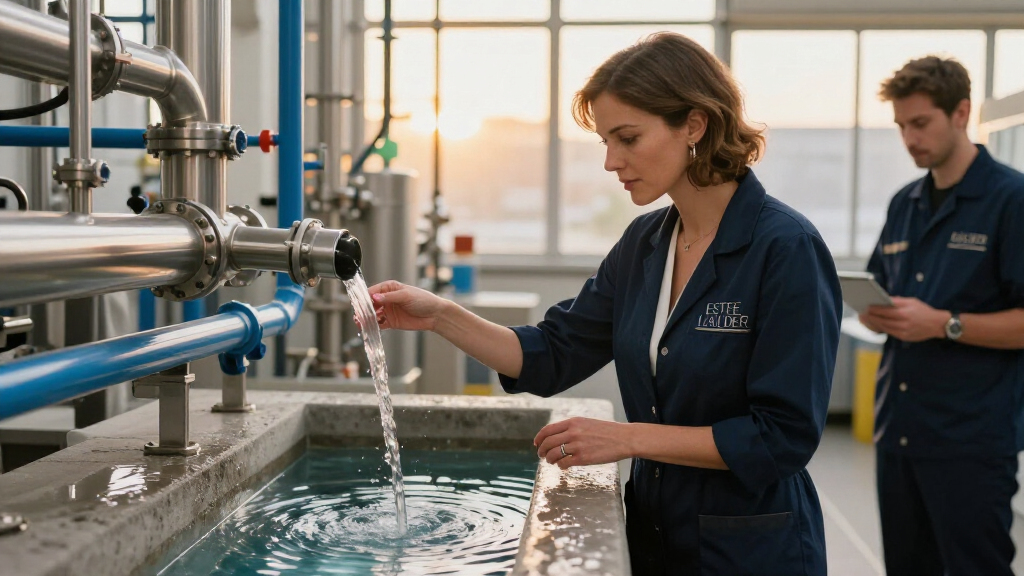
Estée Lauder Companies is investing €5.7 million in water infrastructure at its Oevel manufacturing site in Belgium. The company expects the project to save about 25 million litres of water annually and cut water intensity from 9.3 to 3.6 litres per kilogram of product once operational.
Estée Lauder Companies is investing €5.7 million in water infrastructure at its Oevel manufacturing plant in Belgium, with the company projecting annual savings of about 25 million litres once the project is operational. The system is designed to reduce the site’s freshwater use and wastewater discharge, making the investment relevant to both the plant’s resource consumption and the company’s wider manufacturing plans.
The project introduces an integrated water-circularity system intended to keep water in use for longer across manufacturing operations. Estée Lauder Companies (ELC) says the infrastructure will combine enhanced purified-water systems, reuse of water in equipment cleaning and sanitisation, and treatment that makes some wastewater suitable for defined operational uses.
ELC expects the changes to lower the plant’s water intensity from 9.3 litres to 3.6 litres per kilogram of product. It also estimates annual water savings of approximately 25 million litres, which the company compares with around ten Olympic-sized swimming pools. These figures are projections for when the project is operational, not reported results from a completed system.
The company has not specified a start date for operation in the source report. It says the system is intended to reduce reliance on incoming freshwater while limiting wastewater discharge, and that experience from Oevel could inform possible future projects elsewhere in its manufacturing network.
Water Targets at Oevel
The investment connects a defined site-level infrastructure project to water use in manufacturing. The projected reduction in water intensity gives a per-unit measure alongside the annual savings estimate, while the reuse elements are intended to address both freshwater demand and wastewater output. The figures may help readers gauge the scale ELC expects from the system, but they remain company projections until the infrastructure is running and results are reported.
The project also sits within a wider upgrade of the Oevel campus. ELC says the site has received investments in automation, artificial intelligence, digital manufacturing, logistics and production technologies. The company says more than €150 million has been invested at Oevel over the past decade. The water project is one element of that broader manufacturing effort, rather than a standalone account of the site’s overall environmental performance.
For the wider company, Oevel is being presented as a potential source of lessons for future manufacturing initiatives. If the system performs as projected, its approach could inform decisions across ELC’s network. The source does not commit the company to a specific rollout, however, and does not provide a timetable or target for expansion.
Products Worth Considering

Coway Airmega AP-1512HHS Smart HEPA Air Purifier, Black

Oura Ring 4 Smart Ring – Silver – Size 8

Levoit Core 600S-P Smart Air Purifier for Large Rooms up to 2933 ft²
As an affiliate, we earn on qualifying purchases.
Oevel’s Manufacturing Upgrade
Oevel is described by ELC as one of its largest manufacturing sites. Water circularity forms part of a transformation underway at the plant, which the company says includes new technologies and digital capabilities intended to support manufacturing operations. The company also links the site’s development to its broader effort to reshape its beauty supply chain.
ELC describes that company-wide effort as part of its “Beauty Reimagined” strategy, which it says is aimed at building a more agile and resilient business. The strategy is also intended to improve profitability, address lagging sales and streamline operations, according to the supplied report. Those are company objectives; the source material does not provide results showing the effect of the strategy so far.
The Oevel investment arrives as manufacturers are putting money into water-efficiency measures while seeking to maintain product quality and reliable operations. The supplied report gives no industry-wide figures for those investments, so the Oevel project should be understood on its own terms: a €5.7 million company investment with projected water savings and a possible role as a model for future ELC projects.
““Oevel demonstrates how we are translating that ambition into reality through advanced manufacturing, digital innovation and responsible resource management.””
— Alexander Gregorian, Estée Lauder Companies’ senior vice-president of manufacturing and engineering
Project Results Still Pending
The reported savings and water-intensity reduction are expected outcomes, not measured results. The source does not give a commissioning date, implementation schedule or interim milestones, and it does not say when ELC will publish performance data after the system begins operating.
Details about the infrastructure’s capacity, operating costs and the share of site water demand that will be met through reuse are not provided. The company describes wastewater as becoming reusable for “defined operational purposes,” including cleaning and sanitising equipment, but does not list other uses or explain the treatment standards. It is also unclear whether the projected annual savings account for all water used at the plant or only the project’s targeted operations.
ELC says the project could inform future work across its manufacturing network, but no additional sites, investment amounts or rollout dates are identified. The supplied material also does not include independent verification of the forecast figures.
Operational Data to Watch
The next milestone is for the water infrastructure to become operational; ELC has not announced when that is expected. Once running, measured figures on water intensity, annual savings and wastewater discharge would show how closely performance matches the company’s projections.
Readers can also watch for whether ELC shares further details about the system’s implementation or applies lessons from Oevel at other manufacturing sites. The company says the project may help guide future initiatives, but has not confirmed a network-wide programme. Until it provides operating data or a rollout plan, the stated savings remain forecasts tied to the Oevel investment.
Key Questions
How much is Estée Lauder investing at Oevel?
Estée Lauder Companies says it is investing €5.7 million in water infrastructure at its Belgian manufacturing plant in Oevel.
How much water does the company expect to save?
ELC projects annual savings of approximately 25 million litres once the system is operational. The source does not report measured savings yet.
What is the project expected to change?
The system is designed to reduce incoming freshwater use, reuse water in equipment cleaning and sanitisation, and make some treated wastewater available for specified operational purposes.
When will the Oevel system start operating?
The source material does not provide an operational start date or implementation schedule.
Will Estée Lauder use the system at other sites?
ELC says lessons from Oevel could inform future manufacturing initiatives across its network. It has not confirmed other locations, a rollout schedule or further investment.
Source: rss