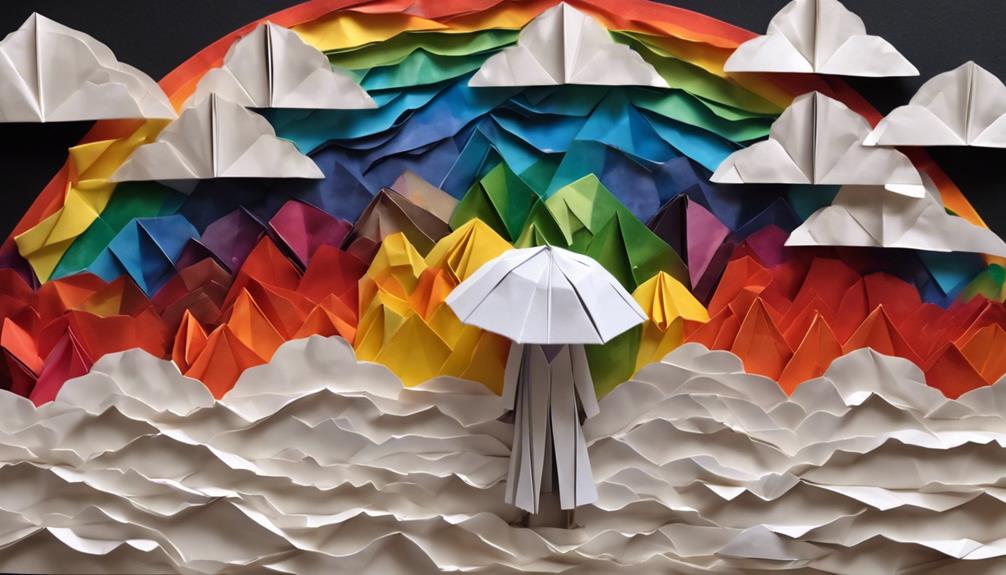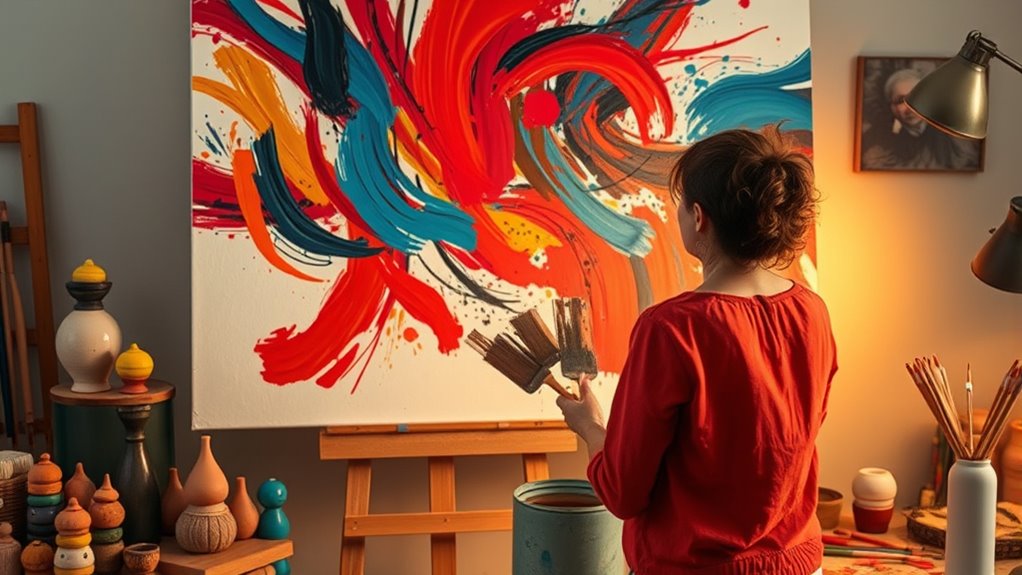

Expressive arts like music and dance offer you safe, non-verbal ways to process and heal complex emotions such as grief, anxiety, and anger. Engaging actively in these creative activities helps you access feelings that words often can’t capture, leading to emotional release, resilience, and greater self-awareness. These practices also promote mindfulness and connection with your inner self. If you continue exploring, you’ll discover how combining these arts can deepen your emotional recovery and overall well-being.
Key Takeaways
- Expressive arts provide a safe outlet for processing complex emotions like grief, anxiety, and anger.
- Music therapy uses sound and rhythm to access and express feelings beyond words.
- Dance movement therapy helps reconnect the body and emotions, releasing tension and fostering self-awareness.
- Combining music and dance enhances emotional release, resilience, and self-compassion.
- Creative, non-verbal activities support ongoing emotional well-being and deeper emotional understanding.
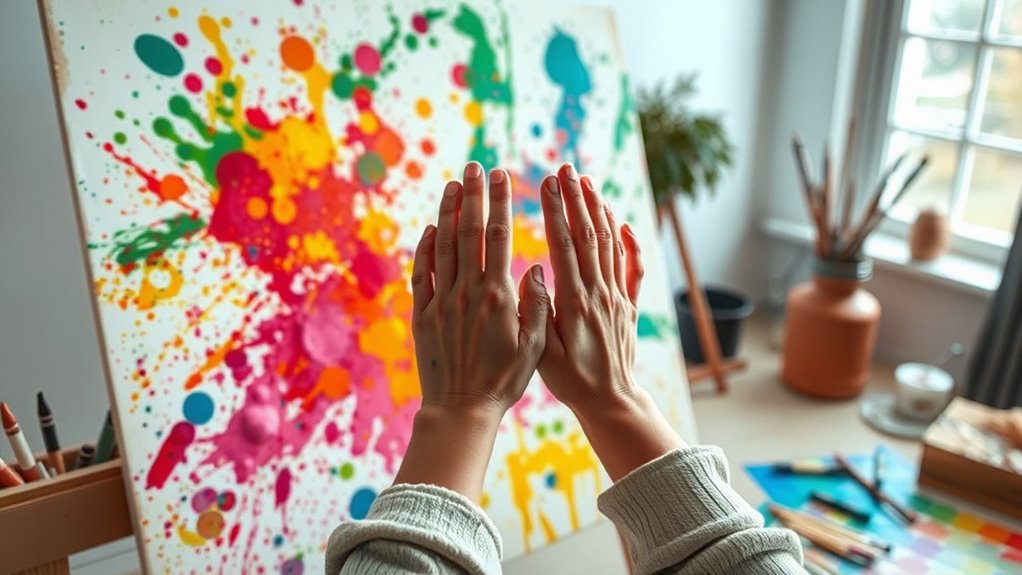
Expressive arts offer a powerful pathway to emotional healing by allowing you to process feelings that words often can’t fully capture. When you’re charting complex emotions like grief, anxiety, or anger, engaging in creative activities can provide a safe outlet for expression. Two particularly effective methods are music therapy and dance movement. These approaches tap into your body’s natural ability to communicate and help you connect with your emotions on a deeper level.
Music therapy involves using sound, rhythm, and melodies to explore and express your feelings. You don’t need to be a musician or have any musical training to benefit. Simply listening to certain songs, playing instruments, or even improvising with sounds can help you access emotions that might be difficult to articulate verbally. Music has an incredible way of resonating with your inner state, often bypassing the mind’s defenses and touching your core feelings. It can evoke memories, inspire hope, or provide comfort during tough times. When you participate actively—whether you’re singing, drumming, or creating melodies—you engage your brain in a way that fosters emotional release and catharsis. This active involvement can reduce stress, improve mood, and foster a sense of empowerment. Moreover, understanding the role of color accuracy in art and media can deepen your appreciation of how visual elements evoke emotional responses.
Music therapy uses sound and rhythm to explore and express feelings, fostering emotional release and empowerment.
Dance movement is another dynamic form of expressive arts that promotes emotional healing. Moving your body freely to music allows you to express feelings physically, often revealing emotions that are hard to put into words. When you dance, you reconnect with your body, releasing tension and pent-up energy that may have accumulated from stressful experiences. You don’t need formal dance training; simply allowing yourself to move naturally, guided by your feelings and the rhythm, can be profoundly therapeutic. This process encourages mindfulness and self-awareness, helping you stay present and grounded. It also fosters a sense of liberation, empowering you to express vulnerability without judgment. As you dance, you may notice emotional releases or insights emerging, which can lead to a greater understanding of your inner world.
Both music therapy and dance movement tap into your innate creativity, making them accessible and non-threatening ways to explore your emotional landscape. They provide opportunities for self-expression that don’t rely solely on verbal communication, which can be especially helpful if you struggle to articulate feelings. By integrating these expressive arts into your healing journey, you create a space where emotions can surface safely, be acknowledged, and processed. Over time, engaging in music and dance can help you build resilience, foster self-compassion, and cultivate a sense of wholeness, guiding you toward emotional well-being.
music therapy instruments for emotional healing
As an affiliate, we earn on qualifying purchases.
As an affiliate, we earn on qualifying purchases.
Frequently Asked Questions
Can Expressive Arts Replace Traditional Therapy Methods?
No, expressive arts can’t fully replace traditional therapy methods, but they complement them well. Art therapy and creative expression help you explore emotions and process experiences uniquely. While they offer valuable emotional healing tools, professional therapy provides structured support, diagnosis, and interventions that expressive arts alone might not achieve. Combining both approaches can enhance your emotional well-being, making therapy more personalized and effective.
How Soon Can I See Results From Expressive Arts Therapy?
You might see visible improvements within a few sessions, but timing expectations vary based on your engagement and specific issues. Some people notice emotional releases or increased self-awareness early on, while others experience gradual progress. Consistency is key, and with regular expressive arts therapy, you’ll likely observe meaningful changes over time. Remember, everyone’s healing journey is unique, so patience and openness will help you get the most from your sessions.
Is Prior Artistic Experience Necessary to Benefit From Expressive Arts?
No, you don’t need prior artistic experience to benefit from expressive arts. This approach helps build your artistic confidence, regardless of your skill level. As you engage in creative activities, you’ll develop new skills and self-awareness, making the process more accessible and rewarding. You’ll find that over time, your confidence grows, and you gain a deeper understanding of your emotions through the creative expression, no matter your starting point.
Are There Age Restrictions for Participating in Expressive Arts Therapy?
Nope, there are no age limitations for participating in expressive arts therapy—whether you’re a sprightly toddler or a wise octogenarian, everyone’s invited to paint their feelings or sing their worries away. You don’t need prior artistic skills, either. So, if you’ve got emotions to process, age shouldn’t be a barrier. Just bring your enthusiasm and a willingness to explore—therapy participation is open to all ages!
How Can I Incorporate Expressive Arts Into Daily Emotional Self-Care?
You can incorporate expressive arts into your daily self-care by practicing daily mindfulness through creative journaling. Set aside a few minutes each day to write, draw, or collage your feelings without judgment. Use these activities to connect with your emotions, express thoughts visually or verbally, and reflect on your experiences. This simple routine helps you stay grounded, process emotions healthily, and foster emotional resilience every day.
dance movement therapy accessories
As an affiliate, we earn on qualifying purchases.
As an affiliate, we earn on qualifying purchases.
Conclusion
As you embrace expressive arts for emotional healing, you discover a power greater than you ever imagined—transforming pain into profound beauty. Every brushstroke, note, or movement becomes a weapon against emotional turmoil, guiding you toward renewal. Remember, your creative journey isn’t just healing; it’s a revolution within, igniting a spark so bright it could light up the universe. Trust in this process, and watch your emotions blossom into a masterpiece more magnificent than anything you’ve ever known.
creative expressive arts therapy tools
As an affiliate, we earn on qualifying purchases.
As an affiliate, we earn on qualifying purchases.
sound healing instruments for stress relief
As an affiliate, we earn on qualifying purchases.
As an affiliate, we earn on qualifying purchases.