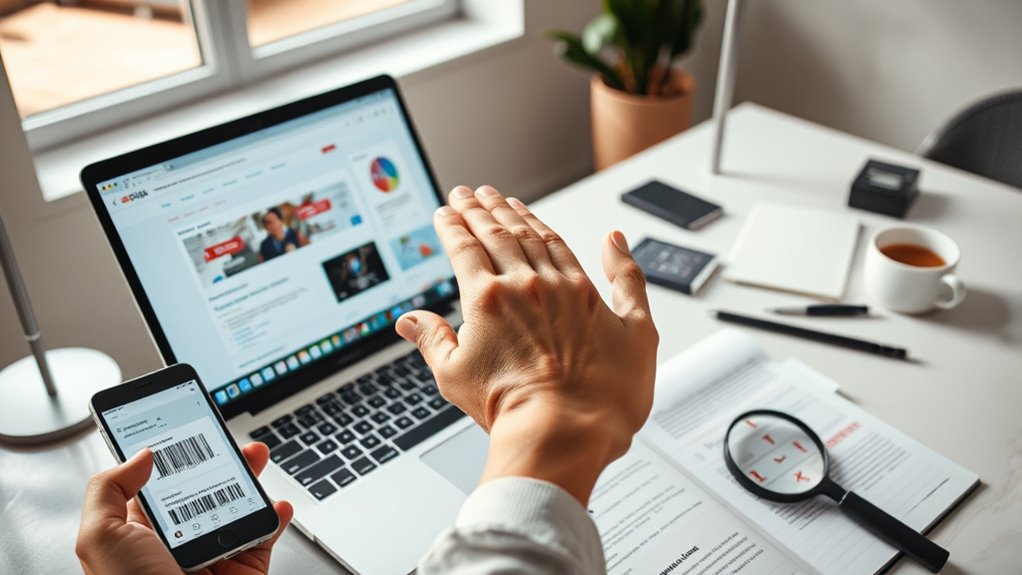

To verify information online, use fact-checking tools like Snopes, FactCheck.org, and PolitiFact. These platforms help you quickly analyze claims, find supporting evidence, and detect falsehoods or biases. Cross-check info with reputable sources and pay attention to source transparency and credibility. Be mindful of emotional language or patterns of sensationalism. If you keep exploring, you’ll discover even more techniques to guarantee you’re getting trustworthy and balanced information.

Get beauty and skincare favorites delivered free — and shop member deals
- Fast, free delivery on millions of items
- Access to Prime Big Deal Days deals on October 6–7
- Prime Video, Amazon Music and more included
Key Takeaways
- Use reputable fact-checking websites like Snopes, FactCheck.org, and PolitiFact to verify claims quickly.
- Cross-reference information with official sources or trusted news outlets for accuracy.
- Evaluate the source’s transparency, authorship, and supporting citations to determine credibility.
- Detect potential bias by examining language, perspective balance, and omission patterns.
- Combine fact-checking tools with critical analysis skills for comprehensive verification of online information.

Have you ever wondered how to quickly verify the truth behind the information you encounter online? In today’s digital age, where misinformation spreads rapidly, mastering the art of source verification is essential. When you come across a claim or a piece of news, don’t just accept it at face value. Instead, examine where it originated. Reliable sources are transparent about their authorship, credentials, and funding. Look for citations, references, or links that support the information. Cross-check the data with reputable outlets or official websites. This process of source verification helps you determine if the information is credible or if it might be misleading or false. Detecting passive voice in your reading can also improve your understanding and clarity, since active constructions are usually more direct and engaging.
Bias detection is another critical skill in evaluating online content. Recognize that many sources have inherent biases based on their political, financial, or ideological interests. When you read an article, ask yourself: Is this source presenting a balanced view, or is it pushing a particular agenda? Be cautious of emotionally charged language or one-sided arguments that seem designed to sway your opinion. Comparing multiple sources from different perspectives can reveal hidden biases and give you a more complete picture of the topic. If you notice a pattern of sensationalism or omission, consider that bias detection is at play, and approach the information with skepticism.
Using fact-checking tools makes source verification and bias detection more manageable. These tools are designed to quickly analyze claims and provide evidence-based assessments. For example, fact-checking websites like Snopes, FactCheck.org, or PolitiFact scrutinize viral claims, political statements, and news stories. When you input a dubious piece of information, these platforms search their extensive databases for corroborating or debunking evidence. Many of these tools also provide insights into the source’s credibility, helping you evaluate whether the origin of the information is trustworthy. Combining these tools with your critical judgment enhances your ability to spot falsehoods and recognize biased reporting.
As an affiliate, we earn on qualifying purchases.
Frequently Asked Questions
How Can I Identify Fake News Sources Effectively?
To identify fake news sources effectively, you should scrutinize headlines for misleading language and verify the credibility of expert quotes. Check the source’s reputation and look for signs of bias or sensationalism. Cross-reference information with reputable outlets, and be cautious of stories that lack supporting evidence or cite dubious experts. Always question extraordinary claims and use fact-checking tools to confirm the accuracy before sharing.
Are There Free Tools for Quick Fact-Checking?
Yes, you can find free tools for quick fact-checking. Browser extensions like NewsGuard or Fact-Checker help you verify info directly on webpages, while social media plugins such as the Facebook Fact-Check or Twitter’s misinformation labels alert you to false claims. These tools are easy to install and use, giving you real-time assistance in spotting fake news and ensuring the information you consume online is accurate.
How Reliable Are User-Generated Fact-Checking Platforms?
User-generated fact-checking platforms can be somewhat reliable, but you should be cautious. They often depend on community input, which can introduce editorial bias or questionable source credibility. Always cross-check their findings with reputable, established sources. While they can be helpful for quick checks, don’t rely solely on them for critical information. Your best bet is to evaluate each platform’s transparency and the credibility of the sources they cite.
Can Fact-Checking Tools Verify Images and Videos?
Think of fact-checking tools as detectives with magnifying glasses. They can perform image analysis and video verification, helping you spot fakery or edits. These tools examine pixels, metadata, and motion patterns to confirm authenticity. While they’re effective for many cases, some sophisticated forgeries can still slip through. So, use them as your first line of defense, but stay cautious and cross-check with multiple sources for the most reliable truth.
What Steps Should I Take if I Find False Information Online?
If you find false information online, start by checking the source credibility to see if it’s trustworthy. Then, look for reputable fact-checking sites or official statements to verify the facts. If the information is incorrect, consider sharing misinformation correction with your network to prevent further spread. Always rely on verified sources and avoid amplifying unverified claims, helping to promote accurate information and curb misinformation online.
online misinformation verification software
As an affiliate, we earn on qualifying purchases.
As an affiliate, we earn on qualifying purchases.
Conclusion
Think of fact-checking tools as your trusty lighthouse guiding you through a stormy sea of information. They help you navigate safely past hidden rocks of falsehoods and misleading waves, leading you to the shore of truth. Just as a lighthouse warns sailors of danger, these tools keep you aware and cautious. By trusting them, you stay on course, ensuring your journey online remains clear, safe, and grounded in reality.
source credibility analysis tools
As an affiliate, we earn on qualifying purchases.
As an affiliate, we earn on qualifying purchases.
bias detection browser extension
As an affiliate, we earn on qualifying purchases.
As an affiliate, we earn on qualifying purchases.
Fall Picks
fall essentials
As an affiliate, we earn on qualifying purchases.