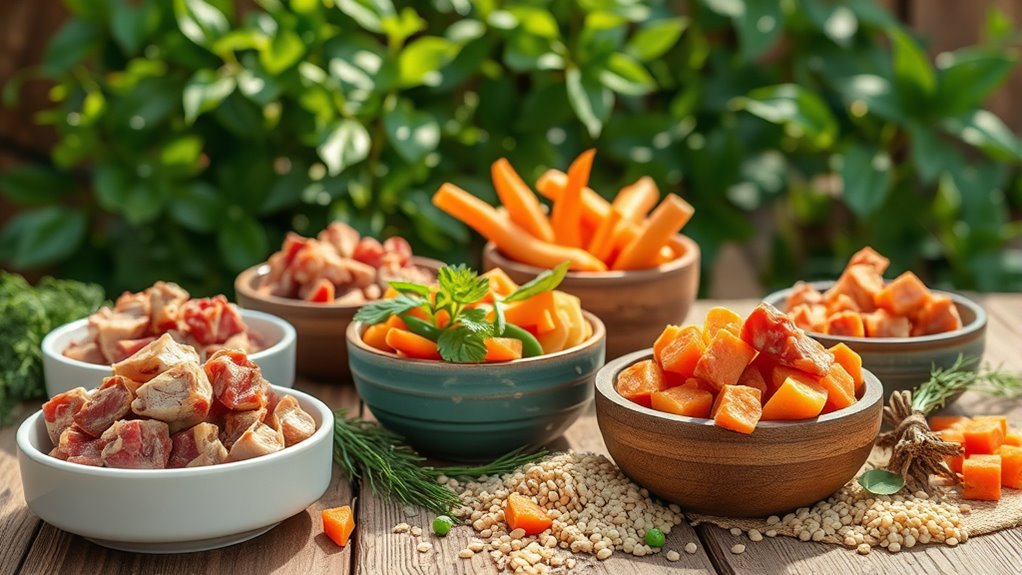

Choosing fresh and organic pet food means you can control the ingredients, avoiding preservatives and artificial additives. It provides your pet with nutrient-dense, high-quality foods that support better digestion, coat health, and energy. Sourcing from trusted suppliers guarantees ingredients stay fresh and safe. While organic options can be more costly, the health benefits often outweigh the expense. To discover how to make the most of these benefits for your pet, explore further.
Key Takeaways
- Provides control over high-quality, preservative-free ingredients tailored to your pet’s dietary needs.
- Supports overall health, digestion, and coat quality through nutrient-dense, organic foods.
- Reduces exposure to pesticides, chemicals, and artificial additives by sourcing from reputable suppliers.
- Requires careful ingredient selection and consultation with a vet to ensure a balanced, complete diet.
- Promotes long-term wellness and strengthens the bond between pet and owner through attentive nutrition choices.

Have you ever wondered if the food you give your pet is truly healthy and free from harmful additives? Many pet owners are shifting toward fresh and organic options, believing that it’s a better way to support their pet’s health. One way to guarantee the quality of your pet’s diet is by preparing homemade recipes. When you make food at home, you control every ingredient, avoiding preservatives, artificial flavors, and fillers commonly found in commercial pet foods. This approach allows you to customize meals to your pet’s specific needs and preferences, which can lead to better digestion, shinier coat, and more energy.
However, creating homemade recipes isn’t just about choosing fresh ingredients; ingredient sourcing plays a vital role. Sourcing high-quality, organic produce, meats, and grains means you’re providing your pet with nutrient-dense foods free from pesticides, antibiotics, and hormones. When shopping, look for reputable suppliers or local farms that prioritize organic farming practices. This guarantees that the ingredients you use are not only fresh but also safe and ethically produced. Prioritizing ingredient sourcing also involves reading labels carefully, asking questions at farmers’ markets, and avoiding processed products that may contain hidden additives.
Preparing homemade meals for your pet can seem intimidating at first, but it’s quite manageable once you understand the basics. Start with simple recipes that incorporate lean meats, vegetables, and grains. For example, you might cook chicken with carrots and sweet potatoes, then mix it with a small portion of rice or oats. Always remember that balance is key: your pet needs a variety of nutrients, vitamins, and minerals to stay healthy. Consulting with a veterinarian or pet nutritionist can help you develop a well-rounded plan that meets your pet’s specific dietary requirements.
In addition to homemade recipes, ingredient sourcing is essential for maintaining a healthy diet. Buying from trusted sources ensures that the ingredients retain their nutritional value and are free from harmful contaminants. Organic ingredients often cost more, but they offer peace of mind that your pet isn’t ingesting unnecessary chemicals. Making your pet’s food at home with carefully sourced ingredients also allows you to introduce new, wholesome foods gradually, reducing the risk of allergies or digestive issues. Incorporating knowledge about plants in Soul Sanctuaries can inspire you to include safe, pet-friendly herbs and vegetables in your pet’s meals, enhancing both flavor and nutritional content.
Ultimately, providing fresh and organic pet food through homemade recipes and mindful ingredient sourcing empowers you to give your pet a healthier, more natural diet. It’s a proactive step that benefits their overall well-being and strengthens your bond through the care you invest in their meals.
organic pet food
As an affiliate, we earn on qualifying purchases.
As an affiliate, we earn on qualifying purchases.
Frequently Asked Questions
How Do I Transition My Pet to Organic Food Safely?
You should start a gradual shift by mixing small amounts of organic food into your pet’s usual diet, increasing the ratio over a week or two. Keep their feeding schedule consistent to reduce stress and monitor for any digestive issues. This slow change helps your pet adjust comfortably and safely to the new food, ensuring they get used to the new flavors and ingredients without upsetting their stomach.
Are Organic Pet Foods Suitable for All Breeds and Ages?
Think of organic pet food as a caring family quilt, woven with love for every breed and age. Yes, it suits most breeds and ages, but you should consider breed compatibility and age suitability. Puppies, seniors, and specific breeds may require tailored nutrients. Always consult your vet to guarantee the organic choice supports your pet’s unique needs, giving them a healthy, happy life.
What Certifications Should I Look for on Organic Pet Food Labels?
When choosing organic pet food, look for certifications like USDA Organic or other reputable organic seals to verify authenticity. These certifications guarantee the food meets strict standards for organic ingredients. Also, check the label for clear ingredient lists and accurate information, so you know exactly what your pet’s eating. Prioritizing certified organic and label accuracy helps you make informed, healthy choices for your pet’s well-being.
How Do Organic Ingredients Affect My Pet’s Allergy Management?
Organic ingredients can help with allergy relief by reducing exposure to synthetic additives and potential allergens. If your pet has ingredient sensitivity, choosing organic food minimizes the risk of reactions caused by pesticides or artificial preservatives. You’ll notice fewer allergy symptoms, like itching or digestive issues, because organic ingredients are less likely to trigger sensitivities. Always consult your vet to ensure the food aligns with your pet’s specific allergy management plan.
Can Organic Pet Food Help Improve My Pet’s Lifespan?
You might notice your pet living longer when you switch to organic food because of the potential longevity benefits. Organic ingredients often provide better nutrition quality assurance, reducing exposure to harmful chemicals and fillers. This healthier diet can support essential organs and boost immune function over time. While no guarantee exists, choosing organic pet food aligns with your goal of helping your furry friend enjoy a longer, happier life.
fresh pet food delivery
As an affiliate, we earn on qualifying purchases.
As an affiliate, we earn on qualifying purchases.
Conclusion
Choosing fresh and organic pet food means prioritizing your pet’s health and well-being. While it may cost more and require extra effort, the benefits of a happier, healthier pet far outweigh the inconveniences. Just as a vibrant, fresh meal nourishes your body, organic food fuels your pet’s vigor. Remember, investing in quality now creates a lifetime of comfort and joy for your furry friend—because their health is the greatest gift you can give.
homemade dog food ingredients
As an affiliate, we earn on qualifying purchases.
As an affiliate, we earn on qualifying purchases.
natural cat food
As an affiliate, we earn on qualifying purchases.
As an affiliate, we earn on qualifying purchases.