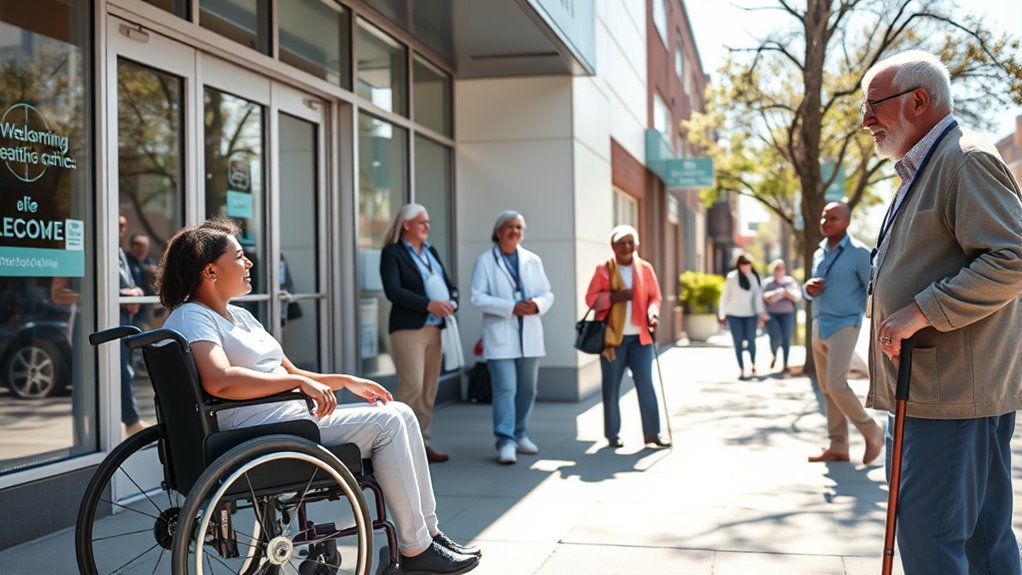

To bridge gaps in healthcare access, you need to understand that health equity means ensuring everyone receives fair, quality care regardless of their background or circumstances. Addressing social determinants like income, housing, and education is essential, along with practicing cultural competence to build trust and communicate effectively. By actively removing barriers and respecting diverse needs, you can help create a more inclusive healthcare system. Keep exploring how these strategies can make a real difference for all communities.
Key Takeaways
- Address social determinants like income, education, and housing to reduce barriers to healthcare access.
- Enhance cultural competence among healthcare providers to improve communication and trust with diverse populations.
- Implement targeted outreach and support services that are culturally appropriate and respectful.
- Foster ongoing community engagement to identify and dismantle systemic barriers to care.
- Promote policies and practices dedicated to continuous efforts toward achieving health equity for all populations.
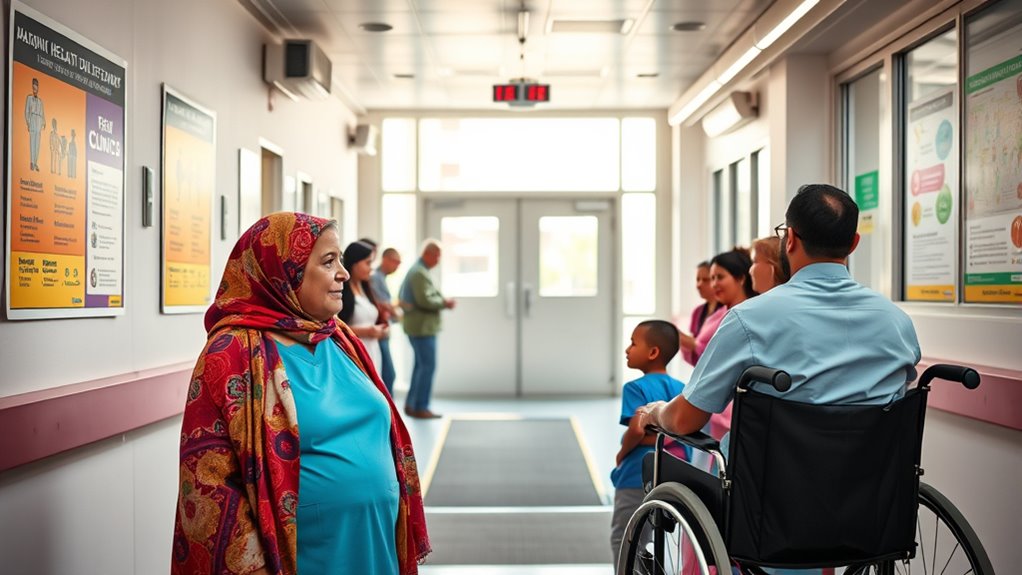
What does it really mean to achieve health equity? It’s about ensuring that everyone has a fair shot at good health, regardless of their background or circumstances. To do this, you need to recognize that health isn’t just about individual choices or medical care; it’s deeply influenced by social determinants—factors like income, education, employment, housing, and community safety. These social determinants create disparities that can make it harder for some populations to access quality healthcare or maintain healthy lifestyles. When these social barriers are overlooked, health gaps widen, leaving marginalized groups at a disadvantage. Achieving health equity means addressing these root causes, not just treating their symptoms.
You play an essential role in closing these gaps by understanding the importance of cultural competence. This means developing a genuine awareness of, and respect for, different cultural beliefs, practices, and languages. When you approach healthcare with cultural competence, you’re better equipped to communicate effectively and build trust with diverse populations. This trust is paramount because it encourages people to seek care early, adhere to treatment plans, and participate fully in their health decisions. Without cultural competence, even the best medical interventions can fall flat if they don’t resonate with the patient’s cultural context. You need to see beyond stereotypes and assumptions, actively listening to your patients’ stories and respecting their perspectives. Doing so helps reduce misunderstandings, overcome language barriers, and ensure that care feels personalized and respectful.
Understanding social determinants and practicing cultural competence go hand in hand. For example, if you’re working with a community facing housing insecurity or food scarcity, knowing these social factors can guide you in providing more targeted support or connecting them to social services. Meanwhile, cultural competence ensures that your outreach and care strategies are appropriate and respectful of cultural nuances. This dual approach helps break down barriers that prevent vulnerable populations from accessing healthcare. Additionally, recognizing the role of global health trends can help inform more effective strategies for outreach and intervention. By acknowledging social determinants and honing cultural competence, you’re not just treating illness—you’re fostering an environment where everyone feels valued and empowered to pursue better health.
Ultimately, achieving health equity isn’t a one-time effort; it’s an ongoing commitment to understanding and addressing the complex web of social and cultural factors that influence health. It requires you to be proactive, empathetic, and culturally aware, always seeking ways to remove barriers and create opportunities for everyone to thrive. When you do this, you’re helping to build a more just and inclusive healthcare system where health isn’t a privilege for some, but a right for all.
Top picks for "health equity bridg"
Open Amazon search results for this keyword.
As an affiliate, we earn on qualifying purchases.
Frequently Asked Questions
How Do Socioeconomic Factors Specifically Affect Healthcare Access?
You face socioeconomic barriers that can limit your healthcare access, making it harder to get the care you need. Factors like income, education, and employment influence whether you can afford healthcare services and insurance. When healthcare is too expensive or resources are scarce, you might delay or skip necessary treatments. Addressing these socioeconomic factors is vital to guarantee you have equitable access to quality healthcare, regardless of your financial or social circumstances.
What Policies Have Been Most Effective in Reducing Health Disparities?
Imagine a bridge spanning inequality—policy reform and funding initiatives are the beams holding it up. These policies are most effective in reducing health disparities when they target underserved populations, expand access, and improve affordability. You benefit when governments invest in community clinics and support preventive care. By prioritizing equitable resource distribution, you help create a healthier, fairer society where everyone has a chance at good health.
How Can Telemedicine Improve Healthcare Equity?
You can improve healthcare equity through telemedicine by offering remote consultations that reach underserved communities. Digital health tools make it easier for people with limited mobility or transportation issues to access care without traveling. By expanding telemedicine services, you reduce disparities, ensuring more individuals receive timely medical attention. This approach helps bridge gaps in healthcare access and promotes equitable health outcomes across diverse populations.
What Role Do Community Organizations Play in Promoting Health Equity?
Community organizations act as the bridge over troubled waters, connecting underserved populations with essential healthcare services. You can see their role clearly through community engagement, which fosters trust and understanding. They also influence resource allocation, ensuring that vulnerable groups receive necessary support. By actively collaborating with local residents, these organizations help break down barriers, making healthcare more accessible and equitable for everyone.
How Can Individuals Advocate for Better Healthcare Access in Their Communities?
You can advocate for better healthcare access by engaging in community outreach efforts and promoting health literacy. Talk to local leaders about healthcare gaps, organize informational sessions, and share resources that improve understanding of health services. Encourage others to get involved, educate your neighbors on available resources, and support policies that expand access. Your active participation can help reduce disparities and ensure everyone in your community receives equitable care.
Conclusion
You might think healthcare access is just about resources, but it’s also about fairness and opportunity. When you bridge gaps in health equity, you create a world where everyone stands on equal ground, regardless of background. It’s easy to focus on what’s missing, yet the real power lies in what we can build together. By closing these gaps, you’re not just improving health—you’re shaping a future where equity is the foundation for all.