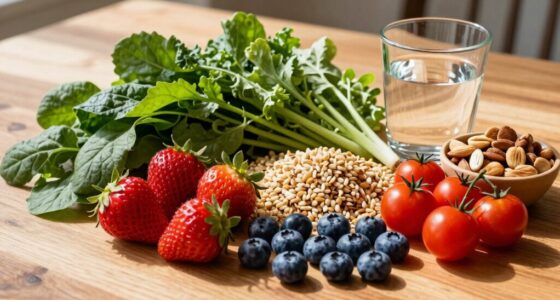
Adopting a high-protein, high-fiber diet can be a sustainable way to lose weight while supporting your overall health. It helps you build and maintain muscle, improves digestion, and keeps you full longer, reducing overeating. Incorporate plant-based proteins like beans, lentils, and tofu, along with whole grains and vegetables. Planning meals and portion control are key, so you’ll stay motivated on your weight loss journey. Keep exploring for more tips to make this approach work best for you.

Get beauty and skincare favorites delivered free with Prime
- Fast, free delivery on millions of items
- Prime Video, Amazon Music and more included
- Member-only deals all year
Key Takeaways
- Prioritizing high-protein, high-fiber foods promotes satiety, reducing overeating and supporting sustainable weight loss.
- Incorporating plant-based proteins like beans, lentils, and tofu provides essential nutrients with low saturated fats.
- Meal planning with batch-cooked legumes and grains ensures quick, nutritious options, aiding consistency and adherence.
- Combining diverse plant proteins and seasonal vegetables keeps meals satisfying, flavorful, and nutritionally balanced.
- Maintaining portion control and balanced intake throughout the day optimizes weight loss while supporting overall health.
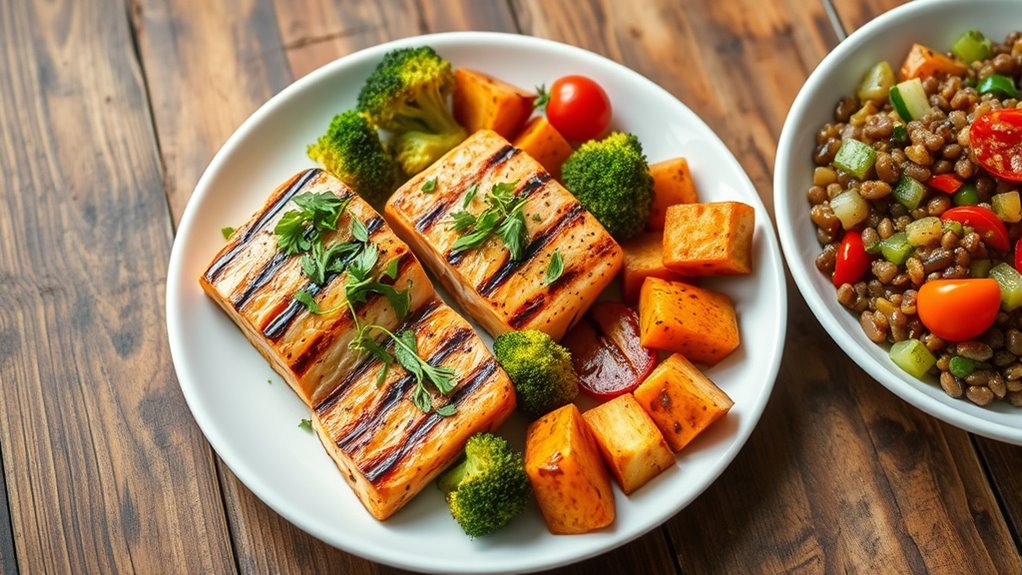
A high-protein, high-fiber diet can considerably boost your health by supporting muscle growth, improving digestion, and helping you feel full longer. When you focus on incorporating plant-based options into your meals, you not only enhance your nutrient intake but also promote sustainability. Plant-based proteins like beans, lentils, chickpeas, tofu, and tempeh provide ample protein without the saturated fats found in some animal products. These options are versatile, affordable, and packed with fiber, which slows digestion and keeps hunger at bay. To maximize these benefits, you need effective meal planning strategies that make incorporating plant-based options seamless and enjoyable.
Start by designing your meal plans around nutrient-dense, high-protein, high-fiber foods. Incorporate a variety of legumes, whole grains like quinoa and oats, and vegetables such as broccoli and spinach. These foods naturally provide a balance of protein and fiber, making it easier to meet your daily goals without relying on processed foods. When planning meals, consider batch cooking or prepping ingredients in advance. For example, cook large batches of lentils or chickpeas to add to salads, wraps, or grain bowls throughout the week. This approach saves time during busy days and ensures you always have healthy, high-protein, high-fiber options readily available.
Plan meals with legumes, whole grains, and veggies; batch cook to save time and stay fueled.
Another effective strategy involves mixing and matching different plant-based proteins to create satisfying combinations. For instance, pairing beans with whole grains increases the overall protein content and enhances flavor. You can also experiment with plant-based meat alternatives made from soy or pea protein, which can add variety without sacrificing your dietary goals. To keep your diet diverse and prevent boredom, try new recipes and incorporate seasonal vegetables, nuts, and seeds. These additions boost both the fiber and nutrient profile of your meals.
Smart meal planning also means paying attention to portion sizes and balancing your intake throughout the day. Include a good source of protein and fiber in every meal—whether it’s breakfast oats with chia seeds and berries, a hearty lentil soup for lunch, or a stir-fry with tofu and vegetables for dinner. Snacks like roasted chickpeas or a handful of nuts can help maintain energy levels and curb cravings. Additionally, staying hydrated and listening to your body’s hunger cues will support your weight loss efforts and overall well-being.
high protein high fiber meal prep containers
As an affiliate, we earn on qualifying purchases.
As an affiliate, we earn on qualifying purchases.
Frequently Asked Questions
Can High-Protein Diets Cause Kidney Damage?
High-protein diets don’t usually cause kidney damage if you have healthy kidney function. However, if your kidneys are already compromised, excessive protein intake can strain them. You should monitor your protein consumption and consult a healthcare professional if you have concerns about kidney function. For most people, moderate high-protein diets are safe and can support weight loss without risking kidney health.
How Do High-Fiber Diets Affect Gut Health?
Imagine you switch to a high-fiber diet, and over time, you notice better digestion and regularity. That’s because fiber fermentation promotes a healthy balance in your gut microbiota, which supports overall gut health. By nourishing beneficial bacteria, fiber improves nutrient absorption and reduces inflammation. Incorporating a variety of fiber-rich foods helps your gut microbiota thrive, leading to improved digestion and enhanced immune function.
Are High-Protein, High-Fiber Diets Suitable for Vegetarians?
Yes, high-protein, high-fiber diets suit vegetarians well. You can incorporate vegetarian protein sources like beans, lentils, tofu, and tempeh, which also provide essential nutrients. Pair these with fiber-rich plant foods such as whole grains, vegetables, fruits, and nuts to boost fiber intake. This combination supports your weight loss goals while maintaining a balanced, plant-based diet that’s sustainable and satisfying.
What Are the Potential Side Effects of Increasing Fiber Intake?
You might experience fiber bloating and digestive discomfort when increasing your fiber intake. Coincidentally, these side effects often occur during the initial adjustment period as your body adapts. To minimize discomfort, gradually add fiber-rich foods, drink plenty of water, and listen to your body’s signals. If symptoms persist, consider consulting a healthcare professional to guarantee you’re balancing your diet effectively without overdoing it.
How Long Does It Take to See Weight Loss Results?
You might start noticing weight loss results within a few weeks, but it varies based on your weight loss timeline and how your body adapts metabolically. Initially, you’ll see quicker changes, but as you lose weight, metabolic adaptation can slow progress. Consistency is key, and patience helps. Typically, steady weight loss of 1-2 pounds per week is sustainable and healthy, but individual results depend on your effort and body’s response.
As an affiliate, we earn on qualifying purchases.
Conclusion
By choosing a high-protein, high-fiber diet, you set yourself up for sustainable weight loss. Imagine Sarah, who incorporated lean meats and vegetables into her meals; within months, she felt more energized and noticed her clothes fitting better. This approach helps you stay full longer and supports your health goals without extreme restrictions. Stick with it, and you’ll see steady progress—making your weight loss journey both effective and enjoyable.
As an affiliate, we earn on qualifying purchases.
As an affiliate, we earn on qualifying purchases.
Fall Picks
fall essentials
As an affiliate, we earn on qualifying purchases.