
TL;DR

Get beauty and skincare favorites delivered free with Prime
- Fast, free delivery on millions of items
- Prime Video, Amazon Music and more included
- Member-only deals all year
A Glamour UK first-person essay argues that maximalist manicures can honor Black women’s influence on nail culture and offer a personal form of self-expression. The piece also reports a wider debate over minimalist beauty standards, while noting that cost and time make elaborate nails a personal choice rather than an obligation.
Glamour UK has published a first-person essay arguing that maximalist nail art can serve as a tribute to Black womanhood and cultural expression, amid renewed debate over the popularity of short, neutral and “barely there” manicures. The piece follows controversy over a BBC article that the broadcaster removed after it suggested the bare-nails trend could “perpetuate white supremacist standards of beauty.”
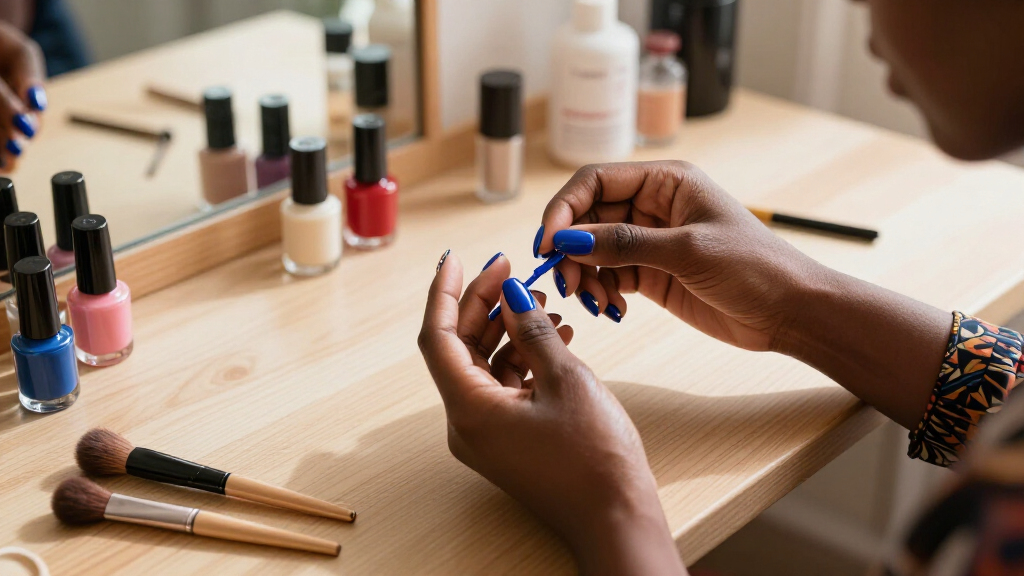
The essay’s author describes elaborate manicures as a lasting part of her personal style and a way to feel connected to herself and to the Black women who helped shape nail culture. She traces her own changing preferences from simple acrylics as a schoolgirl to longer designs with three-dimensional details, chrome and gems. She also describes nail compliments and conversations as small ways her manicures connect her with other people across generations.
The article places that personal account against the recent popularity of short, neutral and natural-looking nails, including Japanese manicures and “BB cream” or rosehip-oil nail looks. It does not establish that all wearers choose these styles for the same reasons. Some people, the essay says, view the broader “clean girl” and “quiet luxury” aesthetic as linked to restraint and pressure to conform; others welcome a break from beauty routines that can be expensive and time-consuming.
Tinu Bello, a senior Mylee ambassador, tells Glamour that maximalism is gaining attention after years of pared-back nails, describing bold designs as a form of self-expression amplified by social media. The author also credits her nail technician, Lottie, with a collaborative approach that turns clients’ moodboards—drawing on patterns, music, fashion and other references—into individual designs.
Nail Art as Cultural Expression
The essay’s central point is that manicure preferences can carry cultural meaning beyond appearance. Nail art has roots in Black, Latina and Asian communities, the article says, and styles associated with those communities have influenced contemporary nail culture. Against that history, calling understated nails “elegant” or “tasteful” can prompt questions about which looks are treated as the default and whose creativity is recognized.
That argument is presented as the author’s interpretation, not proof that minimalist manicures are inherently exclusionary. The piece also recognizes practical considerations: elaborate sets can require more time and money, and the author says she would not fault anyone for opting out. The tension matters to readers because it shows how a fashion trend can be discussed both as an aesthetic preference and as part of a larger conversation about identity, representation and expectations placed on women.
As an affiliate, we earn on qualifying purchases.
From Bare Nails to a Wider Debate
The immediate backdrop is an online argument over bare or minimally styled nails. According to the source article, the BBC removed a piece that had suggested the trend could “perpetuate white supremacist standards of beauty.” The source does not provide the BBC article’s publication date, the full text of its explanation for removal, or details of the editorial decision.
Glamour’s report also quotes beauty journalist Kristin Rodulfo, who told the BBC that the look “really promotes blankness and this kind of sameness and erasure of culture and identity that is so important to black and brown communities.” The essay uses that observation to frame a question about how beauty language assigns value to different styles, while setting out a distinct counterpoint: some women may simply want a less demanding manicure.
In its practical discussion, the report does not present maximalist nails as a single fixed look. Bello advises choosing a theme or a limited set of details—such as one color palette, repeated gems or a recurring motif—and using negative space to keep a design visually balanced. The author’s own process with Lottie begins with a moodboard and develops into a design made for the client.
“Maximalism in beauty is having a real main character moment.”
— Tinu Bello, senior Mylee ambassador, speaking to Glamour UK
As an affiliate, we earn on qualifying purchases.
What the Trend Debate Cannot Settle
The source does not provide survey data showing how widely minimalist or maximalist manicures are being worn, or evidence that the clean-girl aesthetic is directly connected to any particular political movement. The claim that bare nails can reinforce racialized beauty standards remains an argument made in the debate, rather than a conclusion established by the article.
Details about the BBC’s removal of the earlier article are also limited: the source does not report the BBC’s full reasoning or whether it plans to republish or amend the piece. Nor does it establish whether maximalist nails are gaining popularity across salons generally; Bello’s assessment is an industry source’s view, and the article offers no market figures to test it.
As an affiliate, we earn on qualifying purchases.
How Nail Styles May Evolve
The article offers no scheduled follow-up or formal next milestone. The immediate next development is likely to be continued discussion among beauty writers, nail artists and clients as trends shift between understated finishes and more expressive designs. Readers can expect individual choices to remain shaped by personal taste, cultural reference, time and cost, rather than a single style replacing another everywhere.
Glamour’s practical takeaway is that people interested in maximalist nail art can start with a clear theme or one repeated design element, while leaving some natural nail visible. That advice is styling guidance from Bello, not a prediction that a particular manicure trend will dominate next.
As an affiliate, we earn on qualifying purchases.
Key Questions
What is the Glamour UK article about?
It is a first-person essay about the author’s love of maximalist manicures and how she sees them as a tribute to Black womanhood and cultural expression.
Why are bare nails part of a wider debate?
Critics quoted in the report question whether praise for neutral, understated looks can elevate a narrow beauty ideal and overlook cultural influences on nail art. Other people welcome simpler manicures as a way to reduce the time and expense of beauty upkeep.
Does the article say minimalist nails are racist?
No. It reports a disputed interpretation of the trend and the language used to praise it. It does not establish that every person who chooses bare nails shares a particular motive or that the style itself has one fixed meaning.
What advice does the article give for trying maximalist nails?
Tinu Bello suggests starting with a theme, limiting the design to a color palette or recurring detail, and using negative space so the finished manicure feels intentional rather than crowded.
Source: rss
Evergreen bestsellers Picks
bestsellers
As an affiliate, we earn on qualifying purchases.