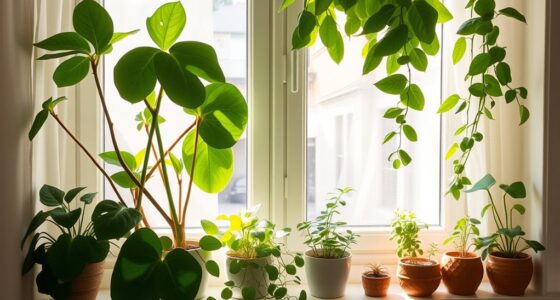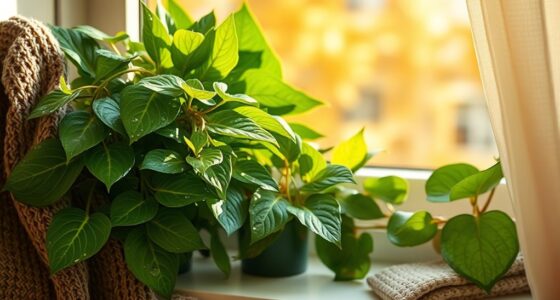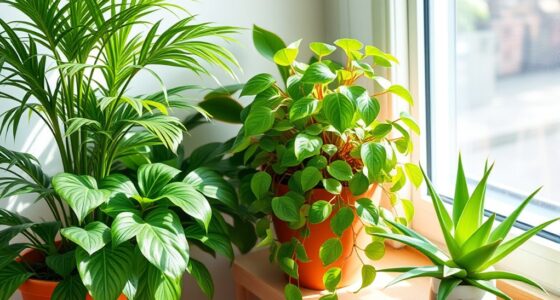

To troubleshoot common indoor plant problems, start by checking your watering habits—overwatering can cause root rot, while underwatering leads to wilting. Make certain your pots have proper drainage and you’re watering only as needed, based on soil moisture. Inspect plants regularly for pests like spider mites or aphids, and treat infestations promptly. Maintaining good airflow, proper lighting, and healthy soil helps prevent issues. Continue exploring for detailed tips to keep your plants thriving.
Key Takeaways
- Regularly check soil moisture and adjust watering to prevent over or underwatering.
- Ensure proper drainage to avoid root rot and standing water issues.
- Inspect plants regularly for pests like spider mites, aphids, and scale insects.
- Maintain good air circulation and appropriate humidity to reduce pest attraction.
- Keep plants in suitable lighting, provide nutrients, and prune dead foliage for overall health.

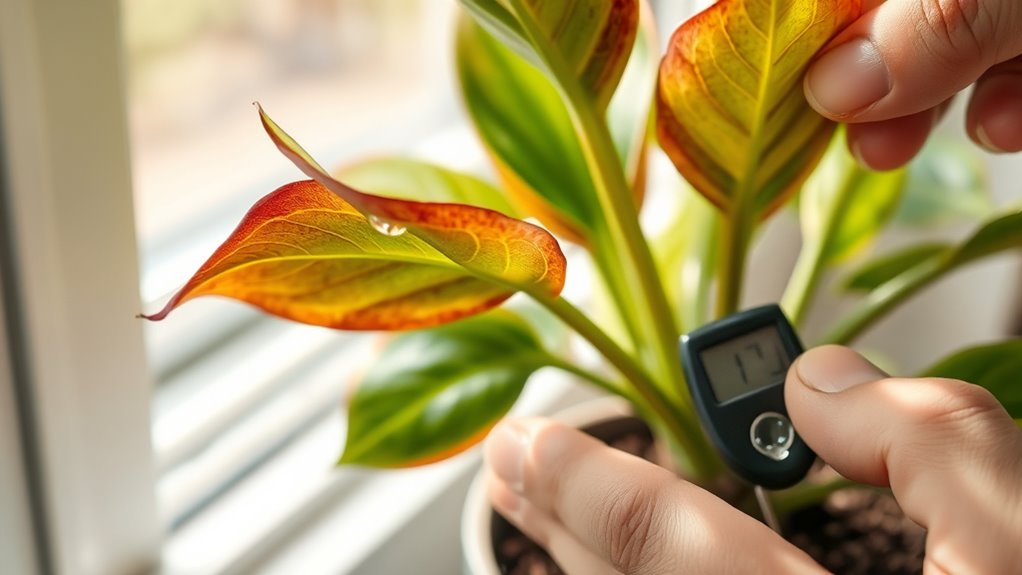
Indoor plants can greatly enhance your living space, but they often face a variety of problems that can hinder their health and growth. One of the most common issues is watering problems. Overwatering is a frequent mistake, leading to root rot and yellowing leaves, while underwatering can cause wilting and dry, crispy foliage. To prevent these issues, check your plant’s specific watering needs—some plants prefer consistently moist soil, while others thrive when allowed to dry out between waterings. Always test the soil moisture with your finger or a moisture meter before watering. When watering, do so thoroughly until excess water drains from the pot’s bottom, ensuring roots get adequate moisture. Avoid letting your plant sit in standing water, as this can promote fungal growth and root decay. Additionally, understanding the importance of proper drainage can help prevent overwatering issues by ensuring excess water is effectively expelled from the pot.
Proper watering—know your plant’s needs, test moisture first, and water thoroughly to keep roots healthy.
Pest management is another critical aspect of maintaining healthy indoor plants. Common pests like spider mites, aphids, scale insects, and mealybugs can quickly infest your plants, causing deformities, yellowing, or stunted growth. Regularly inspect your plants, especially the undersides of leaves and new growth, for signs of pests. If you spot pests, act swiftly by removing them manually with a damp cloth or using natural remedies like neem oil or insecticidal soap. Quarantining new plants before introducing them to your collection helps prevent pest spread. Good air circulation and maintaining proper humidity levels can also reduce pest problems, as many pests prefer stagnant, dry environments.
Sometimes, watering issues and pest problems are interconnected. Overwatering creates a damp environment that attracts pests like fungus gnats or mold, further weakening your plant’s health. Conversely, pest-infested plants may develop stress symptoms like leaf drop or discoloration, which can be mistaken for watering issues. Carefully observe your plants to distinguish between water-related problems and pest damage. For example, if the soil is consistently moist and your plant shows signs of pests, address both issues simultaneously—adjust your watering schedule and treat pests promptly.
In addition to watering and pests, always ensure your plants are in suitable lighting conditions and are receiving the right nutrients. Proper care minimizes stress, making your plants more resilient to common problems. Regularly cleaning leaves, pruning dead or damaged foliage, and maintaining a healthy environment will help prevent many issues from developing. Remember, a proactive approach is key to keeping your indoor plants thriving and beautiful.

Jump Rope, Tangle-Free Rapid Speed Jumping Rope Cable with Ball Bearings for Women, Men and Kids, Adjustable Foam Handles Steel Jump Ropes for Fitness
Durable & Adjustable Rope / / This jump rope is made of steel wires that are coated with...
As an affiliate, we earn on qualifying purchases.
Frequently Asked Questions
How Often Should I Repot My Indoor Plants?
You should repot your indoor plants every 1-2 years, depending on their growth and watering schedule. Look for roots growing out of the drainage holes or if the plant becomes top-heavy. Use repotting tips like choosing a slightly larger pot and fresh soil. Regular repotting helps prevent rootbound conditions, ensures proper water absorption, and keeps your plant healthy. Keep an eye on growth to know the best time to replant.
What Are Natural Remedies for Pest Infestations?
Did you know that beneficial insects like ladybugs and lacewings can reduce pest populations by up to 90%? To tackle pest infestations naturally, you can introduce these insects or use homemade sprays, such as a mixture of neem oil, insecticidal soap, or garlic and chili pepper. These remedies are safe for your plants and eco-friendly, helping you control pests without harsh chemicals, keeping your indoor garden healthy.
How Can I Tell if My Plant Is Overwatered?
You can tell if your plant is overwatered by checking its watering schedule and looking for signs like yellowing leaves, wilting, or a musty smell. To confirm, do a root rot diagnosis by gently removing the plant from its pot and inspecting the roots—brown, mushy roots indicate overwatering. Adjust your watering habits accordingly, allowing the soil to dry out between waterings to prevent further issues.
Which Indoor Plants Are Best for Low Light Conditions?
If you’re too lazy for sunlight, opt for shade tolerant plants like pothos, snake plant, or ZZ plant—they thrive in low light conditions. These low light foliage champions don’t demand much, making them perfect for dim corners or offices. With their easygoing nature, you’ll enjoy their greenery without the guilt of neglect. Just water them sparingly, and watch your indoor jungle flourish despite your minimal effort.
How Do I Improve Humidity for My Indoor Plants?
To improve humidity for your indoor plants, focus on humidity control by placing a humidifier nearby or grouping plants together to create a microenvironment. Use misting techniques regularly, lightly spraying water on your plants’ leaves to boost moisture levels. Additionally, place a tray of water with pebbles under your plants, ensuring they don’t sit directly in water. These methods help maintain ideal humidity and keep your plants healthy.

JaeJaes Smart Roller Shades for Windows, Alexa Blackout Motorized Blinds with Remote Control, Easy Install Automatic Electric Blinds for Indoor (23" W x 72" H, White)
【Smart and Simple with Alexa】Control your smart blinds hands-free with Alexa—no gateway required. Perfect for busy homes, they...
As an affiliate, we earn on qualifying purchases.
Conclusion
Just like a detective solves a mystery, you can troubleshoot your indoor plant problems with patience and observation. By understanding signs like drooping leaves or yellowing stems, you’re equipped to act quickly and restore your plant’s health. Remember, even a small issue is like a tiny crack in a vase — it can be fixed before it spreads. Keep caring, stay attentive, and watch your green companions thrive again. Your plants are counting on your gentle detective work!

Allesin Motorized Blinds with Remote | Automatic Blackout Roller Shades, Easy Install & Smart Control Electric Blinds for Home Office, Living Room (White 38" W x 72" H)
【Eco-Friendly Fabric】Enjoy 100% blackout with our innovative triple-layer fabric. Designed for motorized blinds, this material provides UV protection,...
As an affiliate, we earn on qualifying purchases.

Graywind Hardwired Smart Curtains Motorized Blackout Curtain with Remote Alexa Google Control for Sliding Door Thermal Insulated Drape One-Way or Split Draw, Custom Width to 220" (Vintage Grey)
100% blackoutfabric: Cotton linen blended fabric, reveals a calm atmosphere of charm. Totally block the passage of light,...
As an affiliate, we earn on qualifying purchases.