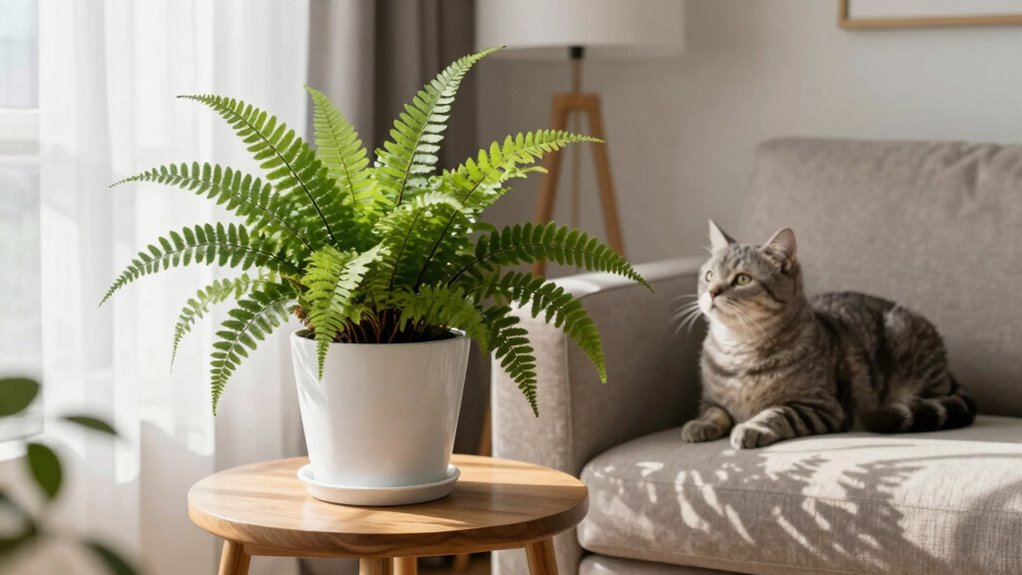

To balance indoor plants with your pet’s safety, focus on strategic placement, like using elevated shelves or wall-mounted planters out of your pet’s reach. Choose pet-friendly plants, such as spider plants or Boston ferns, and regularly check their stability. Train your pets to avoid the plants and use deterrents to keep them interested. With thoughtful setup and consistent care, you can create a beautiful, safe home for both your plants and pets—discover more tips to perfect this balance.

Get beauty and skincare favorites delivered free — and shop member deals
- Fast, free delivery on millions of items
- Access to Prime Big Deal Days deals on October 6–7
- Prime Video, Amazon Music and more included
Key Takeaways
- Use elevated, wall-mounted, or inaccessible locations to keep plants out of pets’ reach.
- Select pet-safe plants like spider plants and Boston ferns to ensure safety.
- Secure plants on sturdy stands and use barriers to prevent climbing or chewing.
- Provide pets with alternative toys and deterrents to reduce interest in plants.
- Regularly inspect and maintain plants to prevent hazards and promote a safe environment.

Bringing indoor plants into your home can brighten up your space and improve air quality, but if you have pets, you need to be mindful of their safety. The key to successfully balancing your love for greenery with your pet’s well-being lies in thoughtful plant placement. You want your plants to thrive without posing a risk to your furry friends. To do this, consider where you place your plants carefully. Elevated shelves, hanging planters, or rooms that pets can’t access are ideal spots. This way, your plants stay out of reach, and your pets won’t be tempted to chew or dig into them.
Pet safety should always come first. Many popular houseplants are toxic to cats and dogs, so it’s essential to know which ones to avoid. Plants like pothos, philodendrons, and peace lilies can cause serious health issues if ingested. Instead, opt for pet-friendly plants like spider plants, Boston ferns, or certain succulents. Even with pet-safe plants, it’s smart to monitor your pets’ interactions with new greenery. Some animals might still chew or nibble out of curiosity, so keeping plants out of paw’s reach is a simple yet effective safety measure. Additionally, understanding the importance of biodiversity in your plant choices can help promote a healthier indoor environment and support conservation efforts.
Plant placement isn’t just about avoiding toxicity. Proper positioning can also prevent accidental spills, broken pots, or damaged plants, which could be hazardous in themselves. Secure your plants on sturdy stands or wall-mounted shelves. If you have a curious pet that loves to climb, consider installing barriers or baby gates around your plant areas. This prevents your pet from knocking over pots or causing a mess that could be dangerous. Additionally, choose pots with no sharp edges and ensure they’re stable enough to withstand any curious paw or nose. Incorporating plant safety practices, such as regular checks and secure positioning, can further ensure your home remains a safe environment for both your pets and your greenery. Regularly inspecting your plants for signs of damage or instability is also a helpful safety habit.
You should also think about your pet’s natural instincts. Pets often dig, chew, or nibble plants, so providing alternative entertainment or chew toys can reduce their interest in your houseplants. Training your pets to avoid plants or using deterrents like citrus scents or bitter sprays can be effective. Remember, the goal is to cultivate a space where your plants add beauty and air quality without risking your pet’s health. With a little planning and vigilance, you can enjoy lush greenery and keep your pets safe and happy at the same time. The balance is achievable, and it makes your home a more inviting and harmonious place for everyone.
As an affiliate, we earn on qualifying purchases.
Frequently Asked Questions
How Can I Identify Toxic Plants for Pets?
To identify toxic plants for pets, you need to learn about plant toxicity and prioritize pet safety. Research common houseplants and check if they’re listed as toxic by veterinary resources or the ASPCA. Always observe your pets’ behavior around new plants, and if you suspect poisoning, contact your vet immediately. Staying informed helps you protect your pets and maintain a safe, beautiful indoor space.
Are There Safe Plants for Cats and Dogs Indoors?
Yes, there are safe plants for cats and dogs indoors. You can place pet-friendly plants like spider plants, Boston ferns, or areca palms in your home. When considering plant placement, keep them out of reach if your pets tend to chew. Pet training can also help prevent your animals from nibbling on plants, ensuring their safety. Always research plants thoroughly before bringing them inside to maintain a healthy, pet-safe environment.
What Are Signs My Pet Is Affected by Indoor Plants?
You notice your pet acting strangely, maybe drooling, vomiting, or lethargy—these are signs of toxic plant exposure. Plant pet safety depends on recognizing toxic plant signs early. If your pet shows loss of appetite, difficulty breathing, or unusual behavior after nibbling on a plant, it’s a red flag. Don’t ignore these symptoms; quick action can save your pet’s life. Always research your plants’ toxicity to keep both your pets and home safe.
How Often Should I Clean Indoor Plant Soil for Pet Safety?
You should clean indoor plant soil once a month to guarantee pet safety. Check soil moisture regularly to prevent overwatering, which can lead to mold and bacteria. Keep up with your fertilization schedule, avoiding excessive nutrients that might attract or harm pets. Always remove fallen leaves or debris promptly, and consider using pet-safe soil or barriers to keep your furry friends from digging or ingesting soil.
Can Pets Damage Indoor Plants, and How to Prevent It?
Pets can damage indoor plants by chewing leaves or digging in the soil. To prevent this, you should carefully consider plant placement, keeping plants out of your pet’s reach. Pet training helps teach your animals boundaries around plants, reducing the risk. You might also use deterrents or barriers to protect your greenery. Consistent supervision and positive reinforcement are key to creating a safe environment for both your pets and plants.
wall-mounted plant shelves for pets
As an affiliate, we earn on qualifying purchases.
As an affiliate, we earn on qualifying purchases.
Conclusion
Finding the perfect balance between indoor plants and pets is like walking a tightrope—trust your instincts, stay vigilant, and adjust as needed. With a little care and awareness, your home becomes a harmonious jungle where both flora and fauna thrive side by side. Remember, you’re the gardener of this living tapestry, weaving together safety and beauty. Keep nurturing that delicate equilibrium, and your home will flourish with life and love.
As an affiliate, we earn on qualifying purchases.
sturdy plant stands for indoor plants
As an affiliate, we earn on qualifying purchases.
As an affiliate, we earn on qualifying purchases.
Fall Picks
fall essentials
As an affiliate, we earn on qualifying purchases.