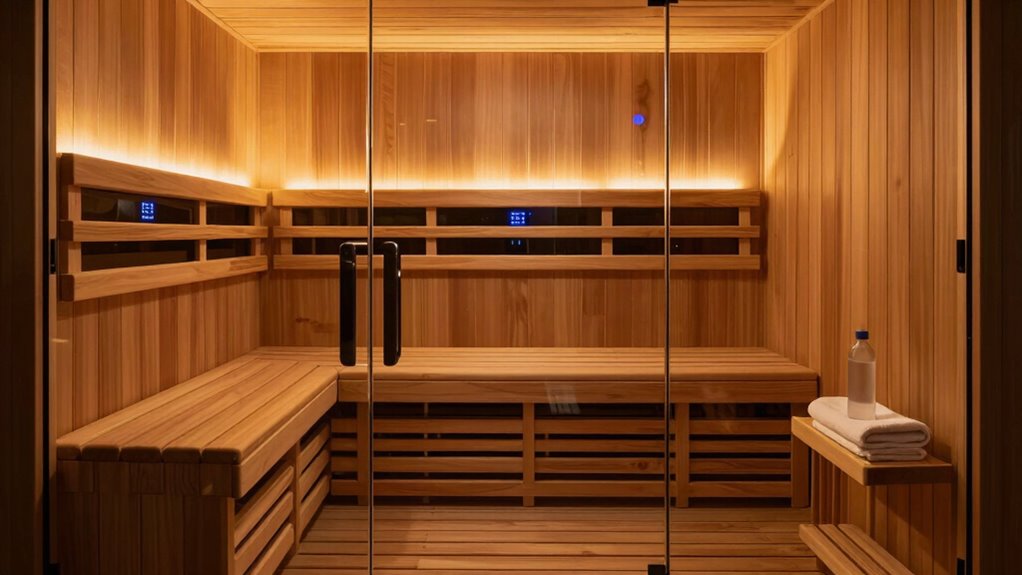

When buying an infrared sauna, don’t overlook key setup questions like electrical requirements, space, ventilation, and lighting options. Make certain your home can handle higher-voltage models, and consider how the sauna’s size fits your space. Good ventilation is vital for safety and comfort, while adjustable lighting enhances relaxation. Ignoring these details can lead to costly mistakes or safety issues. Keep exploring to discover the top practical questions that will make your sauna setup smooth and stress-free.

Get beauty and skincare favorites delivered free with Prime
- Fast, free delivery on millions of items
- Prime Video, Amazon Music and more included
- Member-only deals all year
Key Takeaways
- Assess electrical requirements and outlet availability to ensure safe and proper sauna installation.
- Consider space, size, and ventilation needs for optimal comfort and safety.
- Determine if higher-voltage models require dedicated circuits or professional wiring.
- Evaluate lighting options for mood enhancement and energy efficiency.
- Review energy consumption to balance operational costs with usage frequency.

If you’re considering adding an infrared sauna to your wellness routine, understanding what to look for can make your purchase much easier. One of the first questions you should ask yourself is about lighting options. Does the sauna offer adjustable or customizable lighting? Some models come with built-in LED lights, which can create a calming atmosphere and enhance relaxation. Others might have chromotherapy features, allowing you to choose different colors to boost your mood or energy levels. Think about whether you want dimmable lights, color-changing capabilities, or simple, functional lighting. Your preferences will influence how comfortable and enjoyable your sessions are, so don’t overlook this aspect when selecting a model.
Consider adjustable lighting options, such as LED or chromotherapy, to enhance relaxation and mood during your sauna sessions.
Another practical setup question revolves around voltage requirements. Infrared saunas typically operate on either standard household outlets or higher-voltage circuits. If you’re in a home with limited electrical capacity, you’ll want to check whether the sauna requires 110-120 volts or if it needs a dedicated 220-240 volt outlet. Some models may need professional installation to ensure safety and proper functioning, especially if they demand higher voltage. Knowing your home’s electrical setup beforehand can save you from surprises or costly upgrades later. Also, consider how this impacts your room placement—does your space have the appropriate outlet nearby, or will you need an electrician to install one? This small but crucial detail can influence your overall setup process. Additionally, understanding the electrical requirements can help you plan your space more effectively and avoid potential delays. Ensuring compatibility with your existing electrical system can also contribute to safety during use.
Beyond these technical considerations, it’s also wise to think about the sauna’s size and placement. Will it fit comfortably in your designated space? Do you prefer a compact design for easier placement or a larger unit for more features and space? While size isn’t directly related to lighting options or voltage, your choice impacts installation and usability. Ensuring proper ventilation is another key aspect, as it helps maintain safety and comfort during use. Proper ventilation can also influence the energy efficiency of your sauna, as a well-ventilated space can help regulate temperature and reduce power consumption. A well-designed ventilation system can also prolong the lifespan of the unit by preventing moisture buildup and mold growth.
Lastly, don’t forget to ask about energy efficiency and power consumption. A sauna that consumes less power can save you money on electricity bills, especially if you plan to use it frequently. Make sure to verify the manufacturer’s specifications and see if the model has energy-saving features. Additionally, considering biodiversity and sustainable practices in manufacturing can help you make a more environmentally conscious decision. Taking the time to clarify these setup questions before making a final decision ensures you choose a sauna that fits your space, lifestyle, and budget. It also helps you avoid unexpected hurdles during installation and use, making your wellness upgrade smooth and satisfying.
infrared sauna with adjustable LED lighting
As an affiliate, we earn on qualifying purchases.
As an affiliate, we earn on qualifying purchases.
Frequently Asked Questions
How Do I Choose the Right Size for My Space?
Did you know that 85% of sauna owners regret choosing the wrong size? To pick the right size, measure your space carefully, considering ceiling height and door clearance. Think about material durability—sturdy materials last longer. Also, factor in your budget considerations; smaller models are often more affordable and easier to install. By balancing these elements, you’ll find a sauna that fits perfectly and lasts for years.
What Safety Features Should I Look For?
You should look for safety features like reliable temperature control to prevent overheating, and safety sensors that monitor humidity and temperature levels. These features help you stay within safe operating ranges and alert you if anything’s off. Make certain the sauna has easy-to-use controls and automatic shut-off options for added safety. Prioritizing these features ensures a safer, more comfortable experience during your sessions.
Can I Install It Myself or Need Professional Help?
You can often install an infrared sauna yourself, but it depends on the installation complexity and your DIY skills. If the setup involves basic electrical work and straightforward assembly, a confident DIYer can handle it. However, for more complex installations or if you’re unsure about electrical safety, it’s best to seek professional help. Always review the manufacturer’s instructions and consider your experience level before deciding on a DIY approach.
How Is Indoor Ventilation Handled With Infrared Saunas?
Indoor ventilation for infrared saunas involves ensuring proper air circulation and odor control. You should install vents or exhaust fans to promote fresh air flow and prevent stuffiness. Keeping the space well-ventilated helps manage humidity and reduces odors from sweat or heating elements. Regularly opening windows or adding air purifiers can also enhance air quality. Proper ventilation makes your sauna experience more comfortable and maintains the longevity of your setup.
What Are the Electrical Requirements and Wiring Considerations?
Thinking you can just plug in an infrared sauna? Think again. You need to check electrical compatibility to guarantee your home’s wiring can handle the load. Proper wiring safety is vital, so hiring a professional electrician is wise. They’ll confirm your electrical system can support the sauna’s power requirements, preventing dangerous overloads. Skipping these steps might turn your relaxing retreat into a shocking experience—literally! Prioritize safe, compliant wiring for peace of mind.
high voltage infrared sauna for home
As an affiliate, we earn on qualifying purchases.
As an affiliate, we earn on qualifying purchases.
Conclusion
As you step into your infrared sauna, imagine the gentle warmth enveloping you, melting away stress and tension. By asking those critical setup questions beforehand, you’re ensuring a seamless experience—one that turns your space into a personal sanctuary. Picture yourself relaxing into that soothing heat, feeling renewed and revitalized. With the right preparation, your sauna becomes more than just a purchase; it transforms into a haven of comfort and wellness, waiting to embrace you each time you enter.
infrared sauna with chromotherapy features
As an affiliate, we earn on qualifying purchases.
As an affiliate, we earn on qualifying purchases.
compact infrared sauna for small spaces
As an affiliate, we earn on qualifying purchases.
As an affiliate, we earn on qualifying purchases.
Halloween Picks
halloween
As an affiliate, we earn on qualifying purchases.