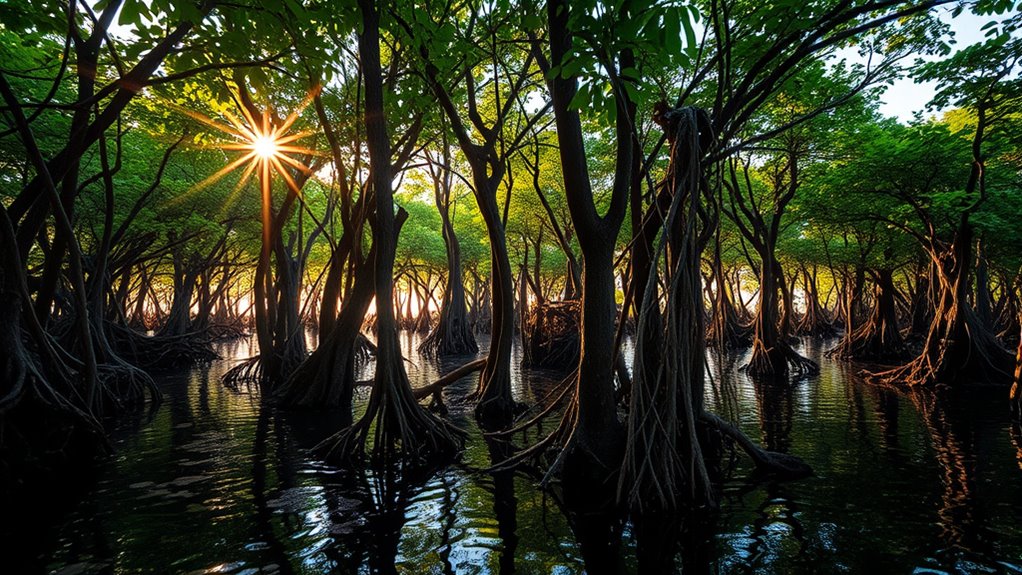

Mangrove restoration is a powerful secret weapon in capturing blue carbon, which helps fight climate change. By restoring these forests, you support their natural ability to sequester large amounts of CO₂, while also protecting coastlines from storms and erosion. Mangroves benefit local communities through healthy fisheries and tourism, making them essential for both environmental and human well-being. Keep exploring to discover more ways mangroves can help build a resilient, sustainable future.
Key Takeaways
- Mangroves are highly effective blue carbon sinks, storing large amounts of atmospheric CO₂ for decades.
- Restoring mangroves enhances natural carbon sequestration, making them a crucial tool in climate change mitigation.
- Mangroves provide coastal protection, reducing storm damage and erosion, complementing their role in carbon storage.
- They support local livelihoods through fisheries and eco-tourism, promoting sustainable community development.
- Protecting and restoring mangroves leverages nature’s own capacity to combat climate change and preserve biodiversity.

Have you ever wondered how restoring mangroves can benefit both the environment and local communities? Mangroves are more than just coastal trees—they’re powerful natural tools that fight climate change and protect our shores. When you restore mangroves, you’re tapping into their incredible ability to perform carbon sequestration. These forests trap and store vast amounts of carbon dioxide from the atmosphere, acting as critical blue carbon sinks. This process helps reduce greenhouse gases, slowing global warming and mitigating climate change impacts. Because mangroves can store carbon for decades or even centuries, they’re some of the most effective natural solutions for carbon management.
Restoring mangroves enhances carbon storage, fighting climate change and protecting coastal ecosystems.
But the benefits don’t stop at climate regulation. Restoring mangroves also plays a crucial role in coastal protection. Coastal areas are constantly battered by storms, rising seas, and erosion—threats that endanger both ecosystems and human settlements. Mangroves act as natural barriers, absorbing wave energy and reducing the impact of storm surges. Their dense root systems stabilize the shoreline, preventing erosion and safeguarding communities from flooding. By planting and nurturing these forests, you help create a resilient buffer zone that shields coastlines from the increasingly severe weather patterns caused by climate change. Enhancing coastal resilience through mangrove restoration can significantly reduce disaster risks and promote sustainable development.
Engaging in mangrove restoration offers tangible benefits for local communities, too. These ecosystems support fisheries by providing nursery habitats for many fish and shellfish species, which local populations often depend on for their livelihoods. Healthy mangroves also attract tourism and recreation, boosting local economies. Plus, they help improve water quality by filtering pollutants and trapping sediments, which benefits both marine life and the health of the coastline. Understanding the spiritual energy of nature can deepen our appreciation for these ecosystems’ vital role in our planet’s health and our own well-being.
Restoring mangroves is a practical and impactful way to combat climate change while supporting sustainable development. When you participate in planting efforts or advocate for mangrove conservation, you’re directly contributing to carbon sequestration and coastal protection. These actions help reduce the vulnerability of coastal communities to climate-induced disasters and promote biodiversity. As you become more aware of their importance, you’ll see that mangroves are not just trees—they’re indispensable allies in our fight against climate change, offering a natural solution that benefits both the environment and the people living along the coast. Embracing mangrove restoration means investing in a resilient, healthier planet for generations to come.
As an affiliate, we earn on qualifying purchases.
Frequently Asked Questions
How Long Does It Take for Restored Mangroves to Sequester Significant Carbon?
When asking how long it takes for restored mangroves to sequester significant carbon, you’re considering the restoration timeline’s impact on carbon accumulation. Typically, you’ll see noticeable carbon storage within 5 to 10 years, as mangroves grow and develop their root systems. The faster you restore and protect these areas, the sooner they start absorbing and storing carbon, making your efforts essential for climate mitigation.
What Are the Main Challenges in Mangrove Restoration Projects?
You face several challenges in mangrove restoration projects. Funding constraints often limit resources and long-term support, making it hard to sustain efforts. Stakeholder coordination can be complex, requiring cooperation among local communities, governments, and NGOs. These challenges can delay or hinder success, but with strategic planning and collaboration, you can overcome them. Prioritizing clear communication and securing diverse funding sources helps guarantee your restoration project thrives.
Can Mangrove Restoration Be Scaled Globally to Combat Climate Change?
You might think scaling mangrove restoration globally is impossible, but with strong global policy and innovative funding strategies, it’s achievable. By prioritizing mangroves in climate action plans, securing international investments, and fostering community involvement, you can help expand restoration efforts worldwide. This approach not only fights climate change but also preserves essential ecosystems. Your support in advocating for these policies and strategies can make a significant impact toward a sustainable future.
How Do Local Communities Benefit From Mangrove Restoration Efforts?
You benefit from mangrove restoration through community empowerment and livelihood diversification. As restoration efforts grow, you gain access to new job opportunities like mangrove planting and conservation work. These projects also help protect local fisheries, boosting food security. With healthier mangroves, you experience increased resilience to climate impacts, and you’re encouraged to participate in sustainable practices, ultimately improving your community’s well-being and long-term sustainability.
Are There Any Risks or Negative Impacts Associated With Mangrove Restoration?
Imagine planting a garden that attracts both butterflies and pests—you might face unintended consequences. Similarly, mangrove restoration can pose environmental risks like disrupting local ecosystems or introducing invasive species. It can also spark social conflicts over land rights or resource use. While these efforts benefit climate and communities, you should be aware of potential negative impacts that could undermine long-term success. Careful planning minimizes these risks and promotes sustainable outcomes.

Silt Fence with Stakes – 200 x 3ft, Black Erosion Silt Fence Fabric Including 20 Wooden Stakes, Heavy Duty Silt Fencing Erosion Barrier for Construction Sites, Farms, Landscape, Yards
- Large Size and Customizable: 200ft length, 24in fabric height, cut to size
- Sediment Runoff Prevention: Captures sediment and prevents water pollution
- Includes 20 Wooden Stakes: Stakes are 3ft long for stability
As an affiliate, we earn on qualifying purchases.
As an affiliate, we earn on qualifying purchases.
Conclusion
By restoring mangroves, you wield a weapon more powerful than a thousand suns in the fight against climate change. These incredible forests can store more carbon than almost any other ecosystem, turning back the tide of rising seas and warming skies. Every effort you make in mangrove restoration isn’t just planting trees—it’s igniting a massive, unstoppable force that can transform our planet’s future. Embrace this green revolution and be part of the solution that shapes history.

Meguiar's M4965 Marine/RV Fiberglass Restoration System, 3-Piece Marine Fiberglass Repair Kit Featuring Oxidation Remover for Boat Care Plus Boat Polish and Wax
- Restores Boat's Appearance: Revitalizes fiberglass and gel coat
- Removes Stains and Scratches: Eliminates oxidation stains and scratches
- Provides Brilliant Shine: Delivers high gloss and luster
As an affiliate, we earn on qualifying purchases.
As an affiliate, we earn on qualifying purchases.
Blue Carbon Sequestration of Mangrove Ecosystem in South Sinai, Egypt: A Comprehensive Evaluation
As an affiliate, we earn on qualifying purchases.
As an affiliate, we earn on qualifying purchases.