

To teach critical thinking skills through media literacy, you need to encourage questioning the content, source, and motives behind the messages you see online or on TV. Look closely at language, visuals, and framing to decode the true intent. Recognize fake news tactics like sensational headlines and emotional appeals. Understanding platform algorithms and biases helps you stay aware of manipulation. Keep exploring these strategies to become more confident in steering through information, unlocking powerful skills that you can use every day.
Key Takeaways
- Teach students to question sources, motives, and credibility of online and media content.
- Develop decoding skills to analyze language, visuals, and framing for hidden messages.
- Incorporate activities that identify biases, manipulative tactics, and emotional triggers.
- Encourage seeking diverse, credible sources to prevent echo chambers and broaden perspectives.
- Foster skepticism and reflective thinking to differentiate fact from fiction in digital media.
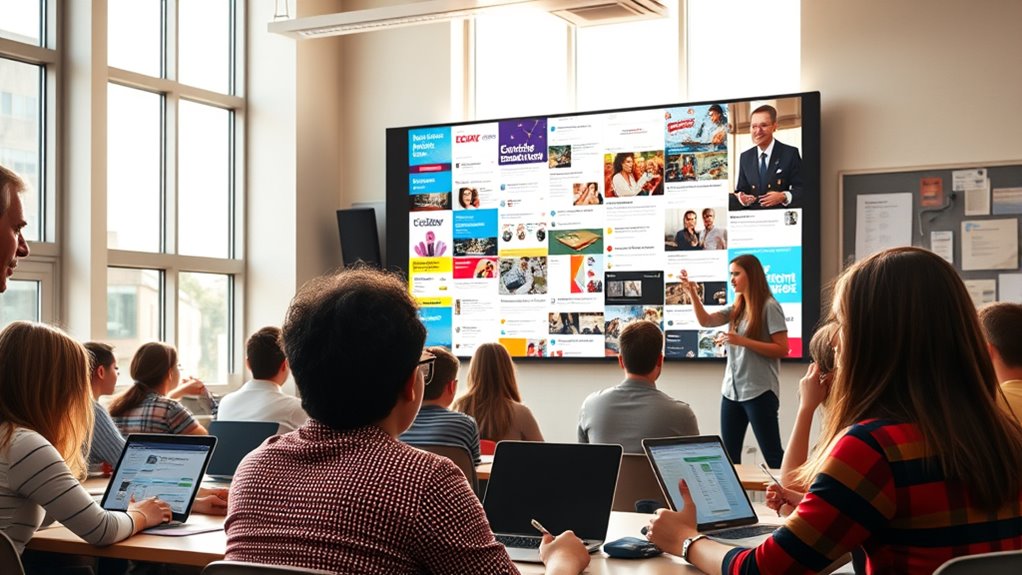
Have you ever questioned the information you encounter online or on television? In today’s digital age, you’re constantly bombarded with news stories, social media posts, and advertisements that can be difficult to sift through. This flood of information makes it easy to fall for fake news, which can distort reality and influence your opinions. That’s where media literacy becomes essential. It’s about developing the skills to critically analyze what you see and hear, especially in a world where digital decoding is necessary to separate fact from fiction.
Fake news spreads rapidly because it’s often designed to grab your attention emotionally rather than inform objectively. When you come across sensational headlines, you need to pause and ask yourself: Who created this? What’s the source? Is this information supported by credible evidence? Media literacy teaches you to approach each piece of content with a healthy dose of skepticism and to recognize common tactics used to manipulate audiences. Instead of passively accepting everything, you learn to decode messages, identify biases, and understand the motives behind certain stories.
Digital decoding is an essential skill in this process. It involves analyzing the language, visuals, and framing of a message to uncover its true intent. For example, a photo may be edited or taken out of context to evoke an emotional response. Headlines might be crafted to provoke anger or fear rather than provide balanced information. When you develop your digital decoding abilities, you’re better equipped to see through these tricks and assess the reliability of the information presented. It’s about becoming an active participant in your media consumption rather than a passive receiver.
Building media literacy also means understanding how different platforms and algorithms influence what you see. Social media feeds are tailored to keep you engaged, often amplifying sensational or polarizing content. Recognizing these mechanisms helps you question the motives behind what’s being shown and encourages you to seek out diverse sources. By doing so, you gain a broader perspective and reduce the impact of echo chambers that reinforce misinformation.
Ultimately, media literacy empowers you to make informed decisions and participate more responsibly in society. It’s a skill set that requires practice, curiosity, and critical thinking. The more you hone your ability to decode digital messages, the better you’ll be at spotting fake news and understanding the complex landscape of modern media. In a world overflowing with information, your ability to think critically is your best defense against manipulation and misinformation. Developing these skills is similar to cultivating a strong foundation in software quality assurance, which emphasizes systematic analysis and attention to detail to ensure accuracy and reliability.
Frequently Asked Questions
How Can Parents Support Media Literacy at Home?
You can support media literacy at home by establishing clear family media rules that set boundaries and promote responsible use. Engage your kids in media discussion strategies, such as questioning content and exploring its intent. Encourage open conversations about what they see online or on screens, helping them develop critical thinking skills. This proactive approach fosters a healthy media environment and empowers your children to become discerning consumers of digital content.
What Are Common Challenges in Teaching Media Literacy?
You might find that teaching media literacy is challenging because kids develop media skepticism at different rates, making it hard to gauge their understanding. Misinformation detection can seem overwhelming, especially when false information spreads quickly. You need to encourage open conversations, help them question sources critically, and stay patient as they learn to navigate media responsibly. Overcoming these challenges requires ongoing effort and adapting strategies to their age and skills.
How Does Media Literacy Impact Adolescent Mental Health?
You see that media influence can substantially affect your adolescent mental health by shaping your self-esteem. When you critically analyze media messages, you’re better equipped to recognize unrealistic standards and compare yourself less. This awareness helps you resist negative portrayals, boosting confidence. Developing media literacy enables you to navigate social media and other platforms more mindfully, reducing anxiety and promoting healthier self-esteem, ultimately supporting your mental well-being.
Are There Specific Tools or Apps for Teaching Media Literacy?
Think of media literacy tools as a Swiss Army knife for your teaching toolkit. You can use interactive quizzes to engage students actively and media analysis tools to dissect and understand content better. These resources help students sharpen their critical thinking skills and navigate the digital world more confidently. Many apps and websites, like Newsela or MediaSmarts, offer these tools, making learning about media both fun and impactful.
How Can Educators Assess Students’ Media Literacy Skills?
You can assess students’ media literacy skills by assigning media analysis projects where they evaluate sources for credibility and bias. Ask them to demonstrate digital skepticism by questioning the content’s intent and verifying facts. Use reflective discussions or quizzes to gauge their understanding of media messages. Observing how students analyze and critique media helps you measure their progress in developing critical thinking skills essential for steering through digital content effectively.
Conclusion
As you navigate the vast digital landscape, remember that media literacy is your compass. Picture yourself standing at a crossroads, each sign pointing to different truths and illusions. By sharpening your critical thinking, you equip yourself to see through the fog of misinformation and find clarity in the chaos. With these skills, you shape a clearer, more informed perspective—like a lighthouse guiding ships safely through stormy seas, illuminating what truly matters amid the noise.