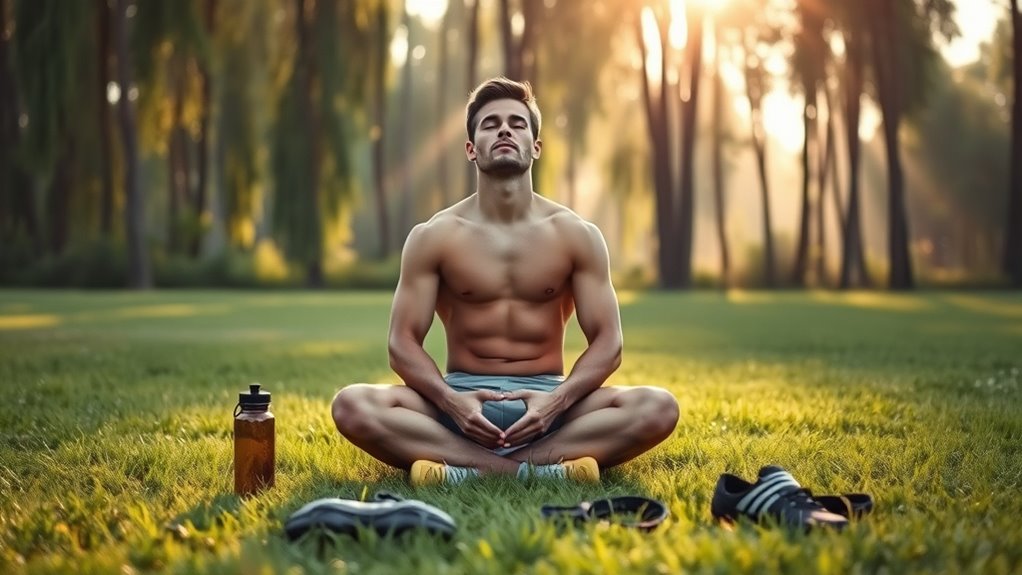

Meditation can remarkably boost your athletic performance by helping you stay calm, focused, and resilient under pressure. It teaches you to pay close attention to your thoughts and feelings without judgment, making it easier to manage stress and negative distractions. Regular practice integrates seamlessly into your routine, sharpening your mental clarity and confidence. Staying consistent with meditation will develop a powerful mental toolkit, ensuring you remain composed and ready for peak performance whenever it counts.
Key Takeaways
- Meditation improves focus and mental clarity, enabling athletes to perform with greater concentration during competitions.
- Regular meditation helps manage stress and anxiety, fostering calmness and resilience under pressure.
- It enhances self-awareness, allowing athletes to recognize and control negative thoughts and distractions.
- Integrating meditation into training routines boosts mental discipline and accelerates recovery from setbacks.
- Over time, meditation develops a mindset of confidence and composure, leading to sustained high-performance levels.
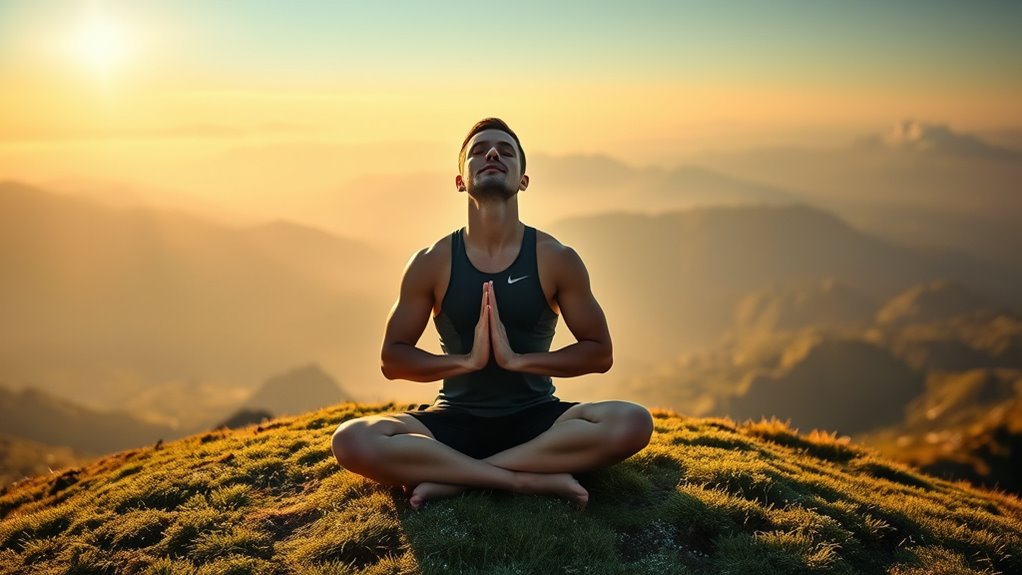
Have you ever wondered how athletes stay calm and focused under pressure? The answer often lies in their use of mindfulness techniques, which help build mental resilience and maintain composure during intense moments. Mindfulness involves paying close attention to your thoughts, feelings, and physical sensations without judgment. When you practice regularly, you develop a heightened awareness of your mental state, making it easier to manage stress and stay centered during competitions. These techniques are simple but powerful tools that can transform your approach to training and performance.
Athletes use mindfulness to stay calm, focused, and resilient under pressure.
By incorporating mindfulness into your routine, you learn to anchor yourself in the present moment. This focus prevents your mind from wandering to past mistakes or future worries that can distract you and undermine your confidence. For example, simple breathing exercises, such as taking slow, deep breaths, can immediately calm racing thoughts and steady your nerves. When you’re able to regulate your breath and bring your attention back to the here and now, you reinforce your mental resilience, making it easier to stay composed when the stakes are high.
Practicing mindfulness also enhances your ability to detach from negative self-talk or external distractions. As an athlete, you might face moments of doubt or frustration, but with consistent mindfulness practice, you learn to observe those thoughts without getting caught up in them. This mental clarity allows you to respond more thoughtfully rather than react impulsively. Over time, this mental discipline becomes second nature, giving you a competitive edge because you’re less susceptible to pressure and more capable of executing your skills under stress.
Furthermore, mindfulness techniques can be integrated into your training sessions seamlessly. You can start or end each workout with a few minutes of meditation focused on your breath or bodily sensations. Doing so helps you reset mentally, increasing your overall mental resilience. This resilience isn’t just about avoiding anxiety; it’s about cultivating a mindset that embraces challenges and setbacks as opportunities for growth. When you see setbacks through this lens, your confidence remains intact, and you can bounce back faster.
In essence, developing mindfulness techniques as part of your routine equips you with a mental toolkit to handle high-pressure situations confidently. It sharpens your focus, fortifies your mental resilience, and ultimately enhances your performance. The more you practice, the better you become at staying calm, collected, and ready to perform at your best, no matter what challenges come your way.

The Mindful Athlete: Secrets to Peak Performance
As an affiliate, we earn on qualifying purchases.
As an affiliate, we earn on qualifying purchases.
Frequently Asked Questions
Can Meditation Improve an Athlete’s Reaction Time?
Yes, meditation can improve your reaction time by enhancing mindfulness training and mental clarity. When you practice regularly, you become more aware of your surroundings and can respond faster to stimuli. Meditation helps reduce mental clutter, allowing you to stay focused during high-pressure moments. As a result, your reflexes sharpen, giving you a competitive edge. Incorporate daily meditation to see improvements in your reaction speed and overall athletic performance.
What Types of Meditation Are Best for Athletes?
Did you know athletes who practice mindfulness techniques see a 20% boost in focus? The best meditation types for you include mindfulness meditation and breath control exercises. These methods help sharpen concentration and reduce stress, essential for peak performance. By incorporating these techniques into your routine, you improve mental clarity and resilience, giving you a competitive edge. Start with short sessions and gradually increase duration for lasting benefits.
How Long Should Athletes Meditate Daily for Optimal Results?
You should aim for 10 to 20 minutes of mindfulness meditation daily for ideal results. Consistency is key, so try to meditate at the same time each day to build a habit. This duration helps you develop better focus, reduce stress, and enhance overall performance. Even a short daily practice is effective, but maintaining a regular mindfulness duration ensures you see steady progress and reap the full benefits of your meditation routine.
Is Meditation Effective for Injury Recovery?
Meditation can be a game-changer in injury recovery. You can use mindfulness techniques to reduce pain and stress, accelerating healing. Visualization exercises help you mentally rehearse rehab movements, boosting confidence and focus. While it might not heal injuries overnight, consistent practice can markedly improve your recovery process, making it feel like you’re healing at lightning speed. Incorporate meditation into your routine, and you’ll likely see faster, more effective recovery.
Can Meditation Reduce Performance Anxiety During Competitions?
Yes, meditation can reduce your performance anxiety during competitions. By practicing mindfulness techniques, you become more aware of your thoughts and feelings, helping you stay focused. Incorporating breathing exercises calms your nervous system, lowering stress levels. Regular meditation trains your mind to stay present, making it easier to manage anxiety and perform at your best when it matters most.

Breathing Lamp Guided Visual Meditation Tool for Mindfulness,Anxiety Relief&Calm Your Mind for Stress&Visual Relaxation and Restful Sleep,478 Seconds Breathing Rate Change 3 Colors,Gift for Kids
Breathing Lamp Function: A mindful breathing lamp is a powerful and effective tool that can help you reduce…
As an affiliate, we earn on qualifying purchases.
As an affiliate, we earn on qualifying purchases.
Conclusion
So, next time you’re about to hit the field, don’t forget—meditation’s your secret weapon. Who knew sitting still and doing nothing could boost your game? Forget those fancy gadgets and endless drills; just breathe, relax, and let your mind do the heavy lifting. After all, if athletes can’t find time to meditate, maybe they’re too busy chasing their own tail. Stay zen, stay winning—because in the end, calmness beats chaos every time.

3 PCS Portable Breathing Trainer with Adjustable Resistance Settings (Black/Grey/White)
【Adjustable Resistance Exercise Trainer】Enhance your workout with our adjustable resistance exercise trainer featuring a rotating valve for easy…
As an affiliate, we earn on qualifying purchases.
As an affiliate, we earn on qualifying purchases.

Boiron StressCalm Tablets for Relief of Stress, Anxiousness, Nervousness, Irritability, and Fatigue – 60 Count
PLANT-POWERED, MULTI-SYMPTOM STRESS RELIEF: StressCalm On the Go is powered by plants to relieve occasional symptoms of everyday…
As an affiliate, we earn on qualifying purchases.
As an affiliate, we earn on qualifying purchases.