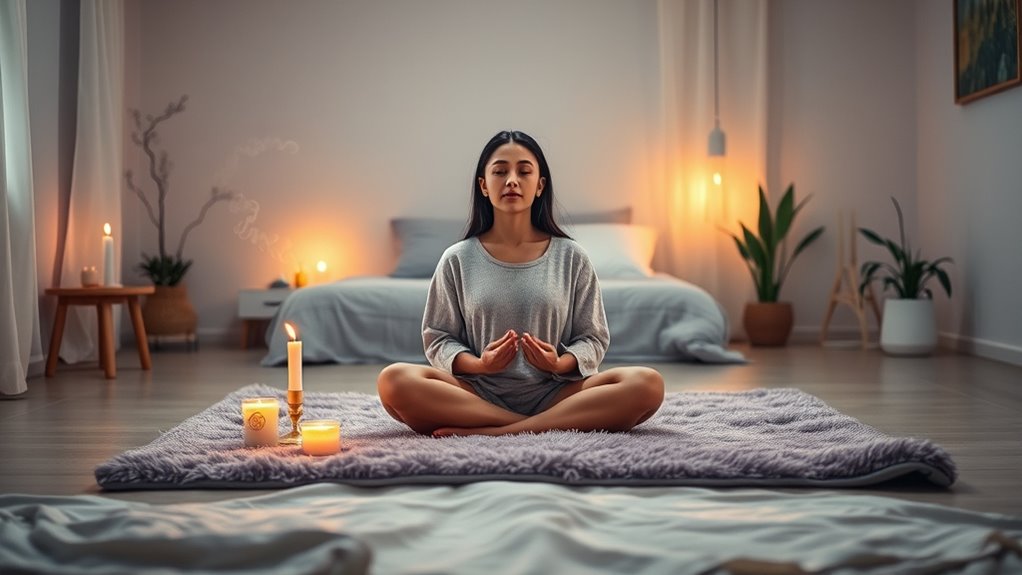

To improve your sleep with meditation, try focusing on mindful breathing—pay attention to your inhales and exhales slowly and deeply. Visualize calming images, like a peaceful beach or forest, to quiet your mind. Incorporate these techniques into your nightly routine, dedicating a few minutes in a quiet space. Consistent practice helps reduce racing thoughts and makes it easier to fall asleep. Keep exploring, and you’ll find more effective ways to achieve restful nights.
Key Takeaways
- Practice mindful breathing by paying close attention to each inhale and exhale to calm the nervous system before sleep.
- Use guided imagery to visualize peaceful environments, distracting the mind from worries and promoting relaxation.
- Establish a consistent bedtime routine incorporating mindfulness exercises to train your mind for quicker relaxation.
- Focus on present-moment awareness, gently shifting attention away from racing thoughts and daily stressors.
- Regularly integrate these practices to improve sleep quality, reduce sleep onset time, and achieve more restorative rest.

Have you ever struggled to fall asleep despite feeling exhausted? If so, you’re not alone. Many people find themselves tossing and turning, unable to quiet their minds after a long day. One effective way to combat this is by practicing mindfulness techniques. These methods help you focus your attention on the present moment, reducing the racing thoughts that often keep you awake. You might start by taking slow, deep breaths, paying close attention to how each inhale and exhale feels. As you breathe, try to gently bring your awareness away from worries or distractions and into your body. This simple act can help calm your nervous system and signal to your brain that it’s time to relax. Incorporating relaxation techniques like deep breathing exercises can further enhance your ability to unwind and prepare for restful sleep.
Guided imagery is another powerful mindfulness technique you can use to improve sleep. It involves creating a vivid mental picture of a peaceful, calming environment. Imagine yourself lying on a warm beach, feeling the gentle breeze and hearing the soft sound of waves. Or picture yourself in a quiet forest, with sunlight filtering through the trees and the rustling leaves. As you engage in guided imagery, you anchor your attention on these soothing images, which distract your mind from stressful thoughts and promote relaxation. You can find recordings or apps that guide you through these visualizations, but you can also do it on your own. The key is to make the scene as detailed and sensory-rich as possible, engaging all your senses to deepen the calming effect.
Incorporating mindfulness techniques and guided imagery into your bedtime routine can make a significant difference in your ability to fall asleep. When practiced regularly, they help train your mind to let go of the day’s worries and settle into a restful state more quickly. The more you practice, the easier it becomes to access this calmness, even on nights when your mind feels particularly restless. Remember that consistency is key—try to dedicate a few minutes each night to these techniques, ideally in a quiet, dimly lit space free of distractions. Over time, you’ll likely notice not only falling asleep faster but also experiencing more restful, restorative sleep overall. These simple yet effective practices can transform your bedtime into a peaceful, restorative experience, helping you wake up refreshed and ready for the day ahead.
Top picks for "meditation sleep practic"
Open Amazon search results for this keyword.
As an affiliate, we earn on qualifying purchases.
Frequently Asked Questions
Can Meditation Replace Medication for Sleep Issues?
Meditation vs medication can be effective for sleep, but it depends on your needs. Meditation offers a natural sleep remedy that helps calm your mind and promote relaxation, making it a good alternative for mild sleep issues. However, for severe or chronic problems, medication might be necessary. You should consult a healthcare professional to determine if meditation can replace medication or if combining both approaches works best for you.
How Long Should I Meditate Before Bed?
You should meditate for about 10 to 15 minutes before bed. Interestingly, studies show that even short meditation sessions can markedly improve sleep quality. Focus on breathing exercises or guided imagery to relax your mind and body. These techniques help slow your heart rate and calm racing thoughts, making it easier to drift off. Consistency is key, so aim to make this a nightly routine for the best results.
Are There Specific Meditation Techniques for Insomnia?
Yes, you can try specific techniques like guided imagery and body scans to combat insomnia. Guided imagery helps you visualize calming scenes, reducing stress and quieting your mind. A body scan involves slowly relaxing each part of your body, releasing tension. Both practices promote relaxation and make it easier to fall asleep. Incorporate these techniques into your bedtime routine to improve your sleep quality and reduce insomnia symptoms.
Can Meditation Help With Sleep Apnea?
Yes, meditation can help with sleep apnea by incorporating breathing exercises and mindfulness practices. These techniques can improve your breathing patterns, reduce stress, and promote relaxation, which may lessen apnea episodes. You might find that practicing deep, diaphragmatic breathing or mindful awareness of your breath before bed helps calm your nervous system, making it easier to breathe more steadily during sleep and potentially improving your sleep quality over time.
Is Meditation Suitable for Children With Sleep Problems?
Yes, meditation can be suitable for children with sleep problems. Child-friendly meditation techniques, like simple breathing exercises or guided imagery, help relax their minds. You should incorporate these practices into their sleep routine, making it a calming part of winding down. Consistency is key, so practicing meditation regularly can improve their sleep quality and ease bedtime struggles, creating a peaceful environment for restful sleep.
Conclusion
By practicing meditation for sleep, you calm your mind, relax your body, and prepare for restful nights. You let go of worries, embrace calmness, and invite peace into your sleep routine. You slow your thoughts, deepen your breath, and open yourself to restorative rest. With patience and consistency, meditation becomes your ally, guiding you toward peaceful sleep and revitalized mornings. Embrace these practices, and watch your nights transform into moments of true relaxation.