

Creating micro-communities in large cities helps you turn anonymous neighborhoods into vibrant, connected spaces. By organizing local events, safety patrols, and open communication channels, you foster trust and cooperation among residents. Encouraging shared responsibility makes everyone feel involved and invested in safety and well-being. Building social capital through activities like block parties and neighborhood clean-ups strengthens bonds. If you want to discover more ways to develop these strong, resilient communities, keep exploring solutions that work for your area.
Key Takeaways
- Implement neighborhood events and activities to foster social interactions and strengthen community bonds.
- Establish accessible communication channels for residents to share concerns and coordinate safety efforts.
- Promote shared responsibility through neighborhood watch programs and collective safety initiatives.
- Involve residents in decision-making processes for local improvements like lighting and park maintenance.
- Build social capital by encouraging trust, familiarity, and cooperation among neighbors for resilience and safety.
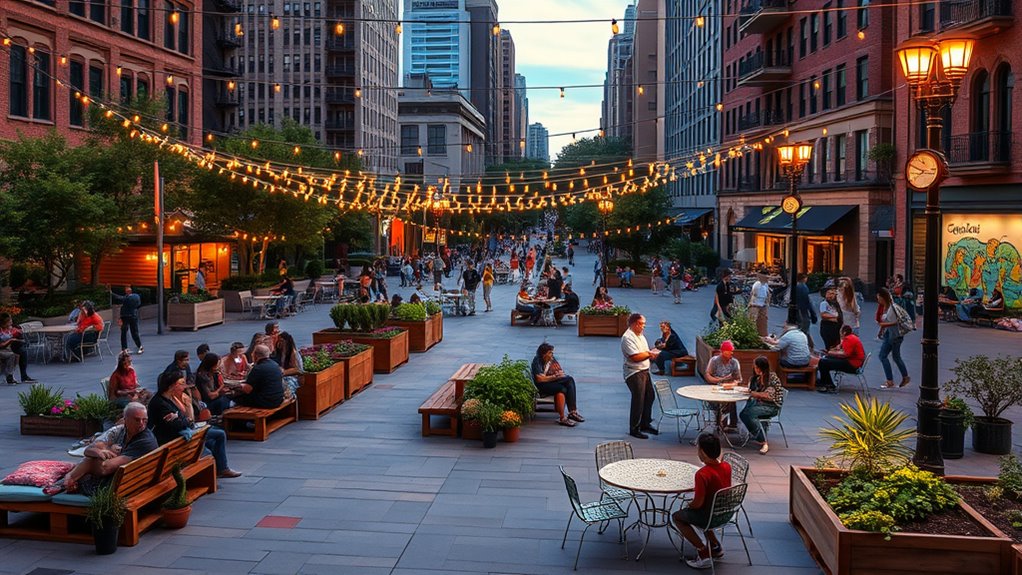
In the vastness of large cities, building tight-knit micro-communities can transform neighborhoods from anonymous sprawl into vibrant, connected spaces. When you focus on fostering a sense of belonging and cooperation among residents, urban safety naturally improves. People tend to look out for one another when they know their neighbors and share a common identity. This collective vigilance reduces crime and creates a safer environment for everyone. Community engagement is key here—by encouraging residents to participate in neighborhood events, safety patrols, and local initiatives, you build trust and accountability. Active involvement helps identify neighborhood issues early and promotes proactive solutions, making your micro-community more resilient. Implementing community cohesion strategies enhances residents’ trust and mutual support, further strengthening neighborhood bonds.
To enhance urban safety, you need to establish channels for open communication. Consider creating neighborhood social networks, either online platforms or physical gathering spots, where residents can report concerns, share information, and coordinate efforts. When people feel heard and connected, they’re more likely to look out for each other and stay alert to suspicious activity. Organizing neighborhood watch programs or safety committees can foster a sense of shared responsibility. These initiatives not only deter crime but also empower residents to take ownership of their safety, strengthening community bonds in the process. Additionally, community cohesion plays a crucial role in establishing trust and mutual support among residents.
Community engagement also plays a essential role in improving urban safety because it nurtures trust and cooperation. When you involve residents in decision-making—whether it’s about lighting improvements, park maintenance, or local events—they develop a vested interest in their neighborhood’s well-being. This sense of ownership encourages ongoing participation and vigilance. Moreover, hosting regular events like block parties, clean-up days, or safety workshops can draw neighbors together, breaking down barriers and building relationships. These interactions foster a sense of familiarity and trust, which are key for effective community policing and collective safety efforts. Building a sense of shared responsibility ensures that all residents feel empowered to contribute to safety initiatives. Additionally, fostering social capital within neighborhoods can lead to more sustained community resilience and collective action.

Lightning X Rip-Away Officer's Patrol Tactical Gunshot & Trauma IFAK Kit w/Headrest Mount – RED
FULL KIT CONTENTS LISTED IN DESCRIPTION BELOW AND IN PICTURE GRID TO THE LEFT:
As an affiliate, we earn on qualifying purchases.
As an affiliate, we earn on qualifying purchases.
Frequently Asked Questions
How Do Micro-Communities Impact Local Economies?
Micro-communities boost local economies by fostering social cohesion and encouraging local entrepreneurship. When you support small businesses within these groups, you create a cycle of economic activity that benefits everyone. These communities attract residents and visitors alike, increasing demand for goods and services. As a result, local businesses thrive, job opportunities grow, and your neighborhood becomes more vibrant and sustainable, strengthening economic resilience in the long run.
What Legal Challenges Exist in Forming Micro-Communities?
Did you know that over 60% of micro-communities face legal hurdles? You might encounter zoning restrictions that limit where you can establish your community, and property rights could complicate ownership and development. These legal challenges often require maneuvering complex regulations, securing permits, and advocating for zoning changes. Understanding these issues helps you plan effectively, ensuring your micro-community aligns with local laws and regulations, making your vision a reality.
How Can Technology Facilitate Micro-Community Development?
Technology plays a essential role in facilitating micro-community development by enabling digital networking and virtual gatherings. You can connect with like-minded individuals easily through social media platforms and dedicated apps, fostering stronger bonds. Virtual events allow members to engage regularly, regardless of physical location. By leveraging these tools, you create a sense of belonging and collaboration, making it easier to grow and sustain your micro-community in today’s digital age.
What Are Successful Examples of Micro-Communities Worldwide?
You see vibrant micro-communities thrive worldwide, blending shared spaces and cultural hubs. In Tokyo, tiny neighborhoods foster close ties through communal gardens and local markets. Similarly, Berlin’s creative districts thrive on shared studios and cultural hubs, nurturing innovation. These examples show how micro-communities, despite their size, build strong connections and cultural identity, proving that small spaces can generate big impacts when designed for interaction and shared purpose.
How Do Micro-Communities Influence Urban Sustainability?
Micro-communities boost urban sustainability by fostering shared spaces that promote resource sharing and reduce waste. As you engage with these close-knit groups, you enhance social cohesion, making neighborhoods more resilient and adaptive. These micro-communities encourage sustainable practices like community gardens or local energy initiatives, which lower environmental impact. Your participation helps create vibrant, eco-friendly urban areas where residents work together toward long-term sustainability goals.

Network Marketing For Facebook: Proven Social Media Techniques For Direct Sales & MLM Success
As an affiliate, we earn on qualifying purchases.
As an affiliate, we earn on qualifying purchases.
Conclusion
By fostering micro-communities, you turn your sprawling city into a vibrant, connected neighborhood—think of it as your own personal TARDIS shrinking to fit your block. These small bonds create a sense of belonging that even a smartphone can’t replace. So, don’t wait for a “DeLorean” moment; start building your community today. After all, in the digital age, real connections are the true time machine to a more fulfilling city life.

2-Pack Neighborhood Watch Sign,12"x 8" .04" Aluminum Reflective Sign Rust Free Aluminum-UV Protected and Weatherproof
This sign is made out of .040 rust free heavy duty aluminum
As an affiliate, we earn on qualifying purchases.
As an affiliate, we earn on qualifying purchases.

SUNNYFEEL Folding Camping Table – Lightweight Aluminum Portable Picnic Table, 18.5×18.5×24.5 Inch for Cooking, Beach, Hiking, Travel, Fishing, BBQ, Indoor Outdoor Small Foldable Camp Tables
Extremely Lightweight & Convenient: The lightweight & sturdy aluminum folding camping table weights only 4.4 LBS (2KG), providing…
As an affiliate, we earn on qualifying purchases.
As an affiliate, we earn on qualifying purchases.