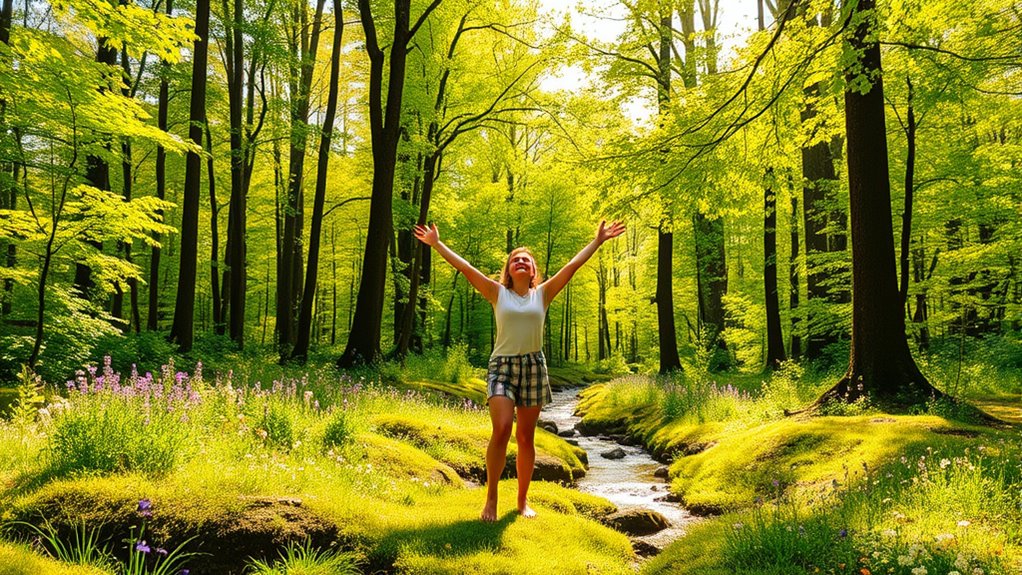

Spending time outdoors in nature can boost your mood, reduce stress, and refresh your mental well-being. Immersing yourself in calming sounds like rustling leaves or flowing streams helps you stay present and cultivates mindfulness. Observing wildlife and breathing fresh air releases feel-good chemicals, while physical activities like walking enhance your happiness. Nature offers an accessible way to reconnect and rejuvenate—stay with us to discover more about how the outdoors can transform your mood and overall well-being.
Key Takeaways
- Immersion in nature reduces stress hormones and boosts mood through calming sounds and fresh air.
- Wildlife observation fosters wonder, patience, and a stronger connection to the environment.
- Outdoor activities release feel-good chemicals like serotonin, enhancing mental and physical well-being.
- Nature encourages mindfulness, helping individuals stay present and improve emotional resilience.
- Even brief outdoor experiences provide accessible, powerful benefits for happiness and mental health.

Many people find that spending time in nature boosts their happiness and overall well-being. When you set out into a lush forest, you’re not just escaping the hustle and bustle—you’re engaging in forest therapy, a practice proven to reduce stress and improve mood. The calming sounds of rustling leaves, chirping birds, and flowing streams create a peaceful environment that helps you disconnect from everyday worries. As you breathe in the fresh, earthy air, your body releases endorphins, lifting your spirits naturally. Forest therapy encourages mindfulness, allowing you to be present in the moment, which can considerably boost your mental health. It’s a gentle reminder that nature’s tranquil settings have a unique power to heal and rejuvenate. Using proper outdoor techniques, you can further enhance your experience and maximize the benefits of your time in nature.
While wandering through the woods, wildlife observation becomes an enchanting activity that enhances your connection to the environment. Watching deer graze, birds flutter from branch to branch, or squirrels scurry across the forest floor sparks a sense of wonder and curiosity. These moments of observing wildlife not only provide entertainment but also foster a feeling of harmony with nature. They remind you that you’re part of a larger ecosystem, which can help you gain perspective on your daily challenges. Wildlife observation encourages patience and attentiveness, qualities that translate into a more mindful and centered approach to life. As you notice the intricate behaviors of animals and the subtle changes in the landscape, your mood improves, and stress diminishes.
Engaging in these outdoor activities also has tangible mental health benefits. The act of immersing yourself in natural surroundings reduces cortisol levels, the hormone associated with stress. It’s easy to feel overwhelmed by modern life, but being in nature offers a reset button. Whether you’re on a short walk through a local park or setting out on a more extensive forest adventure, the positive impact on your mental state is undeniable. Plus, the physical activity involved—walking, hiking, or just wandering—releases additional feel-good chemicals like serotonin. This combination of physical movement and natural immersion creates a powerful boost to your overall happiness.
Incorporating forest therapy and wildlife observation into your routine doesn’t require elaborate plans or special equipment. Even brief moments spent outdoors can make a big difference. All it takes is a willingness to step outside, breathe deeply, and observe the natural world around you. Doing so nurtures your mental well-being, enhances your mood, and reminds you of the simple joy found in nature’s embrace. The outdoors isn’t just a backdrop for recreation—it’s a essential source of happiness waiting to be explored and appreciated.
outdoor hiking walking shoes
As an affiliate, we earn on qualifying purchases.
As an affiliate, we earn on qualifying purchases.
Frequently Asked Questions
How Much Time Should I Spend Outdoors for Optimal Mood Benefits?
You should aim for at least 30 minutes of daily nature exposure for ideal outdoor duration benefits. Spending this time outdoors regularly helps boost your mood, reduce stress, and improve overall well-being. If you can, try to increase your outdoor time gradually or incorporate activities like walking or gardening. Consistent daily outdoor exposure is key to experiencing the full mental health benefits that nature offers.
Can Indoor Plants Provide Similar Happiness Boosts as Outdoor Nature?
Indoor greenery can definitely boost your happiness through plant therapy, but it might not provide the same level of mood benefits as outdoor nature. While caring for plants improves your mood and reduces stress, being outside offers additional sensory experiences like fresh air and sunlight. To maximize happiness, combine indoor plant care with outdoor activities. This way, you enjoy the calming effects of indoor greenery and the revitalizing power of nature.
Are There Specific Outdoor Environments That Enhance Mood More Than Others?
You’ll find that forest therapy spots and beach relaxation environments enhance your mood more than other outdoor settings. Forest therapy promotes calmness and mental clarity through immersive nature walks, while beaches offer calming sounds and sunshine that boost happiness. These environments help reduce stress, improve your mood, and reconnect you with nature. So, whenever you need a mood lift, seek out a peaceful forest or a serene beach for the best emotional boost.
How Does Nature Exposure Affect Mental Health Long-Term?
Like a steady river carving valleys, nature exposure shapes your mental health over time. You’ll experience eco therapy benefits, reducing stress and anxiety, while deepening your nature connection. Regular outdoor time boosts resilience, improves mood, and fosters a sense of calm that lasts. These long-term effects help you manage life’s challenges better, making nature not just a momentary escape but an essential part of your mental wellness journey.
Can Outdoor Activities Help With Specific Mental Health Conditions?
Yes, outdoor activities can help with specific mental health conditions. Engaging in nature therapy and practicing outdoor mindfulness can reduce symptoms of anxiety, depression, and PTSD. You might find that walking in a park, hiking, or simply sitting in nature helps calm your mind and improve emotional resilience. These activities encourage present-moment awareness, offering a natural, accessible way to manage mental health challenges effectively.
wildlife observation binoculars
As an affiliate, we earn on qualifying purchases.
As an affiliate, we earn on qualifying purchases.
Conclusion
So, next time life feels a bit heavy, consider gently stepping outside. The outdoors offers a quiet embrace, a subtle reminder that even in our busiest moments, a touch of nature can softly lift our spirits. It’s like a gentle whisper from the world, guiding you toward calm and happiness without needing grand gestures. Embrace these simple moments outside; they hold the power to nurture your mood in ways words often can’t fully express.
nature sound machine for relaxation
As an affiliate, we earn on qualifying purchases.
As an affiliate, we earn on qualifying purchases.
forest therapy guidebook
As an affiliate, we earn on qualifying purchases.
As an affiliate, we earn on qualifying purchases.