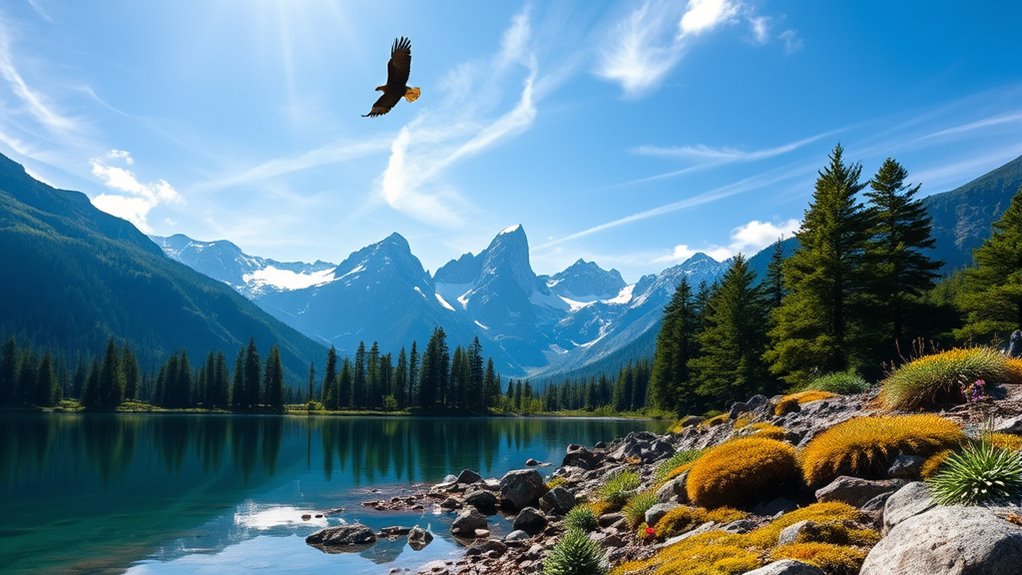

To capture the beauty and meaning of nature, you need the right gear and techniques. Use a reliable camera with fast autofocus, a range of lenses, and weather-sealed equipment to handle different conditions. Practice patience, observe animal behavior, and anticipate moments to tell meaningful stories through your images. Camouflage and environmental awareness help you blend in seamlessly. To create impactful photos that reveal nature’s true essence, discover more about these essential skills and strategies.
Key Takeaways
- Use patience and observation to anticipate natural moments and capture authentic images that convey the scene’s significance.
- Employ proper techniques like fast shutter speeds, wide apertures, and natural lighting to enhance image clarity and emotional impact.
- Adapt gear and approach to environmental conditions, utilizing camouflage and weather-sealed equipment for seamless integration.
- Focus on minute gestures and behaviors to tell a compelling story and reveal the true essence of the subject.
- Develop mindful awareness of surroundings to recognize meaningful compositions and create images that resonate deeply.

Nature photography captures the beauty and complexity of the natural world through your lens. When you venture into the wild, you become a storyteller, documenting wildlife behavior that often goes unnoticed. Observing animals in their natural habitat requires patience and an eye for detail, as their movements can be swift and unpredictable. To truly capture these fleeting moments, your photography gear needs to be reliable and versatile. A good camera with fast autofocus and a range of lenses allows you to adapt to different subjects and distances. A telephoto lens, for instance, is essential for zooming in on distant wildlife without disturbing them, giving you intimate shots that reveal their true nature. A sturdy tripod and a remote shutter release can help you stabilize your camera and prevent blurry images, especially in low light or when capturing minute gestures.
When focusing on wildlife behavior, understanding animal habits and routines can substantially improve your chances of getting compelling shots. Learning about the feeding, mating, or nesting behaviors of your subjects allows you to anticipate their actions and be ready with your camera. This means you can capture moments that tell a story—whether it’s a bird delicately building a nest or a predator stealthily stalking its prey. Your gear plays an essential role here; having the right settings and accessories ensures you don’t miss these critical instances. A fast shutter speed is vital for freezing motion, especially when animals are in rapid movement, while a wide aperture can help you achieve a beautiful background blur, emphasizing your subject. Carrying extra batteries and memory cards also guarantees you’re prepared for long shoots, so you don’t miss a thing due to technical limitations.
Navigating through different environments demands resilience and adaptability. Whether you’re in a lush forest, a vast savannah, or a rugged mountain range, your gear must withstand the elements. Weather-sealed cameras and lenses are a wise investment if you plan to shoot in rain or dust. Additionally, bringing along camouflage or neutral clothing helps you blend into the surroundings, making animals less wary of your presence. The more comfortable and discreet you are, the more authentic and natural your wildlife behavior photographs will be. Remember, patience is key. Wildlife photography often involves waiting silently for the perfect moment to unfold. With the right gear and a keen understanding of animal habits, you’re better equipped to capture those extraordinary instances that reveal the true essence of nature’s creatures. Moreover, developing a mindful approach can enhance your ability to observe and anticipate wildlife actions, leading to more meaningful and impactful photographs.
wildlife camera with fast autofocus
As an affiliate, we earn on qualifying purchases.
As an affiliate, we earn on qualifying purchases.
Frequently Asked Questions
What Are the Best Camera Settings for Capturing Wildlife?
To capture wildlife effectively, set your camera with a fast shutter speed, around 1/1000s or higher, to freeze motion. Use a wide aperture, like f/2.8 to f/5.6, to create a blurry background and focus on your subject. Adjust ISO as needed to maintain proper exposure. These settings help you get sharp, vibrant images of animals in their natural environment.
How Can I Improve My Composition Skills in Nature Photography?
To improve your composition skills, focus on the rule of thirds to create balanced, engaging images. Place your main subject along these lines or at intersections to draw viewers’ eyes. Use leading lines in natural elements like pathways or branches to guide attention through your photo. Practice framing your shots thoughtfully, and experiment with different angles, lighting, and backgrounds to develop a keen eye for compelling nature scenes.
What Ethical Considerations Should I Keep in Mind?
When practicing nature photography, you should prioritize minimizing wildlife disturbance and environmental impact. Keep a respectful distance from animals, avoid disrupting their habitats, and stay on designated paths to protect ecosystems. Use ethical practices like not littering or damaging plants. By being mindful, you preserve the natural environment and ensure your photography respects the beauty and integrity of nature for others to enjoy.
How Do Weather Conditions Affect Outdoor Photography?
Like a painter waiting for the perfect palette, you’ll find weather conditions shape your outdoor shots. Light quality varies with weather, influencing shadows, colors, and mood. Seasonal variations bring different challenges and opportunities, from snow’s reflective brightness to overcast skies’ soft diffusions. Rain or wind might test your patience, but they also add drama. Embrace these elements, adapt your settings, and let nature’s unpredictable canvas elevate your photography.
What Are Some Budget-Friendly Gear Options for Beginners?
You can start with affordable lenses like kit zooms or prime lenses that fit your budget. Consider using DIY accessories like homemade lens filters or stabilizers to enhance your shots without extra costs. Look for secondhand gear or rental options to save money. Focus on mastering your camera’s settings and composition first, then gradually upgrade your equipment as you gain experience and confidence.
weather-sealed telephoto lens for nature photography
As an affiliate, we earn on qualifying purchases.
As an affiliate, we earn on qualifying purchases.
Conclusion
As you venture into nature photography, remember it’s like chasing sunlight—always fleeting but endlessly beautiful. Your camera becomes a window to the world’s wonders, revealing details others might miss. Keep your eyes open and your heart curious, because every shot holds a story waiting to be told. With patience and passion, you’ll create images that not only capture nature’s beauty but also convey its deeper meaning—like a silent language only your lens can speak.
tripod for outdoor photography
As an affiliate, we earn on qualifying purchases.
As an affiliate, we earn on qualifying purchases.
remote shutter release for cameras
As an affiliate, we earn on qualifying purchases.
As an affiliate, we earn on qualifying purchases.