

Peer support models help you connect with others who understand your experiences, creating a safe space for recovery and growth. By sharing stories and strategies, you build trust, reduce stigma, and foster community resilience. You’ll feel empowered to advocate for yourself and take an active role in mental health efforts. Technology tools, like visual aids, enhance engagement and communication. Keep exploring to discover how these models can strengthen your community of care and support your journey.
Key Takeaways
- Peer support models leverage shared experiences to foster recovery, resilience, and create safe spaces for healing and growth.
- Building communities of care reduces stigma and encourages open, honest conversations among individuals with similar challenges.
- Peer connections promote mutual understanding, empathy, and trust, strengthening confidence and a sense of belonging.
- Active community engagement includes organizing events, sharing resources, and advocating for mental health awareness.
- Incorporating technology, like visual aids and virtual platforms, enhances communication and engagement within peer support networks.
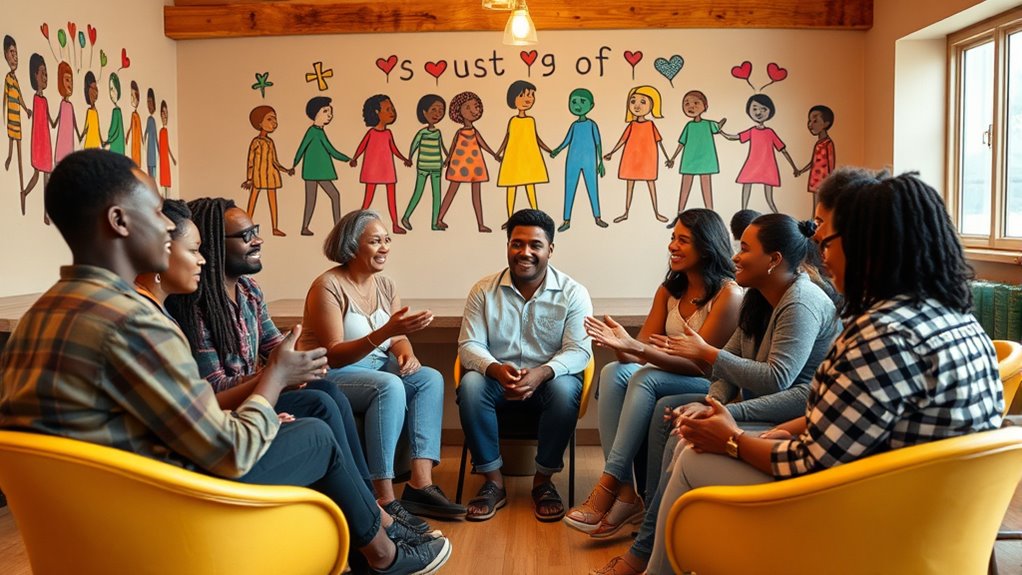
Peer support models are structured approaches that leverage the shared experiences of individuals to promote recovery, resilience, and well-being. When you participate in these models, you tap into the power of community engagement, which is essential for improving mental health. You recognize that mental health challenges aren’t faced alone, and by connecting with others who understand your experiences, you create a safe space for healing and growth. These models foster a sense of belonging, showing you that you’re not isolated in your struggles, and that support can come from those who truly understand what you’re going through.
Participating in peer support fosters belonging, understanding, and community-driven healing for mental health recovery.
In peer support models, you actively engage with others who have faced similar mental health issues. This shared understanding helps break down stigma, encouraging honest conversations that might be difficult in traditional settings. As you connect with peers, you realize that recovery isn’t just about individual effort; it’s about building a community where everyone’s experiences are valued. This community engagement empowers you to advocate for your needs, seek help without shame, and learn coping strategies from those who’ve walked a similar path. It’s a reciprocal process where both giving and receiving support strengthen your resilience.
The strength of peer support lies in its relatability. You’re more likely to open up when you talk to someone who has faced comparable mental health challenges because there’s an inherent trust and empathy. This connection fosters mutual understanding, helping you feel less alone and more understood. As you participate in group activities or one-on-one mentoring, you notice how sharing stories can inspire hope and motivation. Over time, these interactions gradually build your confidence and sense of agency in managing your mental health.
Community engagement through peer support models also encourages proactive involvement in mental health advocacy. You’re not just a passive recipient of support—you become an active participant in shaping your community’s mental health landscape. Whether it’s organizing events, sharing resources, or simply offering a listening ear, your contributions help create a supportive environment where mental health is prioritized and destigmatized. This collective effort fosters resilience not just for you but for everyone involved, reinforcing the idea that mental health is a community concern, best addressed through shared effort and understanding.
Furthermore, incorporating high-quality projectors into these models can enhance virtual or in-person meetings by providing clear visuals that facilitate better communication and engagement among peers.

The Peer Specialist’s pocket resource for mental health and substance use services second edition
As an affiliate, we earn on qualifying purchases.
As an affiliate, we earn on qualifying purchases.
Frequently Asked Questions
How Are Peer Supporters Selected and Trained?
You select peer supporters through a careful peer selection process, focusing on qualities like empathy, communication skills, and lived experience. Once chosen, they go through extensive training programs that cover active listening, confidentiality, crisis intervention, and resource navigation. These training programs equip peer supporters to effectively assist others, ensuring they feel confident and prepared to foster a supportive community. Your role is crucial in creating a sustainable and caring environment.
What Challenges Do Peer Support Programs Commonly Face?
Like Icarus flying too close to the sun, peer support programs often face stigmatization barriers that hinder participation. Cultural inclusivity can be challenging, risking alienation if not prioritized. You might struggle with limited resources, training gaps, or maintaining boundaries. Overcoming these hurdles requires ongoing education, fostering trust, and creating safe spaces where diverse voices feel valued. Addressing these challenges guarantees your community of care remains resilient and truly supportive.
How Is the Effectiveness of Peer Support Measured?
You measure the effectiveness of peer support by focusing on outcome measurement and success indicators. You track improvements in participants’ mental health, social connections, and self-efficacy through surveys, interviews, and behavioral changes. By analyzing these indicators over time, you can assess how well the program helps individuals, identify areas for improvement, and demonstrate its overall impact. Consistent evaluation guarantees your peer support efforts remain meaningful and effective.
Can Peer Support Programs Be Integrated Into Healthcare Systems?
Yes, you can integrate peer support programs into healthcare systems by focusing on digital integration and cultural tailoring. Using digital tools makes it easier to reach diverse populations and streamline communication. Cultural tailoring guarantees the support is relevant and respectful of individual backgrounds. By combining these approaches, you create a seamless, accessible, and effective support system that complements formal healthcare services and enhances patient outcomes.
What Funding Options Are Available for Peer Support Initiatives?
You can tap into various funding sources like government grants, private foundations, and corporate sponsorships for your peer support initiatives. Keep an eye out for grant opportunities specifically aimed at mental health and community care, because who doesn’t love free money? Applying for these grants might seem intimidating, but it’s your best shot at securing the funds needed to build thriving communities of care that actually work.
virtual peer support platform
As an affiliate, we earn on qualifying purchases.
As an affiliate, we earn on qualifying purchases.
Conclusion
By embracing peer support models, you weave a tapestry of care where every thread strengthens the whole. You become a crucial part of a community that lifts each other up, turning individual struggles into collective resilience. As you walk this path together, remember that your shared strength is the beacon guiding others through darkness. Together, you create a garden of compassion—blooming brighter with every act of kindness and understanding.

Coping Skills Cards for Anxiety & Stress Relief – Mindfulness, Meditation & Self-Care Tools for Trauma, BPD, DID, PTSD | Mental Health Therapy Gift for Adults & Teens
Helps Manage Emotional Distress and Crisis: Specifically designed to alleviate panic attacks, flashbacks, trauma recollections, anxiety, stress, dissociation,…
As an affiliate, we earn on qualifying purchases.
As an affiliate, we earn on qualifying purchases.
Mental Health In The Church & Community
As an affiliate, we earn on qualifying purchases.
As an affiliate, we earn on qualifying purchases.