

Pet socialization helps your animals become confident, well-behaved companions and creates a friendly community for everyone. By introducing your pet to other animals and new environments gradually and positively, you build trust and teach proper behavior. Visiting dog parks or hosting controlled playdates can make outings safer and more enjoyable. Keep paying attention to your pet’s signals, and you’ll foster strong bonds and better interactions. Stick around to discover more tips on creating a happy pet community.
Key Takeaways
- Organize controlled meet-and-greet sessions like dog parks and pet events to foster positive interactions.
- Educate owners on recognizing pet social cues and respectful boundaries to ensure safe socialization.
- Use gradual exposure techniques, such as supervised introductions and positive reinforcement, to build pet confidence.
- Promote community-based activities that encourage pet owners to share experiences and advice.
- Emphasize the importance of consistent, positive social experiences to develop well-rounded, emotionally stable pets.
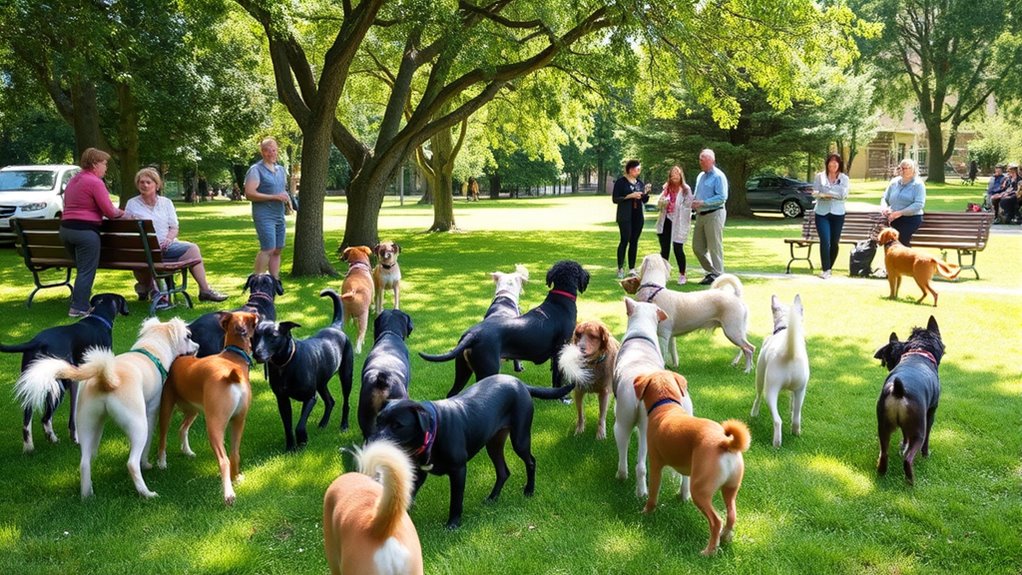
Pet socialization is a essential step in ensuring your pet develops into a well-behaved and confident companion. When you introduce your dog or cat to new environments and other animals, you’re helping them build crucial social skills that will benefit their behavior and your bond. For dogs, visiting a dog park can be an excellent way to facilitate this process, but it’s important to observe proper dog park etiquette. You should always keep your dog on a leash until you’re in a designated off-leash area, and be attentive to how your dog interacts with others. Watch for signs of overexcitement or discomfort, and be ready to step in if needed. Respect other pet owners’ space and make sure your dog isn’t overwhelming smaller or more timid dogs. A well-mannered visit to the dog park helps your pet learn respectful play and boundaries, which are essential in social settings.
For your feline friends, socialization involves understanding feline social cues. Cats are generally more reserved, so observing their signals is key. When introducing your cat to new people or other animals, watch for signs such as tail flicking, ear positioning, or hissing, which indicate discomfort or agitation. You want to create positive associations by giving your cat space and using treats or toys to encourage calm behavior. When other animals are involved, ensure the interactions are supervised and slow-paced. Over time, your cat may learn to accept new companions, but rushing the process can backfire, leading to stress or aggression. Recognizing feline social cues allows you to intervene early and guide your pet toward comfortable interactions.
Both dogs and cats benefit from consistent, gentle exposure that respects their individual personalities. For dogs, socialization often involves controlled playdates, visits to busy parks, or participation in training classes that emphasize good manners and communication. For cats, gradual introductions to new environments, people, and animals help them feel secure and reduce anxiety. The key is patience and attentiveness—pay attention to body language and emotional signals. When you do this, you’re not just teaching your pet appropriate behavior; you’re fostering trust and confidence that will stay with them throughout their lives. Proper socialization creates a positive community environment for pets and owners alike, making outings safer and more enjoyable for everyone involved.

iYoShop Hands Free Dog Leash with Zipper Pouch, Large, 25-120 lbs, Black
- Removable Zipper Pouch: Store smartphone, keys, treats, and more
- Dual Shock Absorbers: Reduces tugging during walks and runs
- Heavy Duty Clip: Secure 2-inch clip with D-ring attachment
As an affiliate, we earn on qualifying purchases.
As an affiliate, we earn on qualifying purchases.
Frequently Asked Questions
How Can I Socialize My Pet if I Work Long Hours?
If you work long hours, you can still socialize your pet by enrolling them in pet daycare, where they can interact with other animals and people daily. Additionally, you can join virtual meetups for pet owners to share experiences and tips. These options help your pet stay socialized and happy, even when you’re busy. Consistent interaction is key, so find ways to keep your pet engaged regularly.
What Are Signs My Pet Is Overwhelmed During Socialization?
Imagine your pet as a tightrope walker, balancing carefully. Signs of stress or overstimulation cues include yawning, lip licking, or paw lifting. If your pet seems tense, avoids eye contact, or becomes overly vocal, they’re overwhelmed. You’ll notice they might retreat or try to escape. Recognizing these cues early helps you pause socialization, giving your pet space to relax and regain confidence in a calm environment.
Can Socialization Help With Pet Behavioral Issues?
Yes, socialization can help with pet behavioral issues by boosting their social confidence and encouraging positive interactions. Through controlled exposure, you can use behavior modification techniques to address problems like aggression or fearfulness. As your pet gains confidence, you’ll notice improved behavior and a more relaxed attitude around other animals and people. Consistent socialization offers a supportive environment for your pet to learn appropriate responses and build trust.
How Do I Introduce My Pet to New Environments Safely?
When introducing your pet to new environments, start with safe exploration by visiting quiet, familiar places first. For example, take your dog to a quiet park, leash them securely, and gradually allow them to sniff and explore. Keep the experience positive with treats and praise. Always supervise, watch their body language, and go at their pace to guarantee a safe and comfortable introduction to new environments.
Are There Age Limits for Effective Pet Socialization?
There aren’t strict age restrictions for effective pet socialization, but younger pets typically reach socialization milestones more easily. Early exposure, ideally before 16 weeks, helps prevent behavioral issues later. As your pet grows, socialization remains beneficial, though older pets may need more patience and positive reinforcement. Consistent, gentle introductions at any age foster better community connections for pets and owners alike.

AILUKI 35PCS Cat Toys Variety Pack for Indoor Cats, Kitten Toys Cat Tunnel
- Variety Pack of 35 Cat Toys: Includes tunnels, feather toys, mice, and more
- Bonus Storage Bag Included: Keep toys organized and easy to store
- Low Noise, Quiet Toys: Soft sound for indoor play without disturbance
As an affiliate, we earn on qualifying purchases.
As an affiliate, we earn on qualifying purchases.
Conclusion
By actively socializing your pet, you create a stronger bond and foster a sense of community. For example, imagine taking your dog to a local park regularly, where it forms friendships with other dogs and owners. Over time, those interactions build trust and confidence for your pet, making outings more enjoyable. Socialization isn’t just about your pet’s happiness; it’s about creating a vibrant, supportive community that benefits everyone involved.

Minimize the Chaos in order to Maximize the Joys of Motherhood: Funny Mama of three, Pet Owner, Interior Designer, and Organizer, is giving away her secrets
As an affiliate, we earn on qualifying purchases.
As an affiliate, we earn on qualifying purchases.

Training the Best Dog Ever: A 5-Week Program Using the Power of Positive Reinforcement
As an affiliate, we earn on qualifying purchases.
As an affiliate, we earn on qualifying purchases.