To propagate indoor plants successfully, start with well-draining, nutrient-rich soil and use clean tools. Choose the right method, like stem cuttings for pothos or leaf cuttings for succulents, and place them in moist soil or water. Keep the soil slightly moist, provide bright, indirect light, and monitor regularly. As roots develop, gradually adjust light and environment, ensuring healthy growth. Stick with these tips, and you’ll soon enjoy thriving new plants of your own.
Key Takeaways
- Use well-draining, nutrient-rich soil with perlite or sand for healthy root development.
- Propagate through stem cuttings or leaf cuttings, ensuring clean cuts below nodes or leaf junctions.
- Provide bright, indirect light and supplement with grow lights if natural sunlight is limited.
- Keep soil slightly moist, avoiding waterlogging, and monitor moisture and light regularly.
- Once roots and new growth appear, gradually transition the new plant to its permanent location with increased light.
Indoor plant propagation is a rewarding way to expand your greenery collection and save money. When you propagate plants, you’re not just growing new foliage; you’re also nurturing healthy roots and vibrant leaves, which depends heavily on understanding soil health and light requirements. For successful propagation, ensuring that your soil is well-draining and rich in nutrients is essential. Healthy soil provides the right balance of oxygen and moisture, which encourages root development and minimizes the risk of rot. Using a light, airy potting mix tailored for your specific plant type can make all the difference, especially in maintaining ideal soil health.
Healthy, well-draining, nutrient-rich soil is key to successful indoor plant propagation.
Light requirements play a significant role during propagation. Most indoor plants prefer bright, indirect light—think near a window with filtered sun—because this provides enough energy for photosynthesis without risking leaf scorch. If your space is limited or the sunlight is weak, consider supplementing with grow lights to mimic natural conditions. Proper lighting not only supports healthy leaf growth but also stimulates root formation, which is essential for successful propagation. Be mindful of each plant’s specific light needs; some tropical varieties may thrive in lower light, while succulents or cacti require more direct sun exposure to flourish.
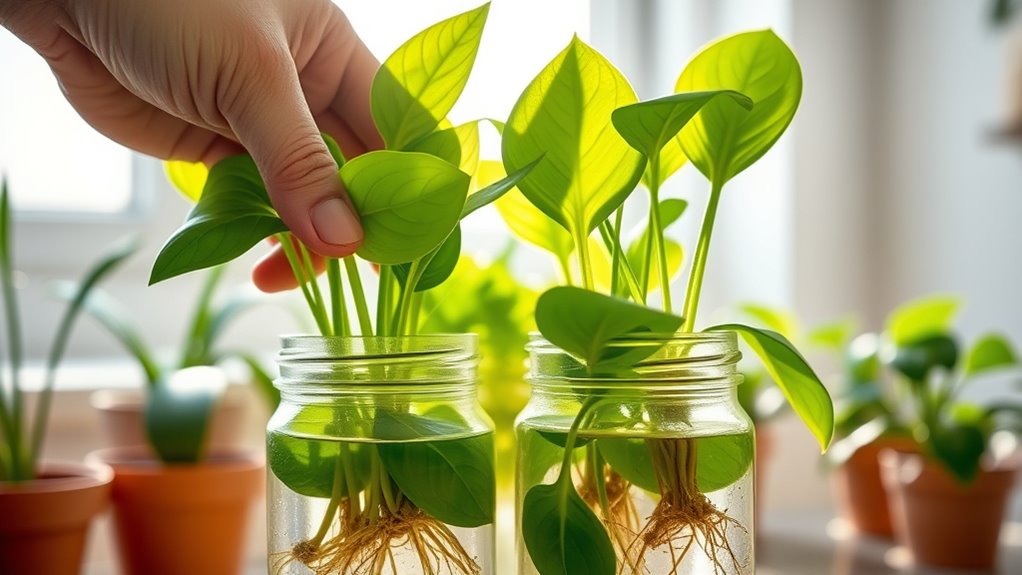
When you’re ready to propagate, choose the appropriate method based on your plant type. For example, stem cuttings work well for pothos or philodendrons, while leaf cuttings are suitable for succulents or certain herbs. Make sure your tools are clean to prevent infections and cut just below a node or leaf junction for best results. After making your cut, place the cutting into moist soil or water, depending on the plant’s needs. During this stage, maintaining the right soil health is critical—keep the medium slightly moist but never waterlogged. If you’re using soil, adding perlite or sand can improve drainage and aeration, further promoting healthy root growth.
Throughout the propagation process, observe the light conditions and soil moisture regularly. If the leaves start yellowing or the soil remains soggy, adjust your watering schedule or move the plant to a brighter location. Patience is key; roots can take anywhere from a few days to several weeks to develop, depending on the species. Once roots are established and new growth appears, you can gradually transition your new plant to its permanent spot with the appropriate light and soil conditions. With a little attention to soil health and light requirements, you’ll find propagation both fun and fulfilling, giving your indoor garden a fresh, thriving boost.
Frequently Asked Questions
How Often Should I Water Newly Propagated Plants?
You should water newly propagated plants when the top inch of soil feels dry, usually every 5-7 days. Adjust watering frequency based on your plant’s root development; as roots establish, they need consistent moisture, but overwatering can cause rot. Check frequently, and guarantee proper drainage. By maintaining balanced watering, you’ll promote healthy root development and help your plants thrive in their new environment.
Can All Indoor Plants Be Propagated at Home?
Not all indoor plants can be propagated at home, but many can with proper soil preparation and care. You should be cautious of plant diseases during propagation, as they can spread if not managed carefully. Some plants require specific conditions or techniques, so research each type before attempting to propagate. By maintaining healthy soil and monitoring for symptoms of plant disease, you’ll increase your success rate and enjoy your new plants longer.
What Is the Best Time of Year to Propagate Indoors?
The best time to propagate indoors is during spring or early summer when seasonal considerations favor growth. During these months, plants have ideal timing for root development due to warmer temperatures and increased light. Avoid propagating in winter, as lower light and cooler temperatures slow growth. By choosing these seasons, you give your cuttings the best chance to thrive and establish strong roots quickly.
How Long Does It Take for Propagated Plants to Mature?
Ever wonder when your propagated plant will reach maturity? It typically takes a few months, depending on the plant species and growth conditions. You’ll notice maturity indicators like new leaf growth, stronger stems, and healthy roots. Keep in mind, maintaining proper light, water, and nutrients can speed up the growth timeline. Patience is key, but with consistent care, you’ll see your new plant flourish and become a thriving part of your indoor garden.
What Are Common Mistakes to Avoid During Propagation?
You should avoid overwatering mistakes, which can cause rot and prevent roots from developing properly. Also, guarantee you use proper cutting techniques; improper cuts can damage the plant or hinder growth. Don’t rush the process or use dull tools, as these mistakes slow propagation. Be patient, keep your cuts clean, and water appropriately to give your indoor plants the best chance to thrive and mature successfully.
Conclusion
Now that you know the secrets of propagating indoor plants, you’re about to open a world of botanical marvels that will transform your space into a lush, living paradise. With a little patience and a dash of green thumb magic, you’ll create an indoor jungle so stunning, even seasoned botanists will be in awe. Get ready to amaze everyone with your unstoppable ability to turn tiny cuttings into a thriving indoor forest—your home’s new crown jewel!