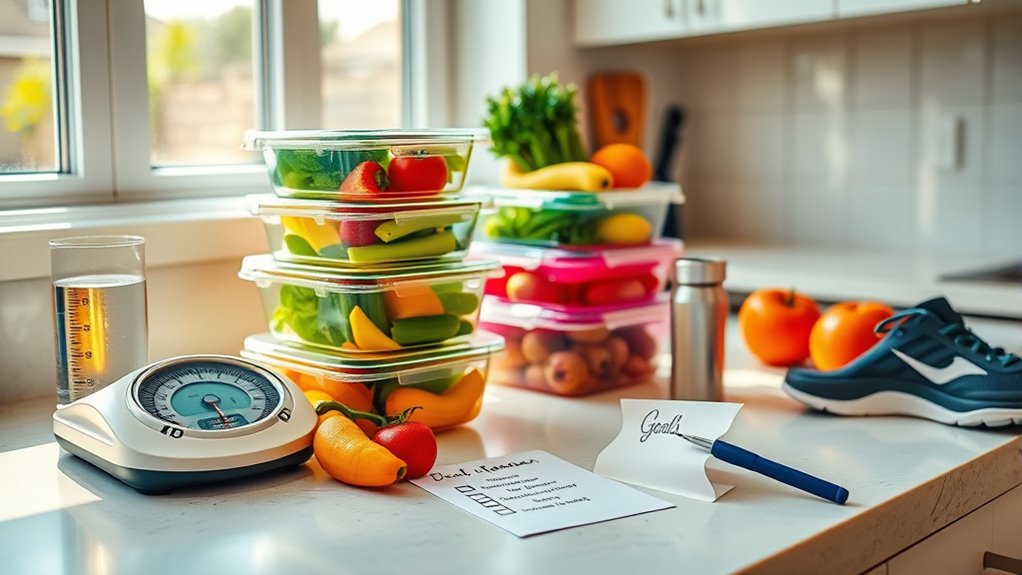

To set realistic weight loss goals, focus on steady, manageable changes like aiming to lose 1-2 pounds weekly. Avoid rapid weight loss, which can be unhealthy, and instead develop habits like creating a calorie deficit through a balanced diet and regular exercise. Celebrate small milestones and be patient, understanding that lasting change takes time. If you keep these principles in mind, you’ll be on a sustainable path toward your goals.
Key Takeaways
- Set achievable targets, like losing 1-2 pounds weekly, to ensure steady and sustainable progress.
- Create a calorie deficit through balanced diet and regular exercise for gradual weight loss.
- Design an enjoyable, manageable exercise routine that can be gradually intensified over time.
- Establish realistic timelines with clear milestones to stay motivated and track progress effectively.
- Practice patience, celebrate small victories, and focus on long-term habits rather than quick fixes.

Setting realistic weight loss goals is essential for maintaining motivation and achieving lasting results. When you’re aiming to shed pounds, it’s important to understand that sustainable progress relies on steady, manageable changes. One of the most effective ways to do this is by focusing on creating a calorie deficit, which means burning more calories than you consume. Rather than aiming for rapid weight loss, set a goal that encourages gradual change—about 1 to 2 pounds per week is a healthy target for most people. This approach helps your body adapt without feeling deprived or overwhelmed. To support your calorie deficit, you’ll want to develop an exercise routine that complements your dietary habits. Incorporating regular physical activity not only accelerates weight loss but also improves overall health and boosts your confidence.
Set realistic weight loss goals with steady progress and a sustainable calorie deficit for lasting results.
When designing your exercise routine, consider activities you enjoy so you’re more likely to stick with them. Whether it’s brisk walking, cycling, swimming, or strength training, consistency is key. You don’t need to overhaul your entire schedule overnight; start with manageable sessions—perhaps 20 to 30 minutes, three to five times a week—and gradually increase intensity as your fitness improves. Remember, the goal isn’t just burning calories during workouts but establishing a lifestyle that supports sustained activity. Incorporating physical activity also supports juice cleansing and detox efforts by enhancing metabolism and nutrient absorption. Combining your exercise routine with mindful eating habits ensures you’re not only creating a calorie deficit but also nourishing your body properly. Focus on whole foods, lean proteins, vegetables, and healthy fats to keep your energy levels stable and avoid unnecessary cravings.
Setting a realistic timeline is equally important. Instead of fixating on quick results, aim for milestones that are attainable within a few weeks or months. For example, losing 5 pounds in a month is a reasonable goal that keeps you motivated without risking burnout. Keep in mind that plateaus are normal; your body needs time to adjust, so don’t get discouraged if progress slows temporarily. Instead, reassess your calorie intake and exercise routine, making small adjustments as needed. Tracking your progress can help you stay accountable and highlight how far you’ve come, reinforcing your commitment to your goals.
Ultimately, setting realistic weight loss goals means balancing ambition with patience. By creating a sustainable calorie deficit through a thoughtful exercise routine and healthy habits, you’ll be more likely to reach your goals and maintain them long-term. Focus on consistency, celebrate small victories, and remember that lasting change takes time—your efforts will pay off in the end.
Top picks for "sett realistic weight"
Open Amazon search results for this keyword.
As an affiliate, we earn on qualifying purchases.
Frequently Asked Questions
How Can I Stay Motivated During My Weight Loss Journey?
To stay motivated during your weight loss journey, focus on mental strategies like celebrating small wins and visualizing your success. Surround yourself with support networks—friends, family, or online communities—that keep you accountable and inspired. Remind yourself why you started, and don’t get discouraged by setbacks. Keep a positive mindset, and remember that progress, no matter how small, is still progress toward your goals.
What Should I Do if I Hit a Weight Loss Plateau?
When you hit a weight loss plateau, don’t get discouraged. Instead, focus on plateau prevention by changing your exercise routine or adjusting your calorie intake to counter metabolic adaptation. You might also add more strength training or vary your workouts. Keep track of your progress, stay consistent, and give your body time to adjust. Remember, plateaus are normal; they signal your body’s adapting, so stay patient and persistent.
How Do I Balance Weight Loss With Social Events?
When balancing weight loss with social events, use social event strategies like choosing healthier options and controlling portions. Meal planning helps you stay on track by preparing nutritious snacks or meals beforehand, so you’re less tempted to indulge. Focus on enjoying the company instead of overindulging, and don’t hesitate to politely decline high-calorie treats. Staying mindful and prepared helps you maintain your goals without missing out on social fun.
Are There Specific Foods That Can Speed up Weight Loss?
You can boost weight loss by including superfoods like berries, leafy greens, and lean proteins in your diet. These foods are nutrient-dense and help keep you full longer. Pay attention to meal timing, eating smaller, balanced meals throughout the day to maintain energy and prevent overeating. While no single food speeds up weight loss on its own, combining superfoods with smart meal timing supports your goals effectively.
How Often Should I Reassess and Adjust My Goals?
You should reevaluate your goals every 4 to 6 weeks, focusing on progress tracking to see how far you’ve come. If you’re consistently meeting your targets, consider making your goals more challenging. If progress stalls, it’s time to adapt for better results. Remember to keep your goals flexible, as your body and circumstances change. Regular check-ins help ensure you stay motivated and on track for sustainable weight loss.
Conclusion
Remember, setting realistic weight loss goals isn’t just about numbers; it’s about creating a journey worth taking. When you set achievable targets, you’ll stay motivated and celebrate small victories along the way. Think of your goals as stepping stones—each one brings you closer to a healthier, happier you. So, believe in your progress, embrace the process, and watch how each step transforms your life. After all, the journey is yours to shape.