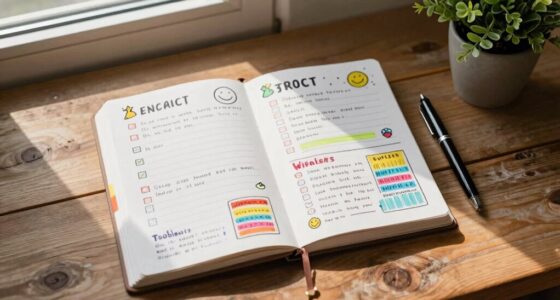

A reflection chart helps you turn vague feelings into clear next steps by organizing your emotions and pinpointing their underlying causes. You start by writing down the situation, labeling your emotions specifically, and exploring triggers. Then, you separate feelings from facts and analyze whether your reactions are valid. This process guides you to concrete actions and choices, building emotional clarity and resilience over time. Keep exploring, and you’ll discover more ways to transform emotional chaos into purposeful progress.

Get beauty and skincare favorites delivered free — and shop member deals
- Fast, free delivery on millions of items
- Access to Prime Big Deal Days deals on October 6–7
- Prime Video, Amazon Music and more included
Key Takeaways
- Use the chart to explicitly identify and label vague feelings for better understanding.
- Separate emotional reactions from factual evidence to gain clarity.
- Reflect on triggers and consequences to understand underlying emotions.
- Convert emotional insights into specific, actionable steps for growth.
- Regularly review and update the chart to track emotional patterns and progress.
When you’re seeking greater clarity in your thinking or decision-making, a reflection chart can be a powerful tool. It helps you organize your thoughts, identify underlying emotions, and transform vague feelings into actionable steps. Often, when you’re faced with a tough decision or a confusing situation, your emotions can feel jumbled or overwhelming. A reflection chart allows you to slow down, examine what you’re truly feeling, and understand how those feelings influence your choices. By doing so, you gain emotional awareness, which is essential for making informed, confident decisions.
The process begins by jotting down the situation or problem you’re facing. Next, you identify and write down the emotions you’re experiencing. Don’t just label them vaguely—be specific. Are you feeling anxious, frustrated, or uncertain? Recognizing these emotions helps you understand their impact on your decision-making process. Sometimes, vague feelings mask deeper issues, like fear of failure or insecurity, and naming these emotions brings clarity. As you continue, reflect on what triggered these feelings and how they’re affecting your behavior. This step deepens your emotional awareness, allowing you to detach from reactive impulses and approach the situation with a clearer mind.
Once you’ve identified your feelings, consider how they influence your thoughts and actions. Ask yourself whether these emotions are valid responses or if they’re clouding your judgment. This step is crucial because it helps you separate emotion from fact—an important skill for effective decision-making. If anxiety is leading you to avoid a decision, acknowledge it without judgment, then explore what evidence supports or contradicts that feeling. This creates space for rational analysis, helping you see the situation more objectively. Additionally, understanding the role of emotional intelligence can enhance your ability to navigate complex feelings and improve your overall clarity. Developing emotional intelligence can also help you better recognize and manage vague feelings, turning them into clearer insights.
Finally, the reflection chart guides you toward concrete next steps. Based on your emotional awareness and understanding, decide what actions are necessary. Will you gather more information? Talk to someone you trust? Set aside time to think more deeply? The chart emphasizes moving from vague feelings to precise actions, giving you a clear roadmap forward. This process not only clarifies your current state but also builds your emotional resilience, making it easier to face future decisions with confidence. Using a reflection chart becomes a habit that sharpens your decision-making skills over time, turning emotional chaos into structured clarity.
reflection journal for emotional clarity
As an affiliate, we earn on qualifying purchases.
As an affiliate, we earn on qualifying purchases.
Frequently Asked Questions
How Long Does It Take to See Results Using the Reflection Chart?
You might start noticing progress within a few weeks, but timeframe expectations vary depending on your consistency and honesty in using the reflection chart. Regularly tracking your feelings and actions helps you see patterns and growth over time. As you continue, you’ll gain clearer insights and feel more confident in your next steps. Remember, patience is key—change happens gradually, and consistent use enhances your ability to turn vague feelings into actionable insights.
Can the Chart Be Personalized for Individual Goals?
Yes, you can personalize the reflection chart for your individual goals through personalized customization. By tailoring sections to focus on your specific objectives, you guarantee better goal alignment. This customization helps you identify feelings and actions related to your unique aspirations, making the process more relevant and motivating. When you adapt the chart to fit your needs, it becomes a powerful tool for clarity, progress tracking, and achieving your personal milestones effectively.
Is the Reflection Chart Suitable for All Age Groups?
Yes, the reflection chart is suitable for all age groups because it offers flexible, age-appropriate prompts that cater to different developmental stages. For younger children, it simplifies feelings, while for teens and adults, it encourages deeper self-awareness. You can easily adapt the language and complexity to match the user’s age, making it a versatile tool for fostering emotional intelligence across various ages and developmental suitability.
What Tools or Materials Are Needed to Use the Chart Effectively?
To use the chart effectively, you’ll want tools that support visual journaling and emotional mapping. Grab some colorful markers, pens, or pencils to jot down feelings and ideas vividly. A blank or grid notebook works well for organizing thoughts. You might also include stickers or images to enhance visual journaling. These materials help you clearly express emotions, making the reflection process engaging and insightful, no matter your age.
How Often Should I Update or Revisit My Reflection Chart?
You should update your reflection chart regularly, ideally weekly or biweekly, to keep it relevant and accurate. Revisit its importance because frequent updates help you track your progress, recognize patterns, and adjust your next steps effectively. Consistent updating ensures your feelings and insights stay fresh, enabling you to make meaningful changes. Don’t wait too long; staying engaged with your chart helps you stay aligned with your goals and emotional clarity.
As an affiliate, we earn on qualifying purchases.
Conclusion
Just as a lighthouse guides ships through foggy waters, your reflection chart illuminates your path through uncertainty. By turning vague feelings into clear next steps, you become the captain of your journey, steering confidently toward your goals. Remember, every voyage begins with a single beacon—trust in your reflection chart to keep you steady, no matter how stormy the seas. Embrace this tool, and watch your clarity grow brighter with each step forward.
emotional intelligence reflection chart
As an affiliate, we earn on qualifying purchases.
As an affiliate, we earn on qualifying purchases.
As an affiliate, we earn on qualifying purchases.
Evergreen bestsellers Picks
bestsellers
As an affiliate, we earn on qualifying purchases.