

Repeating simple rituals can boost your mental health by creating stability and reducing stress. These routines help you stay grounded in the present, fostering awareness and emotional resilience. Small actions like deep breaths or connecting with nature serve as cues for calmness and safety. Over time, these habits become automatic, strengthening your ability to handle chaos and setbacks. Keep exploring, and you’ll discover more ways to incorporate rituals that support your well-being.
Key Takeaways
- Repeating simple rituals enhances mental stability by creating predictability and reducing stress during chaotic times.
- Incorporating mindfulness into routines increases present-moment awareness, decreasing negative thoughts and emotional reactivity.
- Rituals serve as mental anchors, helping individuals regain calmness and emotional balance during stressful situations.
- Consistent routines foster resilience by building a reliable mental foundation capable of withstanding chaos.
- Connecting rituals to nature amplifies calming effects, promoting feelings of tranquility and psychological well-being.
In today’s fast-paced world, finding moments of stability can considerably enhance your mental well-being. One effective way to create that stability is through repeating simple rituals. These routines, though seemingly small, have a powerful impact on your mental health. When you incorporate mindfulness practice into your daily rituals, you anchor yourself in the present moment. This practice helps you notice your thoughts, feelings, and physical sensations without judgment, fostering a sense of calm and clarity. Over time, mindfulness becomes a habit, making it easier to access a peaceful state whenever life feels overwhelming. Habit formation is key here—you start small, perhaps with a few deep breaths or a brief moment of gratitude each morning, and gradually, these actions become automatic. This consistency provides a sense of predictability, which your mind craves during stressful times. Creating positive associations through repeated rituals can further strengthen their calming effect.
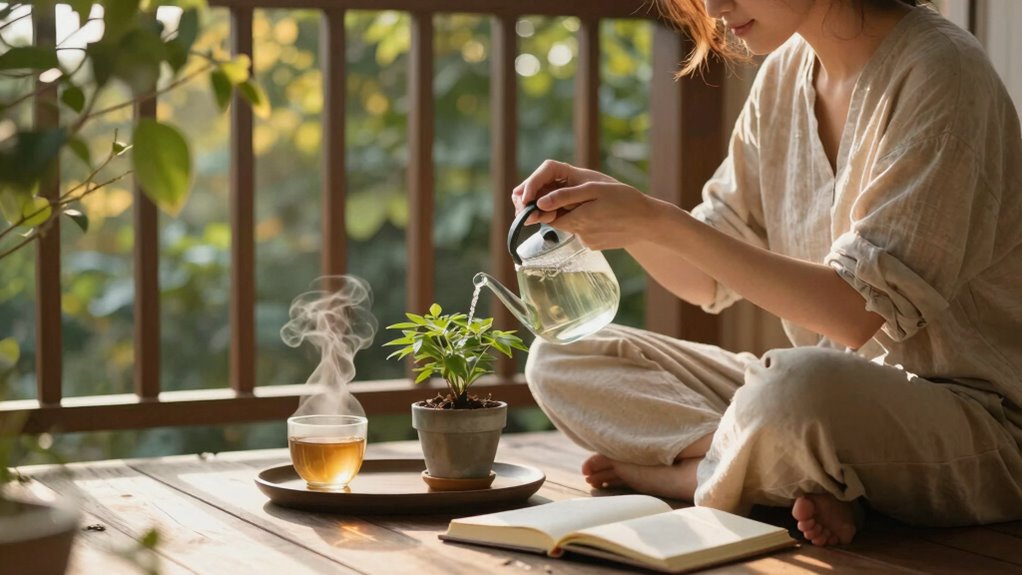
Repeating simple rituals helps your brain associate specific actions with relaxation and stability. For example, making a cup of tea in the same way every morning or taking a few minutes to stretch after waking up can become cues for mindfulness and calmness. As these rituals become ingrained, they serve as anchors during chaos, grounding you and reducing anxiety. The beauty of habit formation is that it doesn’t require drastic changes; instead, it encourages small, manageable steps that fit seamlessly into your daily routine. Over time, these small acts accumulate, creating a resilient mental foundation. It’s like building a mental muscle, one repetition at a time. Additionally, connecting these rituals to biodiversity by engaging with natural surroundings or plants can amplify feelings of calm and connectedness, further benefiting mental health. Engaging with nature has been shown to have significant psychological benefits, reinforcing the importance of natural elements in your routines. Developing an awareness of the natural environment around you can also promote a sense of well-being and reduce mental fatigue.
Additionally, simple rituals can act as a form of self-care, signaling to your brain that your well-being matters. This consistent attention to yourself nurtures a sense of safety and control, which are essential for mental health. Incorporating routine consistency into your daily life further reinforces these benefits by helping your brain recognize familiar cues for relaxation. When you prioritize these rituals, you’re actively reinforcing positive habits that promote emotional stability. Over days, weeks, and months, these repeated actions can diminish feelings of stress and boost your overall mood. The key is to stay committed and recognize that the power lies in repetition. By sticking to a routine, you give your mind the chance to develop a sense of stability amidst chaos, ultimately creating a mental environment where resilience and peace can flourish.

Mindfulness & Guided Sleep Meditation
- Enhances focus through meditation: Meditation to improve focus
- Mindfulness and sleep training videos: Videos on mindfulness training and sleep exercises
- Reduces stress and anxiety: Meditations to relieve stress and anxiety
As an affiliate, we earn on qualifying purchases.
As an affiliate, we earn on qualifying purchases.
Frequently Asked Questions
How Long Does It Take to See Mental Health Benefits From Rituals?
You might start noticing mental health benefits from mindfulness practices within a few weeks, but it varies with daily consistency. Regularly repeating simple rituals helps your mind adapt and develop positive habits over time. Stick with your routines consistently, ideally daily, for at least three to four weeks. The more committed you are, the quicker you’ll experience reduced stress, increased clarity, and overall improved mental well-being.
Can Rituals Replace Professional Mental Health Treatment?
Rituals can’t fully replace professional mental health treatment, but they greatly support your well-being. Did you know that 78% of people find comfort in cultural significance and spiritual connections during rituals? These practices foster stability, mindfulness, and emotional resilience. While rituals enhance mental health, they should complement, not substitute, therapy or medical care, especially for serious issues. Prioritize professional help when needed to guarantee thorough support.
Are There Specific Rituals That Work Better for Anxiety?
Yes, certain rituals like mindfulness practices and grounding techniques can be especially effective for anxiety. You might find that daily meditation or deep breathing exercises help calm your mind, while grounding techniques—like focusing on your senses—bring you back to the present moment. Consistently repeating these rituals can reduce anxious feelings over time, providing a simple yet powerful way to manage your mental health without professional intervention.
How Do I Create My Own Effective Daily Rituals?
To create effective daily rituals, start with personalization strategies—choose activities that genuinely soothe or energize you. Keep ritual consistency by doing them at the same time each day, making them a dependable part of your routine. Adjust as needed, listening to what feels right. Whether it’s meditation, journaling, or a walk, guarantee your rituals resonate with your needs, helping you build stability and mental clarity every day.
Do Rituals Have the Same Benefits for Children and Teenagers?
While rituals may not be identical for everyone, they do offer unique benefits for children and teenagers. For children, consistent routines support healthy child development by fostering security and independence. For teenagers, routines bolster teen emotional health, helping them navigate life’s challenges. You can help by establishing age-appropriate rituals, like bedtime stories or morning check-ins, which create stability and nurture growth during these essential stages.
natural essential oils for relaxation
As an affiliate, we earn on qualifying purchases.
As an affiliate, we earn on qualifying purchases.
Conclusion
Imagine the gentle rhythm of your morning coffee brewing, steam rising like a calming cloud, or the soft closing of a journal lid signaling a moment of reflection. These simple rituals anchor your day, offering a steady heartbeat amid chaos. By repeating these small acts, you create a sanctuary within yourself—calm, familiar, and resilient. Embrace these rituals, and watch as they quietly strengthen your mind, turning everyday moments into powerful anchors of mental well-being.
As an affiliate, we earn on qualifying purchases.
plant terrarium for stress relief
As an affiliate, we earn on qualifying purchases.
As an affiliate, we earn on qualifying purchases.