

Customer journey mapping for retreat planning helps you understand every touchpoint from initial awareness to follow-up, so you can create meaningful, personalized experiences. By identifying attendee needs and pain points early, you can tailor activities, communication, and amenities to boost engagement and satisfaction. Integrating feedback and proactively addressing issues build trust and loyalty. Want to see how these strategies can transform your retreats and leave lasting impressions? Keep exploring, and you’ll uncover how to make your next event unforgettable.
Key Takeaways
- Map all participant touchpoints from awareness to post-retreat to identify opportunities for personalized engagement.
- Segment attendees based on preferences to tailor activities, communication, and amenities effectively.
- Use feedback from surveys and conversations to refine the retreat experience and address pain points proactively.
- Incorporate personalized reminders, content, and interactions at key stages to enhance attendee connection and satisfaction.
- Analyze journey insights to create memorable, tailored retreats that foster trust, increase retention, and encourage positive reviews.
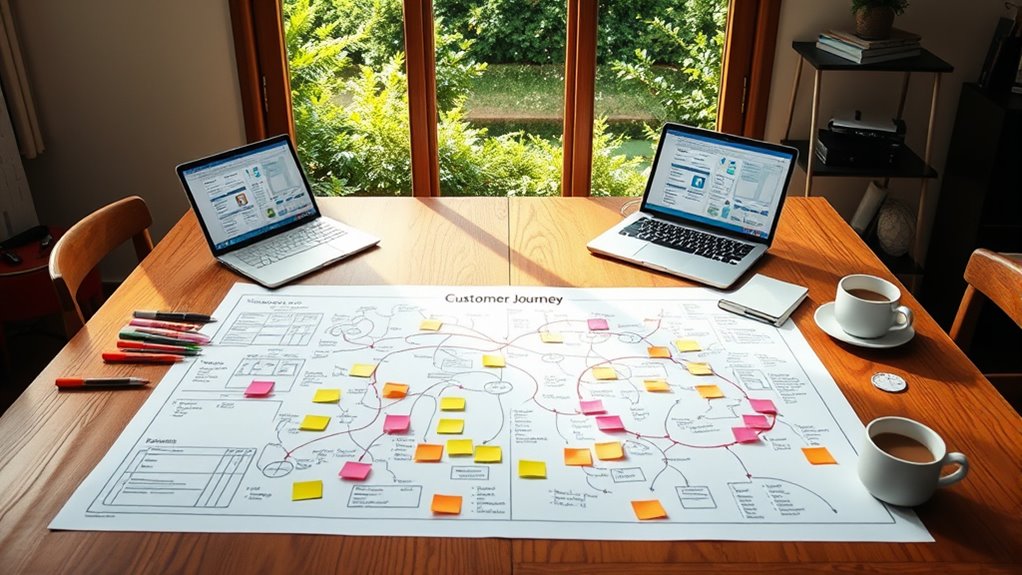
Planning a retreat can be complex, but mapping out the customer journey makes the process smoother and more effective. When you understand each touchpoint your participants experience, you can tailor your approach to meet their needs and expectations better. This is where personalization strategies come into play. By actively customizing aspects of the retreat—such as activities, communication, and amenities—you create a more engaging and memorable experience. For example, you might segment your audience based on their interests or preferences gathered through surveys or prior interactions, then develop specific content or offerings for each group. Personalization not only boosts participant satisfaction but also fosters a sense of connection and value, encouraging repeat attendance and positive word-of-mouth.
Integrating feedback throughout the planning process is equally essential. Feedback integration involves collecting insights from potential or past attendees and using that data to refine your approach. You can gather this feedback through surveys, interviews, or informal conversations, then analyze it for common themes or suggestions. By implementing changes based on feedback, you demonstrate that you value your attendees’ opinions, which enhances trust and loyalty. For instance, if several participants express a desire for more outdoor activities, you can incorporate that into your retreat design. This ongoing feedback loop helps you stay aligned with your audience’s evolving needs, making your retreat more appealing and relevant. Additionally, understanding the individual responses to different aspects can help address emotional support needs effectively.
Mapping the customer journey with these strategies allows you to anticipate potential pain points and address them proactively. As you chart each stage—from initial awareness and registration to participation and post-retreat follow-up—you can identify opportunities to personalize experiences and gather valuable feedback. When you design touchpoints that resonate with your audience, you foster a sense of understanding and care. This could mean sending personalized reminders, offering tailored content, or creating feedback opportunities at key moments. By doing so, you make your attendees feel seen and heard, which increases their overall satisfaction and the likelihood of positive reviews or future engagement.
Anticipate and address pain points by personalizing touchpoints and gathering feedback throughout the retreat journey.
Ultimately, combining personalization strategies with feedback integration transforms your retreat from a generic event into a thoughtfully curated experience. It enables you to build stronger relationships with your attendees, leading to higher engagement, better retention, and a reputation for delivering truly tailored retreats. When you prioritize understanding and responding to your audience’s needs at every step of the journey, you set the stage for a successful, impactful event that leaves a lasting impression.
Frequently Asked Questions
How Do I Identify Key Touchpoints in the Retreat Experience?
To identify key touchpoints, start by analyzing the retreat’s event flow, noting moments where attendees experience strong emotions. Observe interactions during registration, activities, meals, and feedback sessions. Pay attention to attendee reactions and emotions, as these reveal vital touchpoints influencing their overall experience. Use this insights from your event flow analysis to enhance positive encounters and address pain points, ensuring a memorable and seamless retreat journey for every attendee.
What Tools Are Best for Mapping Customer Journeys?
Think of mapping your retreat journey as charting a river’s course. Digital tools like Lucidchart, Smaply, and Miro act as your guiding compass, helping you visualize each twist and turn. Use customer personas as your map’s landmarks, ensuring you capture every experience from start to finish. These tools enable you to craft a clear, engaging flow that highlights key touchpoints, making your retreat unforgettable for every participant.
How Can I Personalize the Retreat Based on Journey Insights?
You can personalize the retreat by leveraging customer feedback and implementing tailored personalization strategies. Analyze journey insights to identify individual preferences, needs, and pain points. Use this data to customize activities, accommodations, and schedules, ensuring each guest feels valued and understood. Engage participants beforehand to gather preferences, then adapt your offerings accordingly. This targeted approach enhances satisfaction, fosters loyalty, and creates a memorable, personalized retreat experience.
How Do I Measure Success From the Customer Journey Perspective?
Think of your retreat as a symphony—success means every instrument harmonizes. You measure it through customer satisfaction scores and feedback analysis, which reveal if attendees felt valued and engaged. For example, if guests consistently praise the activities and logistics, you know you’re hitting the right notes. Tracking these insights helps you refine the experience, ensuring every journey ends on a high note and keeps your attendees coming back.
What Common Pitfalls Should I Avoid in Journey Mapping?
You should avoid overgeneralizing assumptions, as it can lead you to miss specific customer needs and experiences. Neglecting feedback also stalls your improvement, so actively seek and incorporate it throughout your journey mapping process. Don’t rely solely on your perceptions; instead, listen to your customers’ voices, track their actual interactions, and modify your map accordingly. This approach ensures more accurate insights and a better overall retreat experience.
Conclusion
By mastering customer journey mapping for retreat planning, you’re basically creating a flawless, magical experience that feels like stepping into a dream world. Every detail, from first contact to final farewell, will feel as smooth as silk and as unforgettable as a once-in-a-lifetime adventure. Get it right, and you’ll turn your retreat into an epic saga of joy and connection—so extraordinary that your attendees will rave about it for years to come!