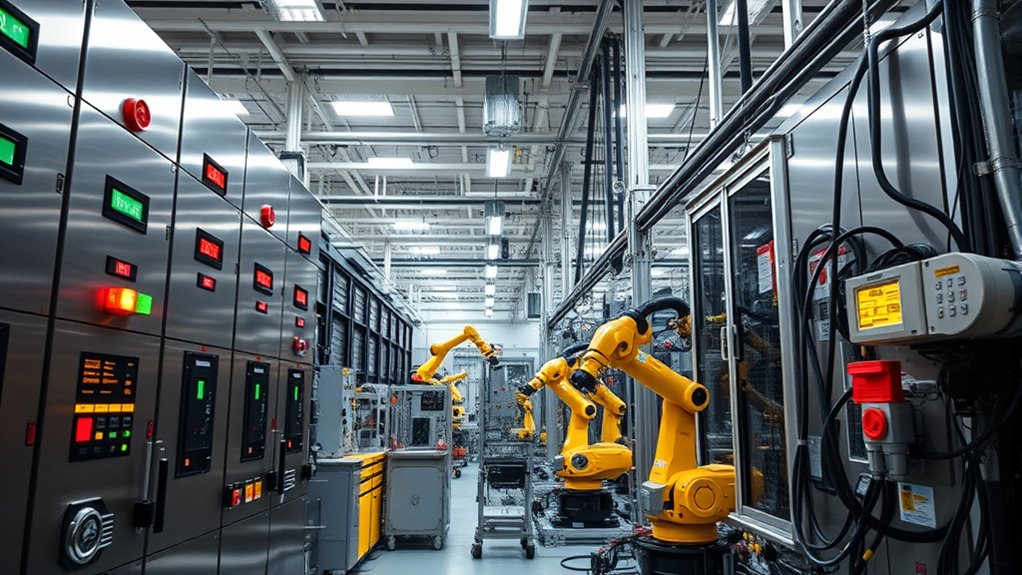

In industrial automation, prioritizing safety involves designing clear and intuitive human–machine interfaces that provide real-time data, alarms, and safety features like emergency stops. You should familiarize yourself with emergency procedures, guarantee emergency stop buttons are easily accessible, and follow established protocols to prevent accidents. Promoting a safety-conscious culture and effective communication helps minimize risks and supports quick responses in emergencies. Continue exploring to discover how these safety considerations can be seamlessly integrated into your automation practices.

Get beauty and skincare favorites delivered free with Prime
- Fast, free delivery on millions of items
- Prime Video, Amazon Music and more included
- Member-only deals all year
Key Takeaways
- Implement well-designed HMIs that provide real-time alerts and safety information to operators.
- Ensure emergency stop buttons are easily accessible, clearly labeled, and integrated into safety protocols.
- Regularly train staff on safety procedures, emergency responses, and proper use of safety equipment.
- Incorporate safety features like interlocks, safeguards, and automatic shutdown systems into automation processes.
- Foster a safety-conscious culture emphasizing communication, continuous monitoring, and prompt hazard detection.

Have you ever wondered how safety is maintained in automated industrial environments? It’s a question that comes up often as factories become more reliant on technology. One of the key components in ensuring safety is the use of human machine interfaces (HMIs). These interfaces serve as the essential link between operators and complex machinery. When designed properly, HMIs provide clear, real-time data about equipment status, alert operators to potential issues, and enable quick responses to emergencies. You should be familiar with how HMIs function because they’re central to maintaining safe operations. For instance, a well-designed HMI can display visual warnings or alarms if a machine starts to operate outside normal parameters, prompting immediate action to prevent accidents. Furthermore, HMIs often integrate safety features like emergency stop buttons, which are indispensable for rapid shutdowns in crisis situations.
Properly designed HMIs provide real-time data and safety features that are vital for safe industrial operations.
Emergency stop procedures are another fundamental element of industrial safety. You need to understand that these procedures aren’t just about pressing a button—they’re about acting swiftly and correctly to prevent injury or damage. Emergency stop buttons are usually strategically placed around machinery, allowing you quick access if something goes wrong. When you activate an emergency stop, the system instantly halts all operations, isolating power and stopping moving parts. This rapid response minimizes risks, especially in scenarios where machinery might malfunction or pose a danger to personnel. It’s essential to familiarize yourself with the location of these buttons and follow established protocols during training. Knowing how to activate the emergency stop quickly can make a significant difference in preventing accidents.
Additionally, safety in automation isn’t solely about equipment; it’s about procedures and communication. You should always verify that emergency stop procedures are well-documented, clearly communicated, and practiced regularly. Regular drills reinforce your instinct to respond appropriately in real emergencies. Also, safety systems should include interlocks and safeguards that prevent machinery from restarting automatically after an emergency stop unless manually reset, ensuring you’re in control. Incorporating AI-driven solutions in safety systems can further enhance responsiveness and accuracy in hazard detection. Combining well-designed human machine interfaces with clear emergency stop procedures creates a layered safety approach that protects everyone in the plant. It encourages a safety-conscious culture where everyone knows their role, understands the risks, and acts responsibly.
In essence, safety in industrial automation hinges on the seamless interaction between humans and machines. By understanding how HMIs communicate crucial information and by knowing how to execute emergency stop procedures effectively, you become an essential part of maintaining a safe working environment. These measures aren’t just protocols—they’re your first line of defense against accidents and injuries in a high-tech industrial setting.
industrial emergency stop button
As an affiliate, we earn on qualifying purchases.
As an affiliate, we earn on qualifying purchases.
Frequently Asked Questions
How Often Should Safety Protocols Be Reviewed in Industrial Automation?
You should review safety protocols regularly, ideally conducting periodic audits at least once a year. Additionally, safety audits should be performed whenever there are significant changes in your automation systems or after any incidents. Regular reviews guarantee your safety measures stay effective, comply with regulations, and adapt to new risks. Staying proactive with these audits helps you identify gaps early, keeping your workplace safer for everyone involved.
What Are the Latest Advancements in Automation Safety Technology?
Imagine a world where your safety is as seamless as a well-choreographed dance. New advancements in automation safety technology include cutting-edge sensor innovations that detect hazards instantly, enhancing robotic safety. These sensors improve real-time response, reducing risks. Additionally, smarter AI-driven systems predict potential issues before they happen, making workplaces safer. Staying updated with these innovations guarantees you safeguard your team and optimize productivity effortlessly.
How Can Employee Training Improve Safety in Automated Environments?
You can improve safety in automated environments by providing thorough employee training. Incorporate machine learning insights to identify potential hazards and tailor safety protocols. Conduct regular safety audits to make certain procedures are followed and risks minimized. When workers understand how automation systems operate and recognize warning signs, they react quickly to prevent accidents. This proactive approach enhances overall safety, reduces downtime, and fosters a safety-first culture in your workplace.
What Are Common Safety Hazards in Retrofitting Older Automation Systems?
You might think retrofitting older automation systems is straightforward, but hardware failures and ergonomic risks are common hazards. Upgrading machinery can lead to unexpected electrical issues or mechanical breakdowns, risking injury or downtime. Additionally, poorly designed workstations can cause strain or repetitive stress injuries. To keep your team safe, always assess these hazards carefully, and implement proper safety measures like updated guarding and ergonomic adjustments during the retrofit process.
How Is Safety Compliance Monitored and Enforced in Industrial Settings?
You monitor safety compliance by conducting regular safety audits and reviewing compliance documentation to guarantee all standards are met. You also implement continuous training programs for staff, keeping everyone aware of safety protocols. Enforcement comes through clear policies, routine inspections, and immediate corrective actions when violations occur. This proactive approach helps you maintain a safe environment, minimizing risks and ensuring adherence to industry regulations and safety standards.
human machine interface (HMI) touchscreen
As an affiliate, we earn on qualifying purchases.
As an affiliate, we earn on qualifying purchases.
Conclusion
As you navigate the world of industrial automation, remember that safety isn’t just a guideline—it’s your shield against unforeseen risks. Embrace best practices and stay vigilant, for neglect can turn progress into peril. Think of safety measures as the silent guardian standing between you and disaster; without them, even the most advanced systems can become vulnerabilities. Prioritize safety consistently, and you’ll ensure your automation journey remains both productive and secure.
industrial safety interlock system
As an affiliate, we earn on qualifying purchases.
As an affiliate, we earn on qualifying purchases.
automated hazard detection sensors
As an affiliate, we earn on qualifying purchases.
As an affiliate, we earn on qualifying purchases.
Halloween Picks
halloween
As an affiliate, we earn on qualifying purchases.