To care for your indoor plants seasonally, adjust watering based on temperature and humidity—water more in warmer months and less in cooler ones. Keep an eye out for pests, especially during spring and summer, and use natural controls to prevent infestations. Regularly clean leaves and ensure good airflow to discourage pests. Proper seasonal care helps your plants thrive year-round. Continue exploring tips to help your indoor garden stay vibrant and healthy through every season.
Key Takeaways
- Adjust watering frequency based on seasonal temperature and humidity to prevent over- or under-watering.
- Increase pest monitoring and prevention during warmer months when pests are more active.
- Clean and dust leaves regularly to reduce pest habitats and improve plant health seasonally.
- Ensure proper drainage and avoid watering from above to minimize fungal issues throughout the year.
- Maintain optimal light and airflow conditions tailored to each season to promote healthy indoor plant growth.
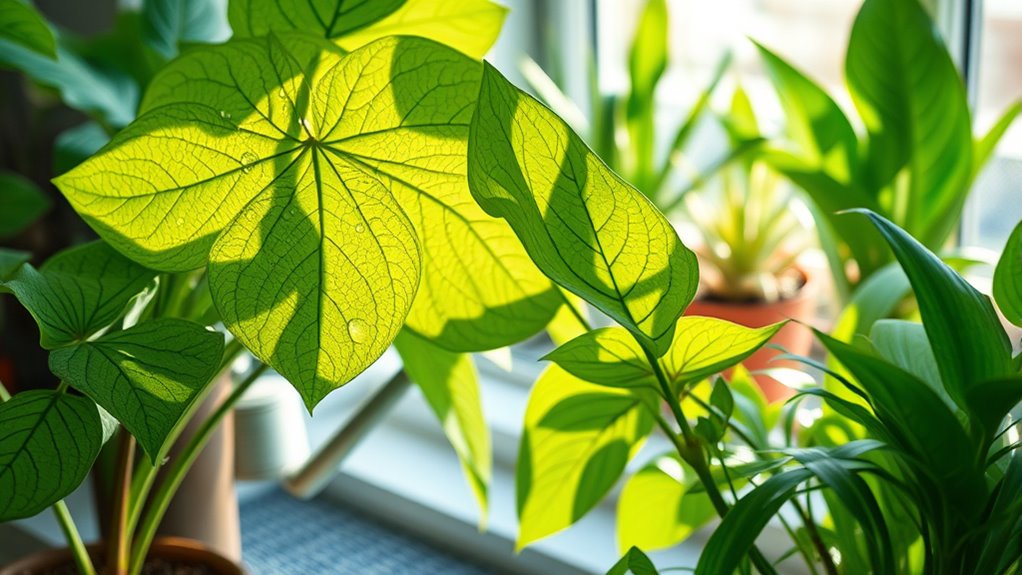
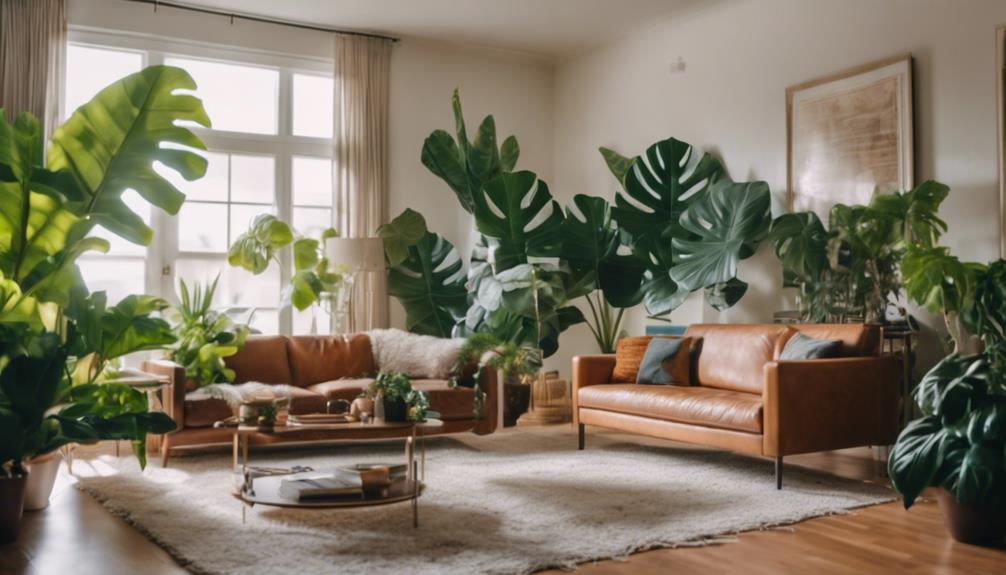
Indoor plants can brighten your space and improve air quality, but they require proper care to thrive. One of the most important aspects of maintaining healthy indoor plants is establishing the right watering schedules. During different seasons, your plants’ water needs change. In warmer months, they typically require more frequent watering because increased sunlight and higher temperatures cause faster evaporation. Conversely, in cooler months, you can cut back on watering, allowing the soil to dry out slightly between waterings. Overwatering is a common mistake that can lead to root rot, so always check the top inch of soil before watering. If it feels dry, it’s time to water; if it’s still moist, hold off. Consistent watering schedules help your plants develop strong roots and prevent stress caused by inconsistent watering routines. Proper watering techniques, such as watering at the base of the plant rather than from above, can also reduce the risk of fungal diseases and keep your plants healthy.
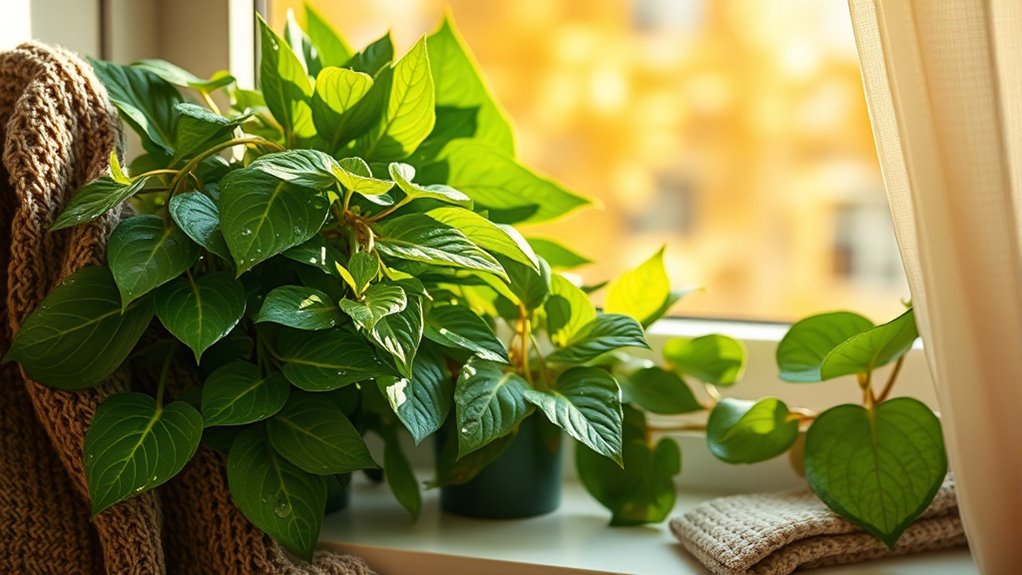
Besides watering, pest prevention becomes increasingly essential as seasons shift. Indoor plants are susceptible to pests like spider mites, aphids, and mealybugs, especially when they’re stressed or coming into contact with contaminated tools or new plants. Seasonal changes can affect pest activity; for example, pests tend to thrive in warmer, more humid conditions typical of spring and summer. To prevent infestations, regularly inspect your plants for signs of pests—such as discolored or sticky leaves, webbing, or small insects. Quarantining new plants before introducing them to your existing collection also helps prevent spreading pests. Using natural pest prevention methods, like neem oil or insecticidal soap, can keep pests at bay without harming your plants or the indoor environment. Maintaining proper humidity levels and good airflow can also discourage pests, as many pests prefer stagnant, humid conditions.
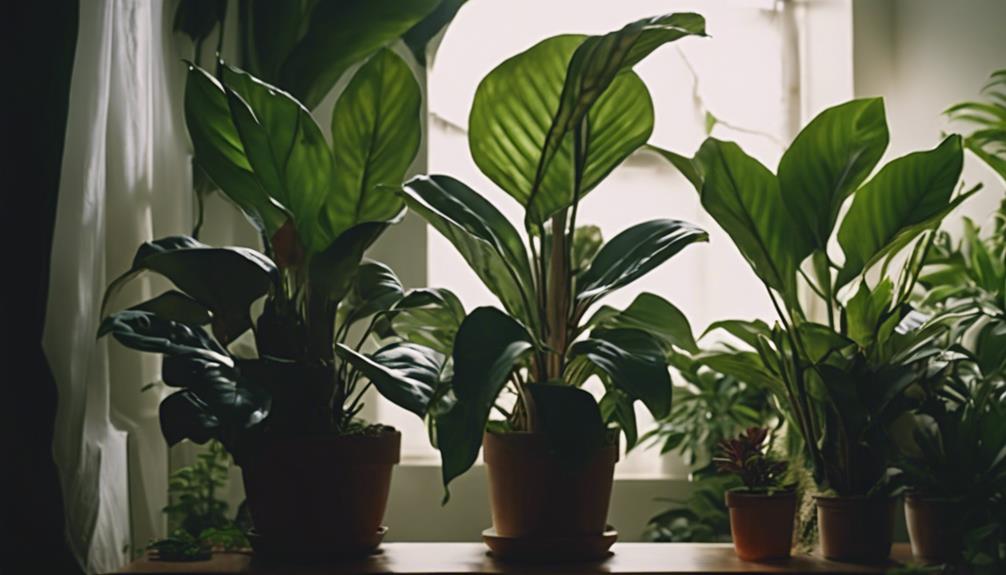
In addition to pest prevention, seasonal cleaning of your plants and their surroundings keeps pests and dust from accumulating and creating a breeding ground. Wipe down leaves gently with a damp cloth to remove dust and debris, which can block sunlight and hinder photosynthesis. When you notice pests, act quickly by isolating affected plants and applying appropriate treatments. Regularly checking your plants and adjusting care routines based on the season promotes healthier growth and minimizes pest problems. By sticking to tailored watering schedules and being vigilant about pest prevention, you ensure your indoor garden remains vibrant and resilient throughout the year. Proper seasonal care not only extends the life of your plants but also enhances the beauty and air-purifying benefits they provide. Additionally, understanding the environmental needs of your plants helps optimize their health and growth, making your indoor garden more sustainable and enjoyable.

Huloo Sleep Weighted Blanket Twin 15lbs for Adult(48"×78",Gray) Breathable Soft Minky Weighted Throw Blanket for All Season,Heavy Blanket with Premium Glass Beads
【HULOO SLEEP PREMIUM WEIGHTED BLANKET】: Our adult minky weighted blanket 15 pounds with (0.88 mm) premium glass beads...
As an affiliate, we earn on qualifying purchases.
Frequently Asked Questions
How Can I Prevent Pests During Winter?
To prevent pests during winter, focus on indoor pest prevention by inspecting your plants regularly for signs of pests. Keep your plants healthy with proper watering and light, as strong plants resist pests better. Use natural remedies like neem oil or insecticidal soap for winter pest management if needed. Avoid overwatering and maintain good airflow to reduce humidity, making your indoor environment less inviting for pests.
Should I Prune My Indoor Plants in Fall?
Yes, you should prune your indoor plants in fall. Use proper pruning techniques like trimming dead or overgrown stems to encourage healthy growth. Follow a fall pruning schedule, typically in late September or October, to prepare plants for winter. Be gentle and avoid over-pruning, which can stress your plants. Regular fall pruning helps improve air circulation, reduces pests, and keeps your indoor garden looking tidy and vibrant during colder months.
How Do I Adjust Watering in Low Sunlight?
Think of your indoor plants as sunbathers needing less water in winter. You should reduce your watering frequency, giving the soil time to dry out more between drinks. Light adjustment helps too—move plants closer to windows or use grow lights. This way, you prevent overwatering and keep your plants happy even in low sunlight, ensuring they stay healthy and vibrant despite the shorter days.
What Are Signs of Indoor Plant Overwatering?
If you notice watering symptoms like yellowing leaves, wilting despite moist soil, or mold growth on the surface, you’re likely overwatering. Overwatering signs include root rot, a foul smell from the soil, and frequent soil moisture that doesn’t dry out. To prevent this, make certain you allow the topsoil to dry between waterings, use well-draining pots, and observe your plant’s specific needs to avoid overwatering.
Can I Use Fertilizer Year-Round Indoors?
You can use fertilizer year-round indoors, but it’s best to follow a balanced fertilizer schedule tailored to your plant’s needs. Imagine providing your plants with a steady stream of nutrients that keeps them vibrant and healthy through every season. Overfeeding can harm indoor plant nutrition, so dilute the fertilizer and reduce frequency in winter. Regular, mindful feeding guarantees your indoor plants thrive without risk of over- or under-fertilizing.

XVCAS Weighted Blanket for Adults - Cooling Heavy Blanket for 110-130lbs with Premium Glass Beads - Soft Thick Big Blankets for All-Season Sleeping Comfort Breathable (60" x 80" 15lbs)
Unbeatable Stability & Comfort:Exclusive 2"x2" micro-compartment grid with 16 reinforced loops keeps your duvet cover (sold separately) perfectly...
As an affiliate, we earn on qualifying purchases.
Conclusion
Taking seasonal care seriously keeps your indoor plants thriving year-round. For example, imagine a plant lover who neglected to adjust watering in winter, only to find their fern wilting. But by simply reducing watering and increasing humidity, they revived it. Your plants depend on your attentiveness—small adjustments can make a big difference. With a little effort, you’ll enjoy lush, healthy greenery that brightens your home no matter the season.
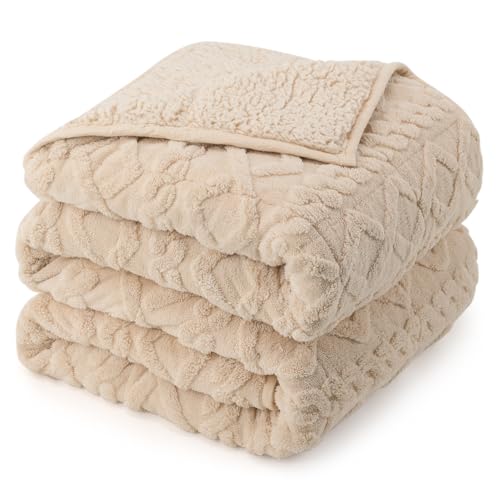
Weighted Blanket Queen Size 15lbs, Classy Soft Jacquard Sherpa Weighted Blankets for Sleep Natural and Calming, Fluffy Cozy Sofa Bed Blanket for Winter, Beige, 60 x 80 inches
Ultimate Comfortable Weighted Blanket: Crafted with 220GSM plush sherpa on one side and 260GSM luxurious jacquard sherpa on...
As an affiliate, we earn on qualifying purchases.

Topcee Weighted Blanket for Adults (20 lbs, 60" x 80") Queen Size Soft Cooling Heavy Blanket Sleeping, Apply to 190-210 lbs Body, Thick Breathable Blanket with Glass Bead, Easy Care
【Premium Material】 - Topcee weighted blanket is made of soft breathable microfiber material and filled with 0.8-1 mm...
As an affiliate, we earn on qualifying purchases.