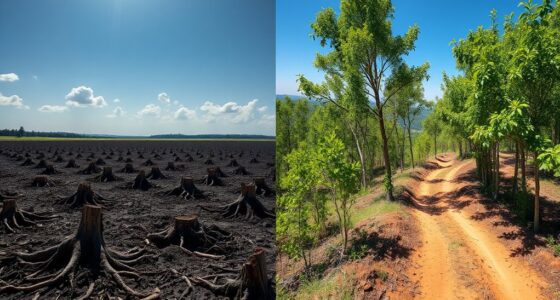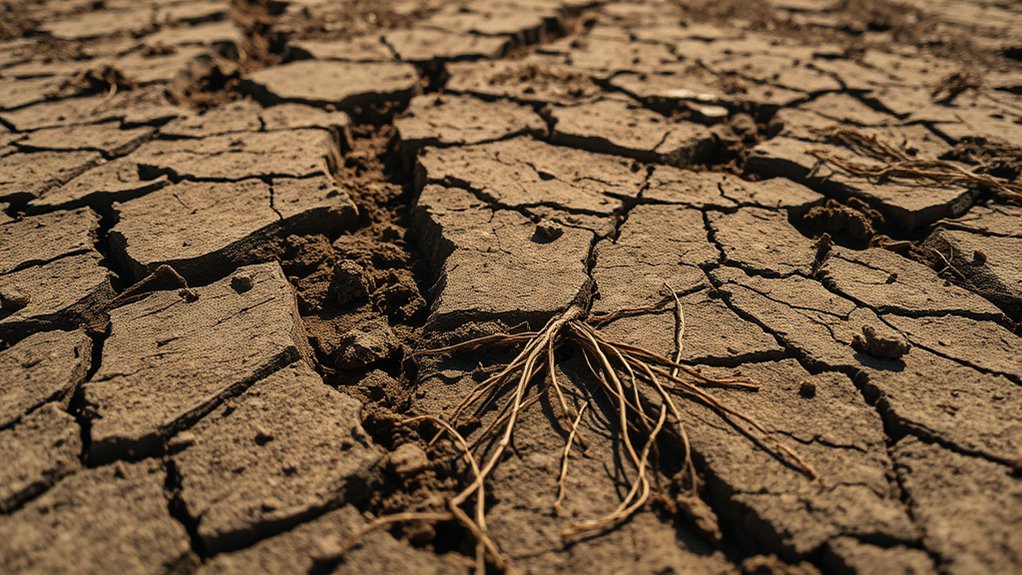
Soil degradation threatens your food supply by stripping away nutrient-rich topsoil through erosion caused by wind, water, and poor land management. Overgrazing, deforestation, and intensive farming make soil less fertile, reducing crop yields and forcing farmers to rely more on chemicals. Protecting soil involves sustainable practices like crop rotation, cover cropping, and reducing tillage, which help restore its health. Continuing to explore how these strategies can safeguard your food system benefits everyone.
Key Takeaways
- Soil erosion reduces topsoil, essential for healthy crop growth, threatening food security.
- Deforestation and overgrazing expose soil to erosion, accelerating land degradation.
- Nutrient depletion from intensive farming diminishes soil fertility, impacting crop yields.
- Implementing sustainable land management practices helps restore soil health and prevents further degradation.
- Maintaining vegetation cover and reducing tillage are vital strategies for soil conservation and food system resilience.
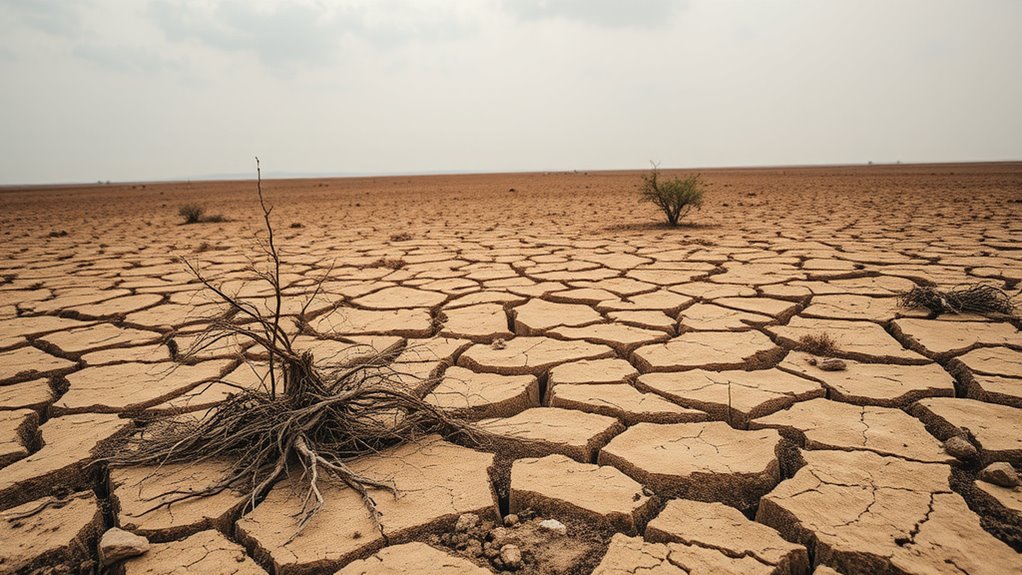
Soil degradation is a serious environmental issue that threatens the productivity of our land and the health of ecosystems. One of the biggest challenges you face is soil erosion, which occurs when wind or water removes the topsoil that plants rely on for nutrients. Without this essential layer, plants struggle to grow, and the land becomes less fertile over time. Soil erosion accelerates nutrient depletion, meaning the soil loses essential minerals and organic matter needed to sustain crops. As the nutrients diminish, farmers often have to use more chemical fertilizers to maintain crop yields, which can further harm the environment and create a cycle of decline.
Soil erosion depletes nutrients, reduces fertility, and worsens land degradation over time.
When topsoil is washed or blown away, the land becomes less capable of supporting healthy plant life. This process doesn’t happen overnight; it results from a combination of factors such as improper land management, deforestation, overgrazing, and intensive farming practices. If you ignore these issues, the soil’s ability to regenerate diminishes, leading to less productive fields and increased reliance on external inputs like fertilizers and water. Over time, the land becomes increasingly barren, making it difficult for farmers to grow food and for ecosystems to thrive.
Nutrient depletion worsens soil degradation. As the nutrients are washed away or used up faster than they can be replenished, the soil becomes less capable of supporting healthy crops. This depletion forces farmers to apply more chemical fertilizers, which can lead to runoff that pollutes nearby water sources. Furthermore, nutrient-poor soils are more vulnerable to erosion because they lack the plant cover needed to protect the surface from wind and water forces. Without healthy vegetation, the soil becomes even more exposed and susceptible to erosion, creating a vicious cycle that deteriorates land quality.
To combat this, it’s essential that you adopt sustainable practices such as crop rotation, cover cropping, reduced tillage, and maintaining vegetation cover. These strategies help hold the soil in place, reduce erosion, and facilitate natural nutrient replenishment. Incorporating soil conservation methods can significantly improve land resilience and health. Implementing buffer zones along waterways and avoiding overgrazing can also protect soil quality. By actively managing land with these methods, you can slow down or even reverse some of the damage caused by erosion and nutrient loss, ensuring that the soil remains fertile and productive for future generations. Protecting soil health isn’t just about maintaining farmland; it’s about safeguarding the foundation of our food system and supporting ecosystems that depend on healthy soil to thrive.
Top picks for "soil degradation protect"
Open Amazon search results for this keyword.
As an affiliate, we earn on qualifying purchases.
Frequently Asked Questions
How Does Soil Degradation Impact Climate Change?
You might not realize it, but soil degradation worsens climate change by reducing soil carbon sequestration, which traps carbon dioxide. When erosion occurs, organic matter is lost, releasing greenhouse gases into the atmosphere. Using erosion control techniques, like cover cropping and contour farming, helps protect soil health. By maintaining healthy soil, you support carbon storage, reduce emissions, and combat climate change effectively.
What Are the Most Effective Local Soil Conservation Practices?
Think of your land as a fragile tapestry needing care. You can protect it through effective practices like cover cropping, which acts as a shield, and erosion control, like binding threads that hold everything together. These methods help preserve soil health locally, prevent nutrients from washing away, and boost productivity. By implementing these practices, you safeguard your land’s future, ensuring it remains fertile and resilient for generations to come.
Can Organic Farming Fully Prevent Soil Degradation?
Organic farming can crucially improve soil health, but it can’t fully prevent soil degradation. You need to combine organic practices like crop rotation, composting, and cover cropping with other conservation methods. These practices help maintain soil structure, fertility, and prevent erosion. While organic methods are essential, ongoing management and integrating sustainable techniques are necessary to effectively protect your soil from degradation over time.
How Quickly Can Degraded Soil Be Restored Naturally?
Think of soil as a wounded friend; natural restoration can take years or even decades to fully heal. Soil recovery depends on factors like climate, land management, and the severity of degradation. With patience and proper care, degraded soil can gradually bounce back through natural processes. However, don’t expect quick fixes—restoration is a slow dance of time, patience, and nurturing to bring soil back to life.
What Policies Are in Place Globally to Prevent Soil Loss?
You can look into policy frameworks and global initiatives that aim to prevent soil loss. Many countries participate in international efforts like the UN’s Sustainable Development Goals and the Global Soil Partnership, which promote sustainable land management. These policies encourage practices like crop rotation, reduced tillage, and reforestation. By supporting and adhering to these initiatives, you help sustain healthy soils and protect our food system’s foundation for future generations.
Conclusion
If you neglect soil health, you’re risking the very foundation of our food system—it’s the backbone supporting every meal you enjoy. Soil degradation isn’t just a minor issue; it’s a crisis threatening to turn fertile lands into deserts overnight. By taking action today—embracing sustainable practices and protecting our soils—you hold the power to prevent this catastrophe. Don’t let our future turn to dust; safeguard the earth beneath your feet before it’s too late.