
Using music and sounds for meditation can help you relax, focus, and deepen your experience. Natural sounds like rain or ocean waves create calming environments, while binaural beats can entrain brainwaves to states of relaxation or focus, especially with headphones. Incorporating these sounds as an anchor helps you stay present and smooths the way into deeper meditation. Keep exploring, and you’ll discover how these auditory tools can transform your practice and overall well-being.
Key Takeaways
- Select calming sounds like nature noises or gentle music to promote relaxation and focus during meditation.
- Use binaural beats with headphones to entrain brainwaves and deepen meditative states.
- Focus attention on sound rhythms, allowing them to serve as anchors that enhance presence and reduce distractions.
- Incorporate sounds as a supportive tool alongside traditional meditation techniques for a more immersive experience.
- Consistent use of auditory elements can improve meditation depth, reduce stress, and promote overall well-being.
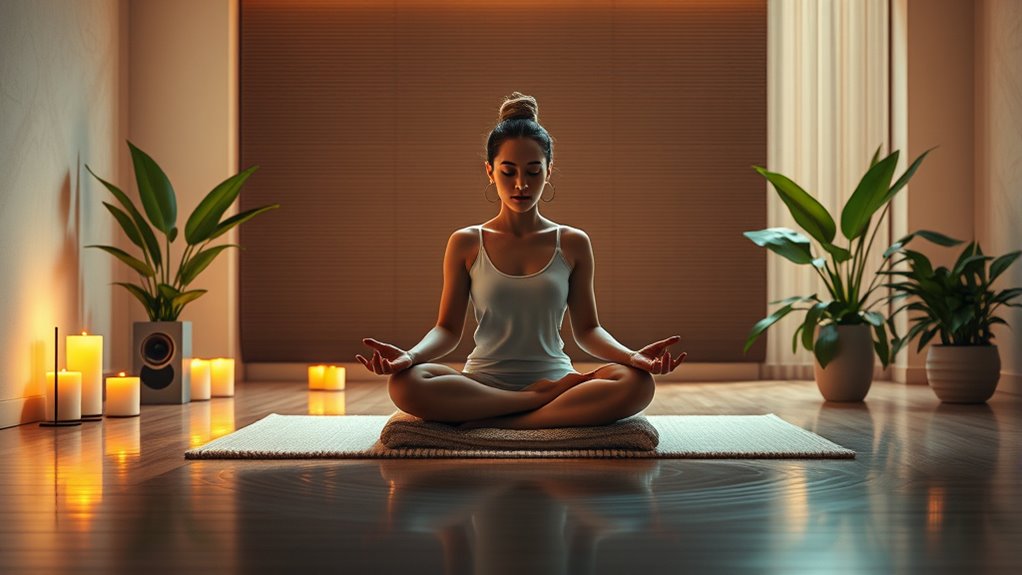
Have you ever noticed how certain sounds or music instantly help you relax and focus during meditation? That’s because specific auditory elements can deeply influence your mental state, guiding you into a peaceful and centered experience. Two powerful tools are nature sounds and binaural beats. Nature sounds, like gentle rain, ocean waves, or rustling leaves, mimic the natural environments that promote calmness and reduce stress. When you listen to these sounds, your brain tends to synchronize with the rhythm of nature, helping you let go of tension and stay present in the moment. They serve as a soothing backdrop, blocking out distractions and creating a sense of tranquility that’s easy to sink into.
Nature sounds help your brain relax and stay present during meditation.
Binaural beats are another effective way to enhance your meditation. These are created when two slightly different frequencies are played into each ear separately. Your brain perceives a third tone, called a beat, which results from the difference between the two frequencies. This process can entrain your brainwaves, guiding you into specific mental states like relaxation, focus, or even deep sleep. For example, listening to binaural beats in the alpha or theta range can help you reach a meditative state more quickly and effortlessly. When combined with headphones, binaural beats become even more potent, allowing you to experience a profound sense of calm and mental clarity.
Using nature sounds or binaural beats during meditation is simple. You just need a comfortable space, some headphones if you’re using binaural beats, and a device to play your chosen sounds. As you settle into your meditation, let the sounds wash over you, focusing your attention on the subtle shifts and rhythms. Don’t try to analyze or control the sounds; instead, be present with them. If your mind wanders, gently bring your focus back to the soundscape. Over time, you might notice that these sounds become an integral part of your meditation routine, helping you reach deeper states of relaxation more easily.
Incorporating nature sounds and binaural beats into your practice isn’t about replacing traditional meditation techniques but enhancing them. These sounds act as anchors, guiding your mind away from stress and into a peaceful, focused state. Whether you prefer the natural ambiance of rain and waves or the subtle rhythm of binaural beats, both tools offer powerful support for your meditative journey. With consistent practice, you’ll discover how these gentle sounds can transform your experience, making meditation more accessible, enjoyable, and effective. Additionally, choosing the right mattress toppers can improve overall sleep quality, supporting your mental and emotional well-being as you meditate.
Frequently Asked Questions
How Do Different Musical Genres Affect Meditation Outcomes?
Different musical genres influence your meditation outcomes based on genre influences and cultural variations. For example, classical or ambient music can promote relaxation, while rhythmic genres like drumming may energize you or deepen focus. Cultural variations also shape your experience, as traditional sounds resonate differently depending on your background. Experimenting with various genres helps you find what best supports your meditation practice, enhancing relaxation, focus, or spiritual connection tailored to your preferences.
Can Sound Therapy Replace Traditional Meditation Practices?
Sound therapy, including sound healing and vibrational therapy, can complement meditation but isn’t a complete replacement. Studies show that over 60% of practitioners find combining sound therapy with meditation enhances relaxation and stress relief. While sound healing helps balance energy and calm the mind, traditional meditation develops focus and mindfulness. You might find that integrating both offers a richer, more effective approach to your mental and emotional well-being.
Are There Specific Sounds Recommended for Beginners?
Yes, as a beginner, you should try nature sounds and ambient melodies. These sounds are gentle and calming, making it easier for you to focus and relax. Start with simple tracks like flowing water, birdsong, or soft instrumental music. Avoid loud or complex sounds initially. Over time, you can explore different soundscapes, but these basics will help you build a calming meditation practice and deepen your relaxation.
How Does Volume Impact the Effectiveness of Meditation Music?
You should keep volume levels low to enhance meditation because loud sounds can distract you, reducing sound clarity and focus. When the volume is just right, it creates a calming environment that helps you relax and stay present. If the sound is too loud or too soft, it can hinder your meditation experience. Adjust the volume to a gentle, steady level that supports your concentration and fosters tranquility.
Can Personalized Soundscapes Improve Meditation Experiences?
Yes, personalized soundscapes can remarkably enhance your meditation experience. Imagine a sound healing session tailored just for you, tapping into your emotional resonance and creating a deeper connection. Personalized sounds hold the power to evoke specific feelings, making your practice more immersive and meaningful. This customization heightens relaxation, helping you reach a state of calm more quickly and effortlessly, transforming meditation into a truly unique and powerful journey.
Conclusion
By incorporating music and sound into your meditation, you create a bridge to inner calm that’s as reliable as a lighthouse guiding ships through fog. These auditory tools help anchor your mind, making it easier to let go of stress and find peace. Remember, the right soundscape is your personal sanctuary—a gentle wave that washes over you, calming every storm within. Embrace it, and let the melodies lead you to tranquility.