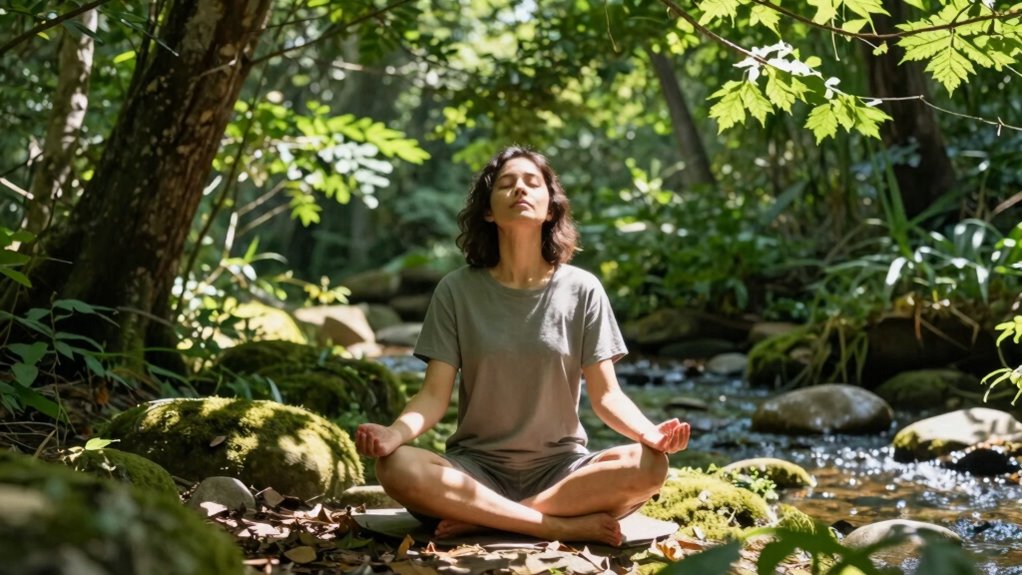
When you recover from stress, you also heal emotional responses because your body and mind are closely linked. Stress triggers hormone surges and racing thoughts that intensify emotions. Calming physical signs like a slower heart rate help ease emotional tension. Practices like mindfulness and social support support emotional balance and resilience. Understanding this connection reveals how calming your body can restore your emotional well-being. Keep exploring to discover more ways to support your recovery process.

Get beauty and skincare favorites delivered free with Prime
- Fast, free delivery on millions of items
- Prime Video, Amazon Music and more included
- Member-only deals all year
Key Takeaways
- Stress triggers hormonal and physiological responses that are deeply intertwined with emotional states.
- Emotional recovery involves calming both physical responses and emotional reactions to restore equilibrium.
- Mindfulness techniques help detach from emotional charge, facilitating emotional processing and release.
- Social support reduces emotional intensity and activates brain chemicals that promote resilience.
- Connecting with natural environments enhances emotional well-being and reinforces the sense of safety and interconnectedness.

Have you ever wondered how quickly your body and mind can bounce back after a stressful event or intense emotion? It’s a fascinating process that highlights how closely linked stress and emotion truly are. When you face a stressful situation, your body reacts with a surge of hormones, your heart races, and your mind races to process what’s happening. But recovery isn’t just about calming your body; it’s also about returning your emotional state to equilibrium. This is where mindfulness techniques come into play. By practicing mindfulness, you focus on the present moment, observing your thoughts and feelings without judgment. This helps you detach from the emotional charge of stress, making it easier to process and release those feelings. Over time, mindfulness trains your brain to respond more calmly and thoughtfully to future stressors, reducing their emotional impact and speeding up your recovery process.
Social support also plays a vital role in this recovery. When you share your feelings with trusted friends, family, or support groups, it validates your experience and alleviates emotional burdens. Talking through your emotions can diminish their intensity and help you gain perspective. Supportive interactions activate your brain’s reward system, releasing neurochemicals that promote feelings of safety and connection. This positive reinforcement encourages emotional resilience, making it easier to recover from stressful episodes. In addition, understanding the importance of biodiversity and a balanced ecosystem can inspire a sense of interconnectedness, which supports emotional well-being. Recognizing how environmental health impacts mental health can foster a greater appreciation for the natural world and enhance your emotional recovery. Incorporating awareness of natural ecosystems into your mindfulness practices can deepen your connection to the environment, further supporting emotional balance. Furthermore, cultivating a sense of interconnectedness with nature can reinforce feelings of safety and stability, aiding in emotional healing. Recognizing the influence of ecological systems on mental health underscores how our environment profoundly affects our emotional resilience. Combining mindfulness techniques with social support creates a powerful synergy — you’re not just calming your body through breathing exercises or meditation, but also healing your emotional wounds through connection and understanding.
mindfulness meditation for stress relief
As an affiliate, we earn on qualifying purchases.
As an affiliate, we earn on qualifying purchases.
Frequently Asked Questions
How Quickly Can Emotional Recovery Occur After Stress?
Emotional recovery after stress varies, but with strong emotional resilience and effective stress adaptation, you can often bounce back within minutes to hours. Your ability to manage emotions quickly depends on practices like deep breathing, mindfulness, or distraction. The more you develop resilience, the faster your emotional recovery becomes, helping you regain balance and clarity. Consistently practicing stress adaptation techniques strengthens this process over time.
Can Physical Health Improve Alongside Emotional Recovery?
Yes, your physical health can improve alongside emotional recovery, like a garden thriving when both the soil and plants are cared for. The mind-body connection plays a crucial role here, as emotional healing boosts physical well-being. Holistic therapies nurture this harmony, addressing stress, emotions, and health simultaneously. When you nurture your mind and body together, you foster a balanced, healthier self, allowing both emotional resilience and physical vigor to flourish.
Are Some People More Emotionally Resilient Than Others?
Some people are more emotionally resilient because of their personality traits and emotional intelligence. You might notice that resilient individuals handle stress better, stay calm under pressure, and recover faster from setbacks. Their ability to manage emotions, stay optimistic, and adapt helps them bounce back. Developing traits like self-awareness and empathy can boost your resilience, enabling you to navigate emotional challenges more effectively and maintain overall well-being.
How Do Sleep Patterns Affect Emotional Recovery?
Think of sleep as a gentle river washing away emotional debris. When your sleep patterns are consistent and restful, it’s easier for your mind to process feelings and bounce back from stress. Good sleep hygiene and dream analysis help you understand and release emotional tension, like clearing storm clouds. Skimp on sleep, and emotional recovery stalls, leaving unresolved feelings to linger like shadows in the night.
Is Professional Help Necessary for Emotional Recovery?
Professional help isn’t always necessary for emotional recovery, but it can be beneficial if you’re struggling to regain emotional awareness or manage mental health challenges. Seeking support from a counselor or therapist provides strategies to process emotions effectively and rebuild resilience. If your feelings persist or interfere with daily life, reaching out guarantees you get the guidance needed to recover and maintain emotional well-being.
emotional resilience support tools
As an affiliate, we earn on qualifying purchases.
As an affiliate, we earn on qualifying purchases.
Conclusion
As you step out of the storm’s shadow, imagine the sky gradually clearing, sunlight piercing through lingering clouds. Recovery from stress gently restores your inner landscape, much like a river carving a new path after a flood. When you heal emotionally, it’s like dawn breaking after a long night—bringing clarity, warmth, and renewed strength. Remember, each moment of recovery is a quiet rebirth, guiding you toward calm waters and brighter days ahead.
stress reduction relaxation products
As an affiliate, we earn on qualifying purchases.
As an affiliate, we earn on qualifying purchases.
As an affiliate, we earn on qualifying purchases.
Halloween Picks
halloween
As an affiliate, we earn on qualifying purchases.